

My guest again this week is Christopher S. Connelly, author of the fascinating new book. HELEN MORGAN — THE ORIGINAL TORCH SINGER AND ZIEGFELD'S LAST STAR... Read More
From the show: BROADWAY NATION
Featured Shows
About
My guest again this week is Christopher S. Connelly, author of the fascinating new book
HELEN MORGAN — THE ORIGINAL TORCH SINGER AND ZIEGFELD'S LAST STAR.
The topics discussed in this episode include:
- Morgan's follow up to Show Boat, the 1929 hit musical Sweet Adeline — a star vehicle created especially for her by Jerome Kern and Oscar Hammerstein II.
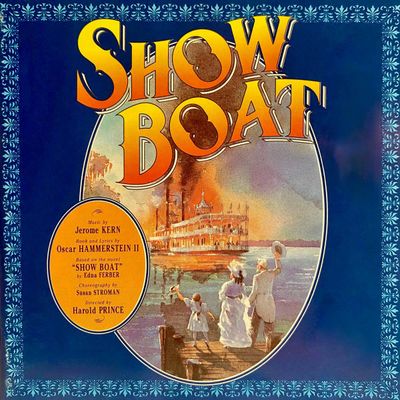
- The 1932 revival of Show Boat and subsequent tour.
- Morgan's career as a nightclub hostess and entertainer at a series of night spots named for her including Chez Morgan, Helen Morgan's Summer House, and The House of Morgan.
- The Ziegfeld Follies of 1931.
- And Helen Morgan as a Gay Icon and the "Pansy Craze" stars who imitated her.
Christopher S. Connelly is a film and theater historian. His work has appeared in Etcetera magazine and the Kino Lorber DVD release of Mamoulian's Applause. He is also an actor, Roman Catholic cantor, and chorister for the Atlanta Opera. When he is not writing or performing, he works IT for the Georgia Institute of Technology.
Become A PATRON of Broadway Nation!
This episode is made possible in part through the generous support of longtime Patron Club Member Ann Welsh.
If you are a fan of Broadway Nation, I invite you to become a PATRON!
For as little as $7.00 a month you can receive exclusive access to never-before-heard, unedited versions of many of the discussion that I have with my guests — in fact I often record nearly twice as much conversation as ends up in the edited versions. And you will also have access to additional in-depth conversations with my frequent co-host Albert Evans that have not been featured on the podcast. And all patrons receive special “on-air” shout-outs and acknowledgement of your vital support of this podcast.
And If you are very enthusiastic about Broadway Nation there are additional PATRON levels that come with even more benefits.
If you would like to support the work of Broadway Nation and receive these exclusive member benefits, please just click on this link:
https://broadwaynationpodcast.supercast.tech/
Thank you in advance for your support!
Transcript
This transcript was automatically generated and might contain errors.
[0:00] David Armstrong: Welcome to Broadway Nation, the podcast that explores the remarkable history of the Broadway musical with a particular focus on the immigrant, Jewish, queer, and black artist who invented it.
[0:30] David Armstrong: I'm David Armstrong, and my guest again today is Christopher S. Connelly, who returns to tell us more about his new book, Helen Morgan, the Original Torch Singer and Ziegfeld's Last Star. If you missed the first episode, you may want to catch up with that before listening to this one. At the center of Helen Morgan's amazing life and career are three acclaimed performances, first in 1927 as Julie in Showboat, then in 1929 as the star of the film Applause, and today we pick up with her follow-up to Showboat, Kern and Hammerstein's Broadway musical Sweet Adeline.
[1:22] Christopher S. Connelly: I'm a poor fool, but what can I do? Why would I fall in love with you?
[1:46] David Armstrong: If you're a fan of Broadway Nation, I invite you to join such long-time patrons as Anne Welsh, whose generous support helps to make this podcast possible. If you're interested, there'll be information at the end of the episode about how you, too, can become a patron. Here we go. Let's talk about Sweet Adeline, though, because this is a very important show and a big hit, one that is somewhat off our radar today, a show that's never been revived in any major way. Goodspeed might have done it at some point.
[2:18] Christopher S. Connelly: Yes, they did. But not something that has stayed with us, although, again, it's Kern and Hammerstein. It's the follow-up to Showboat. It has some very, very significant songs that she introduced, Why Was I Born, Don't Ever Leave Me. Give us a little taste of what that show was. If we got to see Helen Morgan in Sweet Adeline, what would we have seen?
[2:35] Christopher S. Connelly: Sweet Adeline was the star vehicle of star vehicles. They tailored it completely to her talents, which is the primary reason why it's not revived, because we don't have Helen Morgan anymore. I think afterwards there was a production in Muni, maybe two, but Kern and Hammerstein realized, yeah, it's not the same without her. So her biological father was a veteran of the Spanish-American War, so they set it during that time. And she starts out in a beer garden and ends up in a burlesque show, which may or may not be a homage to Applause. So they're weaving actual elements of Helen's life into this fictional story.
[3:18] David Armstrong: Yes, including the climax where two men fight over her, which actually was, I wouldn't say a big scandal, but certainly made the gossip columns when her relationship with Reggie Hammerstein came to an end. So they're blurring the line between fiction and reality.
[3:33] Christopher S. Connelly: Yes. All the way through the show. The other interesting thing is Hammerstein wrote two-star comic roles for Irene Franklin and for Charles Butterworth. And joke for joke, it may be the funniest thing that Hammerstein ever wrote. They have some really good material. But what Helen did, again, is another story of a woman sacrificing herself for a younger sister-daughter figure, as Julie does for Magnolia in Showboat, as Katie Darling does for her daughter in Applause, Adeline does for her sister Nellie in this. And stakes aren't as high as they are in other Hammerstein shows, but it was enough for Helen. Helen was able to make that work. And when it is dusted off and comes out, you know, the problem is people expect another Showboat.
And that's not what it is. That's not what it was intended to be. It's almost a tempest in a teapot sort of thing. But Helen was so emotionally wrong in it that you still were caught up in it. She raised the stakes on her own and made them life or death because of what she could bring to it.
[4:34] David Armstrong: Right. So interesting. And this is a big hit.
[4:37] Christopher S. Connelly: It was one of the biggest advance sales up to its time. It packed them in. You know, it should have had a longer run than it did. Again, it opened two months before the stock market crash.
[4:47] David Armstrong: I was going to say it opens in 1929. So that puts a damper on sales, I'm sure.
[4:52] Christopher S. Connelly: But still, again, partly because of the advance sale, but partly because of the drawing power of Helen and Irene Franklin and Charles Butterworth. It was fine. It was certainly profitable. It should have lasted the season. But in February of 1930, Irene Franklin had to step out of the show. She had an emergency appendectomy, missed three or four weeks, I think. And that just took all the wind out of the sails and it closed early, but still toward the following season.
[5:20] David Armstrong: So this will be her final dramatic book musical other than the revival of Showboat. Why do you think that is? Because clearly she's a giant Broadway star and acclaimed as an actress and a singer.
[5:34] Christopher S. Connelly: I think part of the reason was because of the Depression. There weren't a whole lot of serious musicals. She was supposed to do the original production of Music in the Air. Again, Kern and Hammerstein.
[5:43] Christopher S. Connelly: Again, Kern and Hammerstein. But when it was time to take the revival of Showboat out on the road, they lost some key people. And again, by that point, you could not think of doing Showboat without Helen Morgan. They offered her a very high salary to take it on the road. As a career move, it was probably not the best thing for her. You know, after that, there really isn't a whole lot of, quote-unquote, serious musicals after Music in the Air. I mean, poor Game Pass, that's an opera. But that's pretty much it.
[6:09] David Armstrong: For the 1930s, yeah.
[6:11] Christopher S. Connelly: Yeah, that continues to fascinate people. So it went back to reviews. And yeah, she was fine in reviews, but she'd become known as this serious singing actress. She really, really wanted to make a name for herself in straight plays. She wanted to play Camille, you talk about. Throughout her career, she is lobbying to play Camille in the play.
[6:31] Christopher S. Connelly: Oh yeah, she desperately wanted to play Camille. And she would have been just incredible in the role. I mean, that was purported, and she knew that, but she just never got that. And then, you know, after MGM made the film version with Garbo, there was no point in trying to do it on stage.
[6:43] David Armstrong: That's so interesting. And the other aspiration she had was to sing opera, which you say she pursued, certainly trained to do, but could never quite get up the nerve to actually do it, or just the opportunity didn't come along.
[6:57] Christopher S. Connelly: She did sing for Otto Kahn. The story is that he offered her a contract. I'm not entirely sure how sincere he was. Again, she had a small voice. You know, most of those operatic roles, she certainly would have had a hard time telling them that. But she had a nice little spin to her voice. She was a Puccini heroine in her real life. And she was certainly drawn to those roles. In a small house, yes, she would have been fine.
[7:18] David Armstrong: It's so interesting. Showboat gets a big revival relatively shortly after its premiere. So it premieres in '27, and it's revived in '32. Was that unusual for the time? Did the idea of bringing Showboat back surprise people that quickly?
[7:33] Christopher S. Connelly: I don't know how much it surprised people, but I think it was indicative of the times. Nothing Ziegfeld did after the crash made any money. He was very much a part of a bygone age. The one thing that was surefire was Showboat. I think as early as 1930. I think it's not long after the post-Broadway tour ended, he started putting out fillers to the original cast. Was there any interest in doing a short revival on Broadway? And there was not. But by 1932, yeah, why not? And particularly once Paul Robeson, for whom the product show was written, but for contractual reasons, he was not able to do originally. He did it in London, but he finally got to do it in New York.
[8:11] Christopher S. Connelly: So it's almost the entire original cast with the substitution of Robeson for Bledsoe, and Dennis King is now playing...
[8:20] David Armstrong: Ravenal.
[8:21] Christopher S. Connelly: Ravenal, yeah. And he's a giant star of this period. Not somebody to remember, but he's a giant operetta star, Dennis King. So this is an event in terms of bringing back this gang together to do Showboat. And again, it turns into a sensation. As much of a sensation at the box office as you could have in 1932.
[8:40] David Armstrong: Exactly. Yeah. And it was in a large theater. It did okay through the summer. It's probably good, parenthetically, to remind people back then the summer were the doldrums at the box office for stage shows, largely because most theaters didn't have air conditioning and people didn't travel as much. Now summer is the biggest time in New York because you have all the tours coming into town. So it was the exact opposite back in the day. Getting through the summer, that took some doing. Showboat was able to do that.
[9:06] Christopher S. Connelly: And then it goes on a lengthy tour.
[9:08] David Armstrong: Yes.
[9:08] Christopher S. Connelly: Again, with the whole cast and Helen Morgan.
[9:11] Christopher S. Connelly: Helen Morgan, Norma Terrace, Ava Puck, and Sammy White, and then Jules Bledsoe, who originated the part of Joe, he came back after Robeson left. So it was the five of them who went out originally. And by Christmas, everybody but Helen was gone. She was leading the show by herself.
[9:25] David Armstrong: Which was in some ways all that was necessary. So as long as Helen was in it, people were going to come see Showboat.
[9:32] Christopher S. Connelly: Yes. And you talk about these tab versions of various things that Helen did, including Showboat and later George White Scandals, and I think maybe The Follies. Just describe the tab version of Showboat that then continues the tour into the following year, '33.
[9:48] Christopher S. Connelly: Before, you would go to the big movie palace and you would have a double feature. Movies actually started as a chaser act for vaudeville. That's when they got out of the Nickelodeon and started doing longer films into features. So you would have a vaudeville show that would run 50 to 100 minutes or whatever, and then you would have a break and then there would be a film and then the vaudeville acts would come back on again. Later in the 20s, that had flipped. The feature film was the main attraction, but you would still have, particularly in the big cities, a stage show that would go on with it. Sometimes we get it like a big band. This continued into the 50s. Judy Garland and Mickey Rooney, they toured together and Martin and Lewis toured together and so on.
But what they did with Broadway musicals, when they got to the end of their run, they would reduce them, reduce the cast and cut them down to an hour to an hour and a half. It was easier to do with a review like The Follies, but yes, they did with Showboat, they cut it down to just under an hour and a half. Which is a lot of cutting with Showboat.
[10:47] Christopher S. Connelly: Well, a whole lot of cutting for Showboat. But that cut version served as the guide for Hammerstein.
[10:54] Christopher S. Connelly: And when he wrote the screenplay for the 1936 version, because he had already trimmed it down to a manageable length for a film, and then, you know, he opened it up in other places, obviously, but what there is from the stage show that's in that film is about 90, 95% of what was in that tab version, it gives you an idea of what it was like.
[11:11] David Armstrong: That's very interesting. Obviously, the cast would be reduced as well to a great extent, but they would still maintain at least some of the stars usually in these kinds of things.
[11:21] Christopher S. Connelly: Yes, but again, while the show was shorter, there were more performances, you were doing four or five shows a day, right? And then you would have an hour and a half break while the film played, but you were doing four and five shows a day in these huge, huge movie palaces. Yeah, for a quarter.
[11:51] ♪ Musical number: "Where's That Blue Room?" — performed by Helen Morgan ♪
[12:34] David Armstrong: Don't go away. Christopher and I will be back with more Broadway Nation right after this quick break.
[12:40] Christopher S. Connelly: So let's sidetrack now to talk more about the nightclub career, because Helen Morgan represents the Roaring Twenties to a great extent, and this era of prohibition, and this era of the speakeasies and the nightclubs that are constantly struggling to find surreptitious ways to serve liquor and have gambling.
[13:07] David Armstrong: They're illegal liquor and illegal gambling establishments at the same time that they're incredibly high-profile nightclubs and venues. We think of Texas Guinan as sort of representing that era, but Helen Morgan is right there with her and involved in the controversy of all that nearly as much.
[13:24] Christopher S. Connelly: Yes, probably the most important thing to remember, at least in the early days of prohibition, it was never illegal to possess alcohol, which is why people would go around with a flask of liquor. All these nightclubs, they were all legal, they all had licenses, they operated under the — well, it was more of a fiction than a reality — but they operated under the guise that, you know, they were providing setups, they would provide ice and mixers and whatnot, and if you brought your own and you wanted to have a good time, you'd go right ahead.
[13:51] David Armstrong: But, you know, we'll also serve a little bit of food, and we have this floor show to go with it.
[13:55] Christopher S. Connelly: So what was illegal was to sell the alcohol.
[13:58] David Armstrong: Correct. It was illegal to make it, it was illegal to sell it. But it was not illegal to possess it, it was not illegal to imbibe it. Later on, they tried to combat it, then it became illegal to basically have it out in public. That added to the problems going on. But that was in 27, 28, that became a problem, which was right when Helen was right in the thick of everything.
[14:17] David Armstrong: So describe these nightclubs. Helen Morgan's Summer House is one of them, I think?
[14:21] Christopher S. Connelly: That's correct.
[14:22] Christopher S. Connelly: There's a series of nightclubs culminating sort of in the House of Morgan. I love that photo that you have of it in your book, this sort of Art Deco facade of it. It looks like a glamorous nightclub from a Busby Berkeley movie. What is an evening at one of Helen Morgan's nightclubs like, and what is this controversy that she gets involved in?
[14:41] Christopher S. Connelly: They were all in the theater district. And so it was all after hours entertainment. So you would go to see a show, and then you would go to a nightclub afterwards. Once you got in, they were usually small, smallish, maybe 250, 300 people or so. Again, they would have a kitchen, you would order setups and well, sometimes other things, some food, sandwiches, pub grub, basically, then you would have a floor show. And it would be like a little vaudeville. So there would be a dance band, you would have a couple of acts, usually a dancer or dance team, a couple of singers, an emcee who would do some stand up. Then when they weren't on, the band would play and they would be dancing. And then you know, the customers get up and dance, particularly in the higher end ones of which Helen was associated. Black Tie was required to get in. A lot of New York's 400 went to these clubs. It was a great place to see and to be seen.
[15:30] David Armstrong: With high cover charges, with high cover charges.
[15:31] Christopher S. Connelly: Yes, absolutely. So this is not an inexpensive night on the town.
[15:34] David Armstrong: No. And most of them were in fact selling alcohol one way or another.
[15:37] Christopher S. Connelly: Yes. And most of them are run by the mob. Or at least had mob ties. Each of our clubs were a little bit different. The first club, the 54th Street Club, that was interesting because you know, there was a storefront at the bottom and it was upstairs. It had multiple entrances on it. So at one point, they got into trouble and the authorities padlocked the entrance.
[15:59] Christopher S. Connelly: They just opened up the other door and everyone was able to get into it. The second club was Shea Helen Morgan. The other interesting thing about that, local radios would broadcast the dance bands from there. So you would get two or three nights a week, half an hour or an hour of music from Shea Helen Morgan, which advertised the club nationally and all the other clubs as well.
[16:21] Christopher S. Connelly: So in addition to a radio hookup, Shea Helen Morgan had rares of the rare in a speakeasy. It had a bar, an actual bar. You could belly up to the bar and order a drink there. You weren't just at your table. And then the summer home, it was a rooftop with a retractable roof. So if it was a nice night, again, you're in New York in the summer, you're dancing under the stars and if there's any breeze at all, it's quite lovely. So that was also an added attraction.
[16:45] Christopher S. Connelly: And she would function as sort of the hostess as well as a performer in these venues.
[17:15] David Armstrong: She needed to convince them to order something that they surely would not have on them, which was usually champagne or her favorite drink was brandy, which is what eventually got her into trouble.
[17:29] Christopher S. Connelly: Part of the fiction of the Warner Brothers biopic of her is you get this fiction of Helen Morgan as this tragic, tragic person. She was giddy. She had a great personality. People loved her. She was the perfect hostess. She loved puns. She had this sunny disposition off the stage.
[17:47] Christopher S. Connelly: What she did on stage was essentially a character that she created. And that was part of the appeal of her and the fascination with her because you had Auntie Mame off the stage and then you had this very tragic person on the stage. How are these the same person? That's what made her a terrific, terrific hostess.
[18:06] Christopher S. Connelly: And in the nightclub, that would even be amplified because you'd see her in the club at your table and then see her ascend the piano and suddenly be this incredibly captivating, tragic heroine. She ends up in a lot of legal trouble as the name of these clubs, and she disputes very often whether she actually is involved in the ownership of them or the financing of them.
[18:30] Christopher S. Connelly: But this takes her into court a couple of times as these clubs come under assaults by the law. Talk to us a little bit about that because tracking those trials was a big part of what you had to do for this book because it's such a part of her career.
[18:43] Christopher S. Connelly: It was raided four major times. The last two, Shea Helen Morgan and the Summer House, were the more important ones. That's what ended up in court. In the Shea Helen Morgan raid, they destroyed the club, the revenue agents. They were taken to court and they won. What they didn't destroy, they carted off to warehouses and they got what survived back, apart from the liquor, obviously.
[19:02] Christopher S. Connelly: The second time was on the end of the Democratic National Convention for 1928 when Al Smith was nominated to be president for the Democratic Party. A big platform plank was repeal of prohibition. On the night that he received the nomination, the government raided, I think, about a dozen New York speakeasies, including Hellens, including Texas Guinans, made over 100 arrests.
[19:29] Christopher S. Connelly: Prior to that, most prohibition infractions in New York pleaded guilty. You got a fine. You got a suspended sentence. You were back out on the street. This time was different. Several people, including Helen, chose to stand trial. By the letter of the law, Helen was 100% guilty.
[19:44] Christopher S. Connelly: But what happened was in the time between the arrest and when her trial occurred, which was in April of 1929, the St. Valentine's Massacre occurred in Chicago, and the public sentiment really began to turn. I mean, New York was pretty wet prior to that, but that really left a bad taste in people's mouths. And the jury, basically in an act of civil disobedience, said, no, we're not going to convict her.
[20:07] David Armstrong: So this trial, as you present it, was one of the things that helped turn the tide against prohibition in New York, but really even across the country as well.
[20:17] Christopher S. Connelly: Certainly in New York. I mean, it was clear by then that prohibition was unenforceable in New York.
[20:22] Christopher S. Connelly: It was a failure, and it was only causing more crime and more problems than it was trying to correct.
[20:28] David Armstrong: Well, more Americans died of bad booze in prohibition than died fighting World War I.
[20:34] Christopher S. Connelly: That's a staggering fact.
[20:36] David Armstrong: And Helen's health is affected by this as well.
[20:39] Christopher S. Connelly: Yes. There's no way she could have gotten through prohibition without drinking some adulterated liquor.
[20:44] Christopher S. Connelly: And she was a drinker. She was drinking a lot throughout her career. You describe her as a very high-functioning alcoholic, but no doubt an alcoholic for decades.
[20:55] Christopher S. Connelly: Well, certainly for a decade. By the time she did Show Boat in 1927, she was drinking regularly.
[21:00] Christopher S. Connelly: She became ill in 1930, and I think that was around the time she realized that she had done damage to her liver.
[21:06] Christopher S. Connelly: But she kept on. But again, I can't overemphasize how incredibly highly functioning she was, because particularly during the Depression, she would not risk the livelihood of the people she worked with with her behavior.
[21:18] Christopher S. Connelly: Now, after the show was over for the night, she would drink herself into oblivion.
[21:22] Christopher S. Connelly: But prior to that, she would have one or two drinks or a cup and say, just enough for the sparkle.
[21:27] Christopher S. Connelly: She would go out and be mesmerizing. And then afterwards, the party began.
[22:49] Christopher S. Connelly: Sometimes gay material, sometimes just ribald material. It was very much a freak show for a lot of the audience. Just, you know, let's go in and see how these people live. Much the same way of the Harlem Renaissance, that the white people started going up to the African Americans, to hear that music and to see them dance. And these were their nightclubs. They were the visitors. And so they were seeing how these people act. And because of all the segregation, we were not seeing... White people were not seeing.
[23:15] When repeal happened, the pansy acts went away. Because particularly in the very last couple of weeks, you know, nobody wanted anything to happen that was going to put a wrench into being able to serve liquor legally. Because there were moral clauses and other things that would get into the way. Part of which was because liquor was illegal during Prohibition. It's sort of anything goes for anything else. But once liquor is legal, then the authorities have a much more ability to restrict everything else as well. You're inside the law with liquor, so then they can control the contents as well.
[23:49] I think it was more of a case during Prohibition, going out to a nightclub. That was an act of civil disobedience. So again, you know, experiencing the pansy acts, going to Harlem. Again, that was an act of rebellion against the societal norms at that time. Once things got back to normal, that didn't have that same cachet anymore. People went back to being with their own people.
[24:09] So you remarked about Helen having a large gay audience. Tell us a little bit about that. How did you discover that? What's the evidence of that?
[24:17] Well, a book came out in the 70s that has a little bit more information on that than I delve into. Largely because it's not very well documented. But Helen Morgan, she was, you know, the diva of the moment. She was known as La Morgan among her fans. And because of that image of her sitting on top of a piano, that was very easy to mimic. Maybe not her vocal style, but that image was very easy to replicate. And in silent films, in 1928, there were films where women were sitting on top of a piano, even though they weren't singing. And she had several gestures and movements that she did with a handkerchief and things like that, that could be easily mimicked and picked up on.
[24:58] That's correct. Yes. Again, she was very nervous. Like most of the great, I mean, she had crippling stage fright. And again, she was very, very smart. And she figured out how to turn a liability into an asset. She had gorgeous, beautiful hands. Artists, you know, sketched them and she had photographs, studies made of her hands. They were considered one of her best features. So instead of trying not to have her hands shake, she had them as part of the act and usually would have a scarf or maybe would hold a camellia in her hand. And that became part of the act and how she was holding that. Sometimes she would be tearing at a handkerchief. She was so nervous. And that became part of the act.
[25:44] In the Earl Carroll Vanities of 1930, Joe Frisco, who was, you know, an old-time comedian, smoked a cigar, very Geisenwald. Sort of a tough song and dance man type. He did a burlesque of Helen Morgan in the show, you know, on top of the piano, everything. In 1930, he made a Vitaphone short called The Benefit, where he appeared in drag as Helen Morgan on top of the piano. Unfortunately, that doesn't seem to survive. Probably the most memorable gay homage to Helen Morgan was at the Club Abbey. The Club Abbey, that was the epicenter of the Pansy craze in New York. It was run by the Schwartz brothers. They were the same men who put up Helen Morgan's 54th Street Club, the first club that bore Helen's name.
[26:35] And the main attraction was Gene Mullin. He was a very, very out comedian, sang a little bit, made a couple of movies, died young. But second in the show was Francis Dunn, who was a drag queen who went by the name of Helen Morgan Jr. That was his sort of official stage name. That was the name of the character. So, you know, Geoffrey Robeson, who was Barley Gene Mermin. You had Francis Dunn, who was Helen Morgan Jr. And the Club Abbey became notorious in January of 1931. There was a gangland melee. One of the men there got stabbed. I believe he survived, but they hastened the end of the club. And again, the mob who was running all of the nightclubs at the time. Dutch Schultz, he had a hand in it. I think Legs Diamond was providing the beer, and so on and so forth.
[27:25] But it was such a scandal that in the 1931 follies, Mark Hellinger wrote a playlet. It was two scenes, and it was basically showing how awful things had become in the theater district. The first scene was set at Rector's, and that was a night out before Prohibition, when everything was serene and genteel. And Ruth Edding appeared as Nora Bays, and she sang Shine On Harvest Moon. And that became the big hit song of that follies. That was the only hit song of that follies. Even though it was a song from 20 years earlier.
[28:01] Right. Even though it was an interpolation, it was a revival. The second scene took place in the Club Abbey, complete with a gentleman playing Gene Mullin. By the time he got to New York, they tweaked the name, but everybody knew who it was. And it ended with the gangland slaying, and the gentleman in the playlet, he dies in Ruth Edding's arms. The real pity that they had the whole Club Abbey thing, they had Helen in that show, in that production. It would have been really neat in a sort of Victor Victoria sort of way, to have Helen play a man, play herself. But she did not appear in that scene.
[28:39] She was not in that scene. But that's so interesting that that was all together in the same edition of the Ziegfeld Follies. And do I remember from your book that at some point she coached some of the imitators of her?
[28:51] Yes, she coached Joe Frisco for that film, and taught him to never cross your legs. That was unladylike. She would cross them at her ankles, keep her legs together. Again, she was always a perfect lady on stage. That was a big faux pas. It was inauthentic, and figured if you're going to imitate me, you might as well do it correctly.
[29:09] It's so interesting when performers coach the drag performers who are imitating them. But imitation is the sincerest form of flattery, they say. So in some ways, what makes you more of a star than having somebody imitate you?
[29:24] That's when you know you've arrived.
[29:26] Exactly. This is such a part of history that is so neglected. And what I didn't know until reading your book and hearing you talk about it, is that the Pansy craze was not only happening down the street, it was being a subject of the Ziegfeld Follies.
[29:40] And then repeal came in, and then everything got squeaky clean again.
[29:45] So let's go back now to her film career, because probably the thing that is most accessible to all of us to get as close to Helen Morgan as we can is the film A Showboat. And that comes out, what, in 1936?
[29:59] 1936, yes.
[30:01] And that's where we'll pick up the conversation on the next episode of Broadway Nation, when Christopher Connelly returns to tell us more about his new book, Helen Morgan, the Original Torch Singer and Ziegfeld's Last Star.
[30:35] I'm so dependent, when I need comfort, I always run to you.
[30:45] Don't ever leave me, cause if you do, I'll have no one to run to.
[30:53] If you love this podcast and want to delve even deeper into the world of Broadway musicals, I invite you to become a patron of Broadway Nation. For as little as $7 a month, you can receive exclusive access to never-before-heard, unedited versions of many of the interviews featured on this podcast.
[31:11] I often record twice as much conversation as ends up in the edited public episodes. And you also have the exclusive opportunity to hear additional in-depth conversations with my frequent co-host, Albert Evans.
[31:25] And all patrons will receive special on-air shout-outs and acknowledgments of your vital support. To join, simply go to broadwaynationpodcast.supercast.tech.
[31:37] That's all one word, broadwaynationpodcast.supercast.tech.
[31:45] Or simply click the link in the show notes to this episode.
[31:49] Broadway Nation is written and produced by me, David Armstrong. Special thanks to Powell's Mox for his help with editing this episode, and to the entire team at the Broadway Podcast Network.
© Broadway Podcast Network, All Rights Reserved