

This is the second half of my recent conversation with author Doug Reside, whose fascinating new book is titled Fixing The Musical — How Technologies Shaped the Broadway Repertory... Read More
From the show: BROADWAY NATION
Featured Shows
About
This is the second half of my recent conversation with author Doug Reside, whose fascinating new book is titled Fixing The Musical — How Technologies Shaped the Broadway Repertory.
Today, Doug shares with us how cast recordings, movie versions, and even illegal bootlegs on YouTube have shaped the American musical as an art form and defined the Broadway repertory as we know it.
If you missed part one you may want to catch up with that before listening to this one.
And of course, many listeners to this podcast will know Doug from his day job as Curator of the Billy Rose Theatre Division at the NYPL for the Performing Arts. Reside joined NYPL in 2011 first as the digital curator for the performing arts before assuming his current position in 2014. Prior to joining NYPL, Reside served on the directorial staff of the Maryland Institute for Technology in the Humanities at the University of Maryland. He has published and spoken on topics related to theater history, literature, and digital humanities, and has managed several large grant-funded projects on these topics. He holds a PhD in English from the University of Kentucky.
How to become a PATRON of Broadway Nation!
This podcast is made possible in part by the generous support of our Patron Club Members, including long-time patron Carl Baldasso.
For just $7.00 a month, you will receive exclusive access to never-before-heard, unedited versions of many of the discussions that I have with my guests — in fact, I often record nearly twice as much conversation as ends up in the edited versions. You will also have access to additional in-depth discussions with my frequent co-host, Albert Evans, that have not been featured on the podcast. All patrons receive special “on-air” shout-outs and acknowledgment of your vital support of this podcast. And if you are very enthusiastic about Broadway Nation, there are additional PATRON levels that come with even more benefits.
If you would like to support the work of Broadway Nation and receive these exclusive member benefits, please just click on this link:
https://broadwaynationpodcast.supercast.tech/
Thank you in advance for your support!
Transcript
This transcript was automatically generated and might contain errors.
[0:00] David Armstrong: Welcome to Broadway Nation, the podcast that explores the remarkable history of the Broadway musical with a special focus on the immigrant Jewish, queer, and black artists who invented it. I'm David Armstrong, and this is the second half of my recent conversation with author Doug Reside, whose fascinating new book is titled "Fixing The Musical: How Technology Shaped The Broadway Repertory." Today, Doug shares with us how cast recordings, movie versions, and even illegal bootlegs on YouTube have shaped the American musical as an art form and defined the Broadway repertory as we know it. Of course, many listeners to this podcast will know Doug from his day job as the curator of the Billy Rose Theatre Division at the New York Public Library for the Performing Arts.
If you missed Part 1, you may want to catch up with that before listening to this one. If you enjoy this podcast, I invite you to become a patron of Broadway Nation and join such generous individuals as our newest patron, Carl Baldasso, whose support helps to make this podcast possible. If you're interested, there'll be information at the end of the episode about how you, too, can become a patron. Here we go!
[1:29] Doug Reside: Chapter 3 is called "Recording The Musical." This is, of course, in some ways the heart of the book because we're dealing with a musical medium. The recordings become so significant in the legacy of these shows. Like with the printing, Gilbert and Sullivan are among the first things that ever get recorded. Isn't that true?
[1:47] David Armstrong: It's very well. In fact, Arthur Sullivan, his voice was recorded. Not one of the operettas was recorded. Edison went around to try to record the voices of famous people as a way of selling the new phonograph. He talks about that he's astonished and a little terrified at the results of today's experiment, that he's astonished at the remarkable invention and terrified at how much bad music will be put on record forever. And shortly thereafter, the Mikado...
[2:11] Doug Reside: He wasn't wrong about that.
[2:12] David Armstrong: That's right. And whatever you think of it, the Mikado is recorded barely in lots of different versions relatively soon thereafter. And Florodora actually gets a lot of one-off recordings as well.
[2:21] Doug Reside: And this is still in the age of wax cylinders.
[2:24] David Armstrong: That's right. Yeah. So as the name suggests, it's just kind of a little... looks like a soup can that you would yell or sing very loudly into a big horn. And the vibrations that were transmitted down that horn to the needle would cut a groove into the wax on the soup can. It would harden. You put it back the other way, you'd get the sound back out the very similar kind of horn. And that was actually used for the first bootlegging as well.
[2:46] Doug Reside: Lionel Mapleson was a librarian at the Metropolitan Opera. With the knowledge of the company would often record things onto his new wax cylinder recorders. Legend has it in the sort of fly space over the stage, and the little bits of wax would fall down onto the singers and annoy them. And so he had to move to a different space. And then he finally was told to stop it when commercial recordings became something that seemed viable.
[3:07] David Armstrong: I think you just alluded to this. The 1906 recording of the Mikado on 16 10-inch discs and one 12-inch disc, that's interesting that there were different sized discs at the time, represents one of the earliest near-complete recordings of a show.
[3:22] Doug Reside: That's right. Yeah. And the size is, of course, how long you can record onto a disc. And music is, in particular, orchestral music, is complicated too, because if there's a lot of variation in the volume and the kind of the pitch of the sound, you have the danger of the sort of sound wave that gets communicated to the groove will more so it could cut over one of the grooves that you've already made, and then you've ruined the record. And so music recordings tended to be a little bit more conservative on how much they would try to fit onto one side of a disc, as opposed to like a speech or something like that.
[3:52] David Armstrong: So a symphony was not in favor of being recorded just because it was too long and too complex and needed too many discs.
[3:59] Doug Reside: Up until really the invention of the microphone that could put lots of different sound onto the same disc, everybody had to be standing around the same horn. And so it would be difficult to have an orchestra gathered around a horn playing.
[4:11] David Armstrong: Less people and loud is good in the early days. Talk us now through these changes in recording technology and how those affected and fixed the musical.
[4:21] Doug Reside: Yeah, so I already talked a little bit about the way that the 78s and that the album of the 78s, particularly with the record changers, defined the order in which songs would be sung and also suggested these are the songs that belong to this show. So up until that point, it was not uncommon for a show to interpolate different songs from different writers even. But the record album really said that this show is now defined by the things that are within this album of discs. And also the record changer made it so that the order of the songs was important, even if it wasn't necessarily, as I was talking about with Carousel, the order that would have been in the show. And then, of course, when the LP or the 33 and a third RPM disc came out and could record about 45 minutes of music on two sides of a disc, a lot of record companies began to shift over to that, which even further fixed the order because now you sort of had to listen to the full disc or know exactly where to drop the needle to hear a different song.
But you knew that the songs on this one disc represented the show and the order in which the songs would be played. And also, that was the first moment, really, where music that had been previously released commercially started to be, in a significant sort of way, released again. And that happened again when LPs shifted from mono to stereo. And so they would re-release a show as a stereo version as opposed to just the mono version.
[5:32] David Armstrong: So, just to clarify, the original recording of Oklahoma, which had been done on 78s, was now re-released as an LP and then re-released again in stereo or had to be re-recorded.
[5:44] Doug Reside: Yeah, that one had to be re-recorded. But then you would do a new stereo and sometimes with very strange casts, but do a new stereo recording.
[5:52] David Armstrong: A studio cast album with recording stars or something like that.
[5:55] Doug Reside: That's right. That process, though, of re-recording then signaled that this is an important work that is now part of our repertory. The shift in technology and the need to re-record began to sort of curate a set of titles that were thought to be important enough to re-record in that way.
[6:09] David Armstrong: And who's making that decision?
[6:10] Doug Reside: Usually, the people in charge of the record labels who would be looking at what LPs or what 78s are still selling well and should we try to give new life to them by re-releasing them.
[6:19] David Armstrong: So, in a way, it's similar to what happens today as they're reinvesting in something they already own to try to sustain the life of it, but also making a decision based on it's not worth putting the investment into that if it's not going to be popular.
[6:31] Doug Reside: That's right. Or sometimes there's just the personal tastes or beliefs of the label owners might feel like this is a really important work and we need to re-release on time. Let's say, even though we know it won't sell very well, the people that like him will want to buy it and it's sort of a service to the community to re-release this onto CD or whatever.
[6:48] David Armstrong: So we're now into stereo. I remember my family having to get a new record player that would play stereo records.
[6:55] Doug Reside: Well, the invention of stereo is a really kind of fascinating shift in technology because the engineers wanted to make the stereo records still work on mono record players to kind of jump out into like a level of abstraction that will make audiophiles crazy. The kind of back and forth motion of the needle in the groove will give you the mono signal and then they actually changed the up and down motion with some crazy math and magnets, basically. They made it so that the stereo discs could still be played on mono record players. You would get more out of your investment if you bought a new device, but you could still play the record on the older device.
[7:27] David Armstrong: My Fair Lady was actually released as both stereo and mono, preserving the London production, which might not have happened if they didn't want to have a stereo version with basically the same cast.
[7:38] Doug Reside: Yeah, that's so interesting that there are two different recordings of almost the exact same cast. I've always find that second recording interesting because Rex Harrison sings a lot more on the second recording than he did in the first one where he talks a lot more.
[7:50] David Armstrong: That's right.
[7:51] Doug Reside: And after all those performances, he just started to sing.
[8:41] David Armstrong: And then, you know, the CDs began to allow you to record a lot more, you know, as opposed to 45 minutes. So you got about 74 or 78 minutes on a disc, which allowed the entirety of mega musicals or sung through musicals like Les Mis or Phantom of the Opera to be recorded and distributed, which I think in part helped contribute to the success of those shows, not just in New York, but around the country, that people like me in St. Louis could get those recordings and listen to basically the full show and really come to love the score and then want to go see a live production of it when it came on a tour or whatever.
[9:10] Doug Reside: And of course, those shows are all music. If you had recorded those 10 years earlier, if they existed, you would have just had excerpts from them.
[9:17] David Armstrong: Yeah. So the concept albums of like Evita and Jesus Christ Superstar sort of started that out, but they were intentionally sort of shorter shows that you could fit on two LPs. And actually, in fact, Phantom fits fairly comfortably on at least two CDs. But then things like Les Mis and Miss Saigon began to push the boundaries of what could fit on the multi formats. And they started to be really consumed predominantly on CD, although there were, of course, LPs of all of those.
[9:41] Doug Reside: Where does that bring us to today? Because now we're in this world of we don't have albums anymore. We have streaming, which I mentioned on a recent podcast, drives me out of my mind because I want to hear the show in the order that I know the show goes. Not just a show with albums from the past. I know what song is supposed to come next on Bette Midler's second album. And if it doesn't come, it annoys me.
[10:03] David Armstrong: Yeah. So I think two interesting things have happened. So first, in the early 2000s, with the rise of Napster, shows that had individual songs that could sort of stand out were again popular as people started to download these in their college dorm rooms or whatever. So things like Jason and Robert Brown's Songs for a New World over the last five years became really popular at that point when you could just hear one song, let's say, and then want to hear more, maybe by the album after you've downloaded a song or two, or perhaps legally on Napster. And then streaming has kind of done the same thing. But the interesting thing about the streaming services is the algorithms start to discover shows for audiences that may not be necessarily what the major labels would have thought they would have wanted to see.
So I recently taught a musical theater history class in Missouri where I did my undergrad. I was reminded that there is this kind of streaming canon right now that is very different than what we would think, maybe, or streaming repertory, of what we would maybe think of being the most important shows of the last 10 years. So students today and college students outside of New York are very into things like Heathers or the Starkid shows, many of which I have a passing knowledge of but couldn't really tell you very much about. And these are shows that are super popular on streaming services and maybe you might see a song on TikTok or something like that. The algorithms that try to find similar content to serve to listeners don't necessarily care about promoting what the record label think will be the big hit of the season.
They're just finding this is similar to what you just listened to. And so it's starting to create these recordings of shows that maybe haven't ever been on Broadway. I think Be More Chill was a good example of that. It was enormously successful before it ever even got to Off-Broadway.
[11:32] ♪ Musical number ♪
[12:26] ♪ Musical number: "Michael in the Bathroom" — performed by the cast of Be More Chill ♪
[13:08] David Armstrong: Eventually came to Broadway through that journey. Do you have any predictions about where that's going or what's the next? Is there a new technology on the horizon for recording?
[13:16] Doug Reside: So I think there's two interesting things. One, music and songs generated by artificial intelligence right now are not necessarily that great. They're surprisingly good for something that is created within a few seconds by a prompt. I think we're probably months away from seeing the first fully artificially intelligent generated musical that will, in the first instance, I think, be more or less a gimmick. And then we start to see the way that humans collaborating with computers, I think, will be more and more common. During the pandemic, I was interested in the ways that virtual reality theater was used to gather audiences in digital spaces in real time as opposed to in physical spaces. And I think there was a really interesting possibility and remains really interesting possibility for the way in which that democratizes access to live performance that you don't have to physically be in a major theater city to still gather in a shared space with fellow audience members consuming it at the same time and then even talk about the show in the lobby.
I think that the technology was almost but not quite there. And then once the pandemic ended, everybody kind of wanted to get out of their houses and pause for a minute. I think we might see that again in the future.
[14:19] David Armstrong: Yeah, I had a discussion about that just recently with Todd Buffone, who wrote the book Tick Tock Broadway. And really interesting disagreement really between us, or at least maybe that's too strong a word, but just defining what theater is for the younger generation can be seen very differently. I contend that if it's not on a stage, it's not theater. It's a movie musical or a video musical or some kind of other media. It's no longer can be defined as theater, but that is not necessarily the opinion of younger audiences.
[14:51] Doug Reside: I would probably have agreed with you more strongly until I saw this musical that was done by a science center during the pandemic, just kind of out of curiosity. The experience of the musical itself was sort of like an immersive theater, like a sleep demo or something. You walk or your avatar walked from space to space to watch the different things. What I thought felt most like theater in the lobby before and after the show, I encountered people that I knew in real life that I was able to kind of walk up to and talk with. And there were other conversations going on in different other spaces in that room. And maybe that kind of shared experience in the same moment that synchronized time, same moment, and the ability to interact with the audience as well as with the actors is something like theater. It's hard to define.
[15:35] David Armstrong: Yeah, there's the communal aspect of it is certainly what I'm prizing. And that sort of is at least getting some element of that in there. That's interesting. And I can't help but yearn for a different time. And then I look in the mirror and the present is clearer and there's no denying I'm just.
[16:01] Don't go away. Doug and I will be back with more Broadway Nation right after this quick break.
[16:07] ♪ Musical number: "Michael in the Bathroom" — performed by the cast of Be More Chill ♪
[17:23] David Armstrong: Let's look then at chapter four, which is the musical as moving image. I begin kind of by looking at the early history of musicals on film. You know, the Jazz Singer, the early production of Show Boat, which interestingly, there was a movie version of Show Boat based on the Edna Ferber novel that had nothing to do with the musical. But I think it came out right as sound was becoming a thing and right after Show Boat, because of course, Show Boat came out in December of 27, which was right around the time that sound movies were becoming popular. And so audiences saw Show Boat and knew that sound movies were possible and so expected that they would hear the music of the show that they'd heard about on Broadway.
And so they essentially had to film an epilogue that had just songs from the original production. You can hear Paul Bledsoe, who is the original Joe in Show Boat, singing Old Man River and actually see him performing it on film. It's interesting, like that moment in cinema history allowed that to be possible. But then I kind of skip ahead because up until the home movie industry really got going, watching a film and watching a live production were not that dissimilar. Once the film was done, as a typical audience member probably couldn't watch it again without buying another ticket. When the run ended in your local cinema, you wouldn't have a great way of being able to see it again. But then with the home movie, the access to watch things repeatedly had the same effect, I think, that the cast recordings did, where people came to expect that the show would be more or less what they learned from the media that they had in their homes.
[18:55] Doug Reside: So I started by looking at The Sound of Music, which was one of the first five films released on VHS, and then looked at some of the recordings that I think a lot of us think of today as kind of definitional or really important for our understanding of musicals of the late 70s and early 80s. Pippin was released on RCA Selectivision, which was a home movie format that existed for about a year or two. It actually used grooved discs like a record player. But if you touched them, you would ruin it. So they gave it to you in cartridges, and you'd put the cartridge in the player, which would then pull the disc out and spit the cartridge back at you. And you could watch about two hours worth of a recording on that disc.
So Pippin was released that way originally. And you would have thought that that would have actually fixed Pippin, in the sense that that would be the text that you know. And in a lot of ways, it is. It's hard to imagine doing Pippin today without the gestures towards the Fosse choreography. The Fosse movement and look of that actually was a production created just for that recording, but based on Fosse's original choreography. That came to define what Pippin would look like. But then there was always the famous fight between Stephen Schwartz and Bob Fosse about what the show was really about, and whether it should be a very cynical thing or a more affirmation of family life. At the end of the show, Fosse had wanted to have the show end with Trapped but Happy when Pippin's wife asked him how he's feeling.
In the film version, he says Trapped but Happy, and maybe that's not so bad for the end of a Broadway musical. Ta-da! Which is just a stupid ending. And so Stephen Schwartz has gone back, when it was released on Amazon as a streaming service, to re-edit it. And now it just sort of ends before that question, and they just roll the credits over a frozen frame of that scene. So sometimes what seems to be fixed in the musical isn't quite so fixed as you would think.
[21:10] Doug Reside: When I remember harking back to Fireside Theater, I directed a summer stock production of Pippin just a year or two after it closed on Broadway. And the Fireside Theater script, which had been edited by Stephen Schwartz and Roger O'Hurson, was not at all the same script that was being licensed by whoever licensed that show. I can't remember. Tams Whitmark, probably. And so already, right from the beginning, there were diverging versions of the show.
[21:30] David Armstrong: Yeah, that is what is really interesting, that sometimes even the authorial disagreements can become fixed in the variant literary criticism, textual criticism, what we'd call the varying witnesses to the text. You get different versions that are then, the divergence is actually fixed in what we have with Pippin.
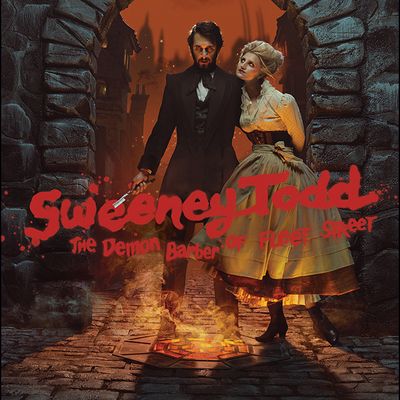
[21:43] Doug Reside: Right. When cable television became more popular, and there were a lot of legal reasons why that was possible in the late 70s, a lot of the theater owners thought they would begin to take advantage of the fact that you no longer had to find something that would get enough of a market on the five or six networks that were available. In America at that time, you could create more niche content, much like the early printed books. With cheaper printing, you could have more niche content. And so the Nederlanders and the Schuberts and others experimented with investing in recording their shows and putting them on these cable channels. Sondheim was one of those. Beginning with Sweeney Todd, they had done Pacific Overture for Japanese television.
He and Hal Prince were already kind of okay with it. And so they recorded the tour of Sweeney Todd and then did the original production of Sending the Park with George, which then started to appear on PBS alongside great works of opera and other things, which I argue in the book is what really kind of led to the apotheosis of Sondheim as more than just like a cult figure. New York Magazine asked to Stephen Sondheim God around that time. He was shooting up there into the ranks of the kinds of things that you watch on public television.
[22:30] David Armstrong: I think you're absolutely right. Those shows, unlike most other shows from the 70s and 80s because they got recorded for video, I think is why Sondheim has suddenly turned into a commercial property today after during his lifetime, for the most part, being a artistic property that would not return its investment.
[22:43] Doug Reside: That's right. Yeah. Why did those shows get recorded at the time? Because the producers wanted to invest in the art of them. Was that the incentive? Why is every Sondheim show recorded and most other shows not?
[22:56] Doug Reside: I think it's a little of both. You know, you knew that you were not going to make a lot of money on a Sondheim show. And so I think the negotiations with the unions was probably easier that there was this feeling that, well, movie stars get paid a lot more than stage stars. If you're going to make a movie of this thing, we need to be paid more like we get paid when we're in Hollywood or on television. In the case of a show like Sondheim, everybody kind of knew, well, this is for the art. This isn't going to be something that's going to make anybody money, but it's a good thing to do or it's a prestige thing to do or whatever. And so I think that kind of is one thing that made it easier for them to be recorded.
And also Sondheim was kind of his interest in games and technology. He was interested in these new forms. He talked about after Sweeney Todd that anything else they want to cabalize is fine with me. I think they had a composer who was both someone who was seen as kind of an art figure, but also very much in favor of having his work documented. Even in terms of stage productions, he was much more willing to allow people to do whatever they wanted to do with his work as long as it got done. I think Hal Prince was quoted about that at one point, saying Steve will let anybody do his show at any time as long as it gets done.
[23:44] David Armstrong: Yeah. Talk about some of these other video and film recordings that have fixed the canon.
[23:50] Doug Reside: Shortly after all the Sondheim shows started to get recorded, the sort of parent company of the company that was releasing the record albums or the CDs of the Andrew Lloyd Webber shows wanted to try to break into commercial video releases of his work. But I think because it was hard to argue that when you've got a show as successful as Cats or Phantom running on Broadway, those union negotiations, I suspect, were more difficult. And so they tended to be shows that were somewhere between a film and a live recording. So Cats was recorded in an empty theater with weird special effects added to it to kind of make it more movie-like. And not the original cast or the cast that was playing. It was sort of a put-together cast, like an all-star cast.
And they cut things that had changed. So I think Growl Tiger's Last Stand, which was different in England and in Broadway, I think is entirely removed from that video, as I remember. There's things like that that were always a little bit awkward on stage, even, that then got cut. And then since then have been routinely cut from productions of Cats. Which ties into your original thesis that these things then change the show.
[25:22] David Armstrong: You also talk about Legally Blonde, which had a whole different path. I remember when that came out on MTV, and that was a huge innovation at the time.
[25:31] Doug Reside: Yeah. So I think it was only allowed to be broadcast maybe six times, if I remember rightly, on MTV. But this was at the very beginning of the YouTube era. And so very shortly after it being broadcast on television legally, it was illegally streamed on all... I mean, this was the days of Google Video, and YouTube was starting to allow longer than short clips to be posted. And so people came to know the production of Legally Blonde across the country, and so it started to get produced all over the place. There's super cuts of people saying, "Courtney, take your break," because every high school has done, or a lot of high schools have done Legally Blonde. Every single one. Yeah. But Legally Blonde was not... I mean, it was successful-ish.
It wasn't like... You wouldn't have thought it would be this foundational work of American musical theater. Because it was not a hit on Broadway. It was certainly not a major hit. It was a minor, at best, hit, and not terribly successful on its tour. This has fixed it in the repertoire.
[26:25] David Armstrong: That's right. And I think that is important, that YouTube and YouTube videos are now kind of becoming the new Broadway channel, I think, that theater producers thought they were going to create in the early 1980s. I mean, there are things like Broadway HD and for-pay streaming services that do things legally, National Theater Live. But I think for a lot of kids across the country, YouTube is the place where they're encountering video of Broadway. And in fact, that's your next chapter, which is bootlegging the musical.
[26:47] Doug Reside: You are absolutely right. I teach young people, college students, and they see no problem with a bootleg. For them, often, if you talk about a show, that is the show for them, a bootleg version of it. Yeah. And I mean, bootlegging, as I talk about in the book, has been, even from the very beginning of Recorded Sound with the Mapleson Cylinders of Opera, people have been recording non-commercially recording performance and then increasingly illegally recording it. There's a whole subculture that I talk about in the 70s and early 80s of trading recordings in the pre-internet era at music stores in New York, places like Music Masters and to a certain extent, Colony Records, places like that.
[27:27] David Armstrong: That is a fascinating part of your book. Probably my favorite part of the book was hearing about the intrigue of you would go into certain music stores and have to say the right things and ask for things that were under the counter or hidden that you could then walk away with a video that somebody had to record in the theater with bulky recording equipment, bulky video equipment hidden in their trench coats or something. And you could walk away with practically any show.
[27:53] Doug Reside: Yeah. And of course, that's now what the internet has become. It's about the product, I suppose, and it's about the kind of work that is done to subvert the law to make it happen. But it's also that activity leads to communities being created, which is sort of interesting, too, that it certainly was the case in the 70s and 80s. And now online, if you look at the comments around YouTube videos, sometimes they'll link to somebody's trading list or whatever. And there's a whole kind of self-governing set of ethics around who can share what when and what the proper behaviors are, which is so funny for something that is at heart illegal. But there is a kind of self-governing system of laws, if you like, for that community.
[28:27] David Armstrong: To get personal in a way, because you are somebody in charge of an archive or partly in charge of an archive, what are the ethics of collecting these for an institution like the Library for the Performing Arts?
[28:44] Doug Reside: Yeah, I mean, it's complicated. And I don't know that there's a simple answer there. When we go out and record, we do it with the full permission of everybody involved. And you protected those videos extremely well. We will not see those videos anywhere except if we go to the library.
[28:57] David Armstrong: That's right. And it was really difficult to get that archive set up in the 70s. Betty Corwin, back in 1970, had to work really hard with the unions to convince them that this was worth doing and that it wouldn't be damaging to their members' livelihood to have these archival recordings available for research use at the Library for the Performing Arts. And of course, there are things that we didn't record. There's always the question of if we do get an archive, and often it's in the archives of the creators. A lot of times people will give us their papers, and in their papers, they will give us a bunch of video cassettes or CDs. And often we and they don't even know exactly what's on the tapes.
They just know that this is a box of tapes that have something to do with Showboat or whatever. And they give us that box. And then as we digitize the recordings, we find, oh, this is a soundboard recording or the video in the dressing room to the stage, whatever it's called.
[29:40] Doug Reside: The monitor. Yeah, the monitor in the dressing room. Somebody recorded that. And then those become historical artifacts of theatre that you don't necessarily want to get rid of, but they were probably not initially created with the permission of the estate. But I mean, this goes back to the days of Shakespeare that the earliest texts we have of Hamlet, like the first and second quarters, are probably created. Well, the editors of the first folio of Shakespeare say that in the past you were abused by copies of texts created with malformed and by surreptitious impostors or whatever. And so that folio was meant to create the official kind of complete symphonic recording of Shakespeare that would then supersede the bootlegs that had come before.
But today, those quarters are still really important witnesses to versions of the text that we don't have in the folio, in the same way that the official recording of any show shows what happened in the recording studio on the day that the record was made. But it isn't necessarily a faithful recording of what happened on any particular night in the theatre.
[30:34] David Armstrong: Exactly. I'm very ambivalent about this, although I'm not supportive of bootlegs of shows that are currently running on Broadway. I'm thrilled to have the bootlegs when the shows are no longer running on Broadway, and it's our only document of what that show was.
[30:48] Doug Reside: Yeah, I mean, in the early recordings I talk about in the book, the early recordings of Funny Girl and Gypsy were, it seems, basically commissioned by Julie Stein himself. The composer wanted a recording of it. It was a hired gun that did it. It wasn't Julie Stein sitting in the people that he hired. This still happens every day. I know composers who go to the soundboard guy and say, "Record the show tonight. I want a copy of it." And those exist all over the place. You're right. It is a complicated ethical question that we have to, I mean, at the library, we have to figure that out every time we do it. I mean, I think the nice thing is because we do have the Theatre on Film and Tape recordings, we do have legally produced recordings for the most part.
[31:23] David Armstrong: Right, correct. You know, credited with the agreements of the unions. And things that happened prior to the 1970s are probably less, you're less worried about. I mean, I love those home movies that sometimes got made of Broadway shows. June Havoc did those home movies of Pal Joey. They're silent, but they're thrilling. It's the only chance you see Gene Kelly in any segment of Pal Joey. It's priceless to have that. And yet that was illegal at the time. Whether anybody thought about it that way or not, I don't know.
[31:51] Doug Reside: Yeah, well, even, I mean, there's the night recordings of the guy from Florida who went up during the Depression, even with a new kind of home movie camera to record little silent bits of movies with a camera that would have been really loud at the time as he was using it in the audience. And, you know, occasionally you see Ray Bolger shake his finger at the cameraman at one point.
[32:06] David Armstrong: What show is that?
[32:07] Doug Reside: Where's Charlie, I think.
[32:08] David Armstrong: Oh, Where's Charlie.
[32:09] Doug Reside: Yeah, I think it's Where's Charlie. Anyway, it's one of those shows. But anyway, now Miles Kruger has those in his institution in California.
[32:15] David Armstrong: I know who Miles Kruger is, but I didn't realize he had quite that extensive archive. That's something I learned from your book. Chapter six is called Licensing the Musical. And this is different than publishing the musical. This is a different vehicle and a different reason. You reminded me in this chapter of Sides, which I recall very much from early summer stock days where I was, you know, a sailor in Anything Goes, and you would literally get a little booklet. If you had lines, we'd have your three lines and then the cue line and the line that came after. And that's all you got, partly because they were saving money on printing. Or was it a way to prevent people from pirating versions of the show?
[32:53] Doug Reside: I think it's a little of both. I mean, Tams Whitmark, in particular, back in the day, used to really use the Sides more than others. And they stuck with it for longer than everybody else did. We would have to look back through their own records to see whether it was actually cost saving, because then you have to create that package. The licensing editions, I guess, to your point, they're not meant for readers, they're meant for performance. And so they've got a lot of things added to them to help performers, but that may not necessarily make sense if you just wanted to read as you might a Fireside Theater edition in your study or your bedroom or whatever.
[33:20] David Armstrong: Licensing, really, initially, there were two threads of it. One was the music libraries. So back in the pre-internet days, if you wanted to even do an opera or Gilbert and Sullivan piece, regardless of the copyright, you still had to get access to the materials. Certain companies would lend out all of the parts to these music pieces, where you would have the flute part and the oboe part or whatever.
[33:40] Doug Reside: So the orchestral parts, especially, were what you absolutely needed in order to do the show.
[33:44] David Armstrong: That's right, yeah. It was both about protecting and managing the intellectual property, but also about just managing the physical materials of the thing. I think it was Tams and Whitmark kind of joined up as two different libraries that were more libraries in that sense of like lending out the material for operas and that kind of thing.
[33:57] Doug Reside: Rodgers and Hammerstein was originally a library as well, is that correct?
[34:03] David Armstrong: Yes, although they were also the licensor. They had the intellectual property. Whereas somewhere like Samuel French was both a kind of a publisher and also a licensor. So they would sell you copies of the script, but then they would also sell you the right to do the script. And I think in part because Samuel French focused predominantly on plays. They did do musicals, but they were real strengthless plays early on. They didn't have to manage quite the huge orchestral libraries that somewhere like Rodgers and Hammerstein did.
[34:29] Doug Reside: And then over the years, they wanted to support the companies to be able to do things that might be hard for an amateur group or a school group to do. So Samuel French used to have a costume library that you could check out the costumes. This was back in the early 20th century. They kind of moved away from that. But then in the 90s, they started to offer different ways to deal with the music. If your school didn't have an orchestra, let's say, and you couldn't get together enough people to actually play the sound of music, you could find different ways of either supplementing. I think that they've always kind of steered clear of saying replacing the orchestra because I think they don't want to encourage that necessarily.
But they've made it possible to do so, I suppose, with things like originally was rehearse the score, which was, as the name suggested, really intended for rehearsals. And since then, they've offered all sorts of new tools like projections for if you don't have someone that can paint your backdrop, you can't borrow a backdrop. You can now project them with things that are based on but maybe not designed by the original designers.
[35:22] David Armstrong: There used to be MTI conversation pieces where Sondheim would tell you about how to play Into the Woods or give you his thoughts on Into the Woods. And now there's talks from dancers teaching some of the original dance pieces. What's interesting is that the licensing of those non-textual and music parts is not as uniform as it is for music and text. The different companies have kind of figured out how to license. But when you do a show by the agreements, you have to do the text and the music as written. But you must not do the staging or design as it was originally done, because those elements are not licensed, typically, by the company, which is hard if you're doing something like Little Shop of Horrors or Avenue Q, which have these very kind of iconic puppets, let's say, that are part of the show.
[36:00] Doug Reside: Probably the big exception to that early on was Fiddler on the Roof, which did license the staging to it with an elaborate book of how to do that staging based on Jerome Robbins. And the advantage there is that his original staging, as brilliant as it was, it was something that was accomplishable by amateur groups or high school groups. And they did figure out a way to convey it that you could follow these instructions and recreate it to at least a great extent without a video. This is sort of pre-video and then post-video, obviously, even more so.
[36:33] David Armstrong: That's right. Yeah. And I think that's also because Jerome Robbins was as much an author of that text as Sheldon Harnick or Jerry Bach or Joseph Stein. And I think the same is kind of, I mean, it's not true in the sense of what you're talking about with the licensing, but like who the author of the text is, or like the auteur, I suppose, in the film sense of the word of the person, the kind of driving collaborator, is not always the person that wrote the words. Cabaret is an example of that, where Hal Prince was really the driver of at least the original production of Cabaret, even though he didn't write any of it, really.
[37:02] Doug Reside: And someone who became somewhat annoyed, I guess I'll just say, when productions for Cabaret do not include his original concepts, although he hasn't licensed his concept to be used, but they have veered away from the thinking that inspired the show.
[37:18] Doug Reside: The MC is a different entity in almost every revival of the show. In Hal Prince, he turns into a Nazi. In Sam Mendes, he turns into a concentration camp victim. And then in the newest version, he's something else. Who knows? But that's interesting because that character was entirely Hal Prince's. He saw somebody in a club in Germany after the war when he was stationed there and came back with that idea to be at the center of the show, which he gave to Kander and Ebb and Joe Mastroff, who then created a character. But it was Hal Prince's idea that then is no longer Hal Prince's idea when it goes on, or it's just a morph of his idea in later productions.
[38:00] Yeah, I mean, he talks about it in that Club Maxime's about even what the person looked like. And Joel Grey is physically similar to what Hal Prince's memories of that person was and very dissimilar to what Alan Cumming or Eddie Redmayne are.
[38:14] What are the aspects of the licensing process that fix these musicals?
[38:19] So it used to be that effectively, when you license a show, you got what was pulled off of the orchestra music stands and sent out. So they didn't do as much kind of editing of the text. And I remember even when I was in high school, music teachers complaining about the poor state from some licensing agencies, not all of them, but from some licensing agencies what you would get. And they essentially had to maybe not exactly reorchestrate, but they had to certainly do some musicology to make sense of the materials that they were given.
[38:43] Today, a lot of the licensing agencies have been bought and re-bought and have changed hands in a bunch of different places. Around that same time, a lot of the materials have been re-engraved in the sense that they've been digitized. Yeah, they've been put into things like the program formerly known as Finale and things like that so that they could actually standardize and license the material a little bit more. But what that means, too, is that it gives the writers a chance to rethink the show before it gets licensed. And so since the London production, you can't do the Broadway production of Jason Brown and Alfred Urie's Parade anymore. Like there's a new version of Parade, but then that's the version you have to license, even though it differs in some significant ways from the original Broadway production.
There's some cases like Cabaret or Anything Goes or Flower Drum Song, where you can choose which version you want to do. But in many cases, the show gets kind of one final draft or maybe not final, but it gets another draft that then becomes the authorized text of the show. And what's interesting there is a lot of times we think about what the authorized version of a manuscript or a book is. But in the case of musical theater, that authorization becomes very important because you literally cannot enact a version other than the one that is chosen by the rights holders, even if that is not the historical version of the text.
[39:50] Yeah, I mean, two examples of that that I know personally from trying to produce within the last 10 years or so are Annie, which has been changed by the authors since the original production, and you are no longer allowed to do the original version. To a greater extent, Grease is the one that has been the most changed. The original production of Grease, which was very raunchy and very transgressive in a lot of ways, they will not allow you to do that version at this point.
[40:18] Yeah, and it's interesting, too, that I think that what's made those changes, especially in the case of Grease, that's kind of a rewriting, like a significant rewriting, but in other cases it's kind of fiddling with the edges of it a little bit. And that may not have been worth it for the licensing agencies back in the pre-computer days, but now it's pretty easy just to change a few words in the word pile.
[40:38] When it goes to your point, the movie of Grease fixed a lot of elements of Grease in the public's mind significantly different from the urban Chicago setting it originally had to this California bubblegum setting of the movie. And then each Broadway version went further in that direction, further fixing Grease in the public mind as a family musical, which it didn't start out to be.
[41:04] And then the TV productions of Grease did the same thing. You delve into the future at the end. Fixing the future is the last chapter. What are your thoughts on the future? What's next?
[41:15] Yeah, I mean, apart from, I think, the AI and virtual reality stuff that I've already talked about, I do think it is interesting how the Broadway and premature maybe is beginning to matter a little bit less. And I think Be More Chill is a good example of that. But the fact that musicals that may never have even been near New York are starting to become some of the most listened to cast recordings, at least by younger audiences, might mean that in the future we're moving towards a period where it doesn't have to be on Broadway to become even part of the licensed and oft-performed repertory. I mean, once it starts to be that somebody is going to produce it on Broadway, but Broadway may not be the starting point. It may just be one production along the route.
[41:55] Again, this ties into my conversation about TikTok Broadway. Heathers is a show that I'm completely unaware of, and yet it has become a show that is very, very popular somehow with young people, even though it's never been produced on Broadway. I guess it was done off-Broadway. I think produced more successfully in the West End, but is part of the repertoire now in terms of young audiences' minds.
[42:45] Yeah, there was a time when even if a show wouldn't work on Broadway, there was a desire to bring it to Broadway for a minute so that you could license it as the off-Broadway version. I've heard that Disney's Newsies was originally thought to be something like that. They didn't expect it to be nearly as successful as it was on Broadway, but knew they wanted people to say the Broadway musical Newsies in order to turn it into a licensed piece. I think that that may not be as important. It's possible now to have widely distributed recordings that people across the country are listening to that never were on Broadway. Sort of like the network to cable television to YouTube, the same kind of democratizing path of technology has made it possible for cast recordings that were created in the University of Michigan to now be some of the most popular recordings that kids listen to.
[43:43] Yeah, it's the same thing. I can produce a podcast and send it out around the world. On my own, it's that exact same technology. It's just now completely democratized. So that will be fascinating to see what comes from that, to see what's next.
[43:56] I mean, and I do think that there's a lot of hand-wringing, and I think to some extent it's justified about the way that AI might replace artists. I do wonder, are there parts of the artistic creation process that will enable artists who couldn't have had their voices heard before because they couldn't afford to pay orchestrators or an orchestra or do a really sophisticated demo, who now can essentially write their songs themselves with their own brain, feed it through an AI machine that orchestrates and plays it as if it were played by a professional orchestra? There certainly is a way in which the artists who are musicians are losing out in that sense, but we may hear different newer voices that couldn't afford to pay those musicians in the near future.
[44:34] I have so many mixed feelings and emotions about that idea because the labor part of it is so much part of what I cherish about theatrical events. The people involved and the work that they contribute to it from a tangible labor standpoint, but that'll be interesting to see.
[44:52] As every other business goes digital in some way, it's the same issue. I mean, I think it's interesting just to look back at the beginning of our conversation that Oklahoma is considered the kind of innovation that it is in large part. Larry Maslin makes this point in his book, From Broadway to Main Street, because of the musician strike that really kept shows like Lady in the Dark or Pal Joey from being recorded in quite the same way. It's hard to really differentiate Oklahoma in any meaningful way from some of those other shows that came out during this time when the musicians were concerned about the way that radio and recorded music was beginning to replace them. Up until around that point, if you wanted to hear music, you had to hire a band.
Around that time, it was possible if you wanted to hear music to play it over the speakers in the hotel or whatever. You didn't have to have the hotel lobby orchestra playing whenever you came in. That did dramatically change the music industry and put a lot of musicians out of work. It's not a new phenomenon, and it's not necessarily a good one or maybe even a bad one, but these technologies change the way that we create musicals and receive them.
[45:48] I think that's a perfect way to end the conversation.
[45:51] In the next few months at the library, what can people look forward to?
[45:54] We've got a really great slate of public programs next year. Part of it's really going to be supplemented by the new Harvey Fierstein Theater Lab, which opens next month. This is a little black box space that Harvey Fierstein gave us funds to build. It'll be both an education space where people that maybe need to learn about, speaking of technologies, the technologies that have come out since they were last in grad school or in undergrad, they can learn and use them in the space to bring their skills up to date if they need to. But it will also be a space we hope that readings can happen in, hoping to help give new life to some of the texts that are in the collection that maybe are not as well known as they maybe should be.
Things like we have the archives of Liz Suedos and Michael Friedman, and we were working a lot with the Mickey Grant Estate to think about some of these shows that are really, really pretty great, but didn't get to be seen during their initial runs or during their composers' lifetimes. So I hope there'll be a lot of really interesting work happening in that lab and also in the Bruno Walter Stage.
[46:44] And then in the fall of next year, so that's in the fall of 2025, a professor at NYU, Michael Dinwiddie, is curating a show on Black musical theatre, the history of Black musical theatre, which will be a really interesting kind of 150-year view of some really great shows, many of which listeners will probably know, but others they may learn about for the first time in the exhibition. I definitely will be coming to New York for that. I think the thing maybe that your listeners should know, too, is that anyone is welcome to use our collections, particularly the archival collections. You don't have to have any special qualification. You certainly don't have to be from New York to use any of them.
We can get you a library card regardless of where you live in the world within a few minutes, and you can use anything we've got. The Theatre on Film and Tape collection, you have to be a researcher, a student, or an artist, and you define which of those you are. As long as you're one of those things, you can come watch those as well.
[47:30] Doug Reside: It has been so great to have you today on Broadway Nation to talk about your new book, Fixing the Musical. Thank you. It was really fun to talk to you.
[47:48] ♪ Musical number: "Martha Dumbtruck in the Flesh" — performed by the cast of Heathers ♪
[48:53] If you love this podcast and want to delve even deeper into the world of Broadway musicals, I invite you to become a patron of Broadway Nation. For as little as $7 a month, you can receive exclusive access to never-before-heard, unedited versions of many of the interviews featured on this podcast. I often record twice as much conversation as ends up in the edited public episodes. And you also have the exclusive opportunity to hear additional in-depth conversations with my frequent co-host, Albert Evans. And all patrons will receive special on-air shout-outs and acknowledgments of your vital support. To join, simply go to broadwaynationpodcast.supercast.tech. That's all one word, broadwaynationpodcast.supercast.tech. Or simply click the link in the show notes to this episode. Broadway Nation is written and produced by me, David Armstrong. Special thanks to Powell's Mocs for his help with editing this episode, and to the entire team at the Broadway Podcast Network.
© Broadway Podcast Network, All Rights Reserved