

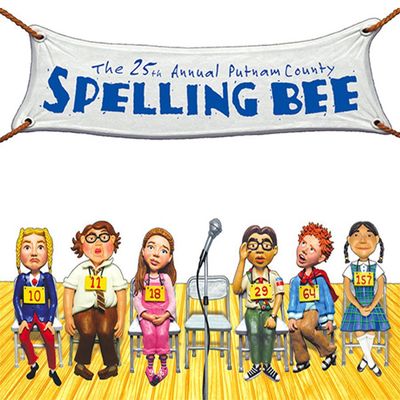
Amazingly, this year marks the 20th Anniversary of the Broadway musical The 25th Annual Putnam County Spelling Bee. In 2005, after an incredibly short development period, opened first off-Broadway at Second Stage Theater, and quickly moved to Circle in the Square Theatre on Broadway... Read More
From the show: BROADWAY NATION
Featured Shows
About
Amazingly, this year marks the 20th Anniversary of the Broadway musical The 25th Annual Putnam County Spelling Bee.
In 2005, after an incredibly short development period, opened first off-Broadway at Second Stage Theater, and quickly moved to Circle in the Square Theatre on Broadway. It was nominated for six Tony Awards and won two, including “Best Book of a Musical,” and the show would go on to run for 1,136 performances and be produced around the world.
In celebration of that anniversary, two new productions will open this fall. Off-Broadway at New World Stages, performances are scheduled to begin on November 27, and next week, on October 21, Spelling Bee will open at Theater Under the Stars in Houston, Texas, where it is directed and choreographed by my guest today, TUTS’s Artistic Director, Dan Knechtges. Not coincidentally, Knechtges made his Broadway debut as the choreographer of the original production, and as you will hear, he was actively involved in every stage of that musical’s development from its very first incarnation working closely with composer/lyricist William Finn, and director, James Lapine.
Knechtges’ other Broadway credits includes the choreography of Sondheim On Sondheim, the revival of 110 in the Shade, and Xanadu, for which he received a Tony Award nomination, and the direction and choreography of the musical Lysistrata Jones.
Become A PATRON of Broadway Nation!
This episode is made possible in part through the generous support of our Patron Club Members.
If you are a fan of Broadway Nation, I invite you to become a PATRON! For as little as $7.00 a month, you can receive exclusive access to never-before-heard, unedited versions of many of the discussions that I have with my guests — in fact, I often record nearly twice as much conversation as ends up in the edited versions. You will also have access to additional, in-depth conversations with my frequent co-host, Albert Evans, that have not been featured on the podcast. And all patrons receive special “on-air” shout-outs and acknowledgement of your vital support of this podcast.
And if you are very enthusiastic about Broadway Nation, there are additional PATRON levels that come with even more benefits.
If you would like to support the work of Broadway Nation and receive these exclusive member benefits, please click on this link:
https://broadwaynationpodcast.supercast.tech/
Thank you in advance for your support!
Transcript
This transcript was automatically generated and might contain errors.
[0:30] David Armstrong: Welcome to another episode of Broadway Nation, the podcast that tells the remarkable story of how immigrant, Jewish, queer, and black artists invented the Broadway musical. Amazingly, this year marks the 20th anniversary of the hilarious Broadway musical, The 25th Annual Putnam County Spelling Bee, which, after a short development period, first opened off-Broadway at Second Stage Theatre and then quickly moved to Circle in the Square Theatre on Broadway in May of 2005, where it was nominated for six Tony Awards and won two, including Best Book of a Musical. It would go on to run for 1,136 performances and be produced around the world. In celebration of that anniversary, two new productions will open this fall, including off-Broadway at New World Stages, where performances are scheduled to begin on November 27th, and a month before that, on October 21st, Spelling Bee will open at Theatre Under the Stars in Houston, Texas, where it will be directed and choreographed by my guest today, TUTS's artistic director, Dan Knechtges, who not coincidentally was Spelling Bee's original choreographer.
And as you will hear, he was actively involved in every stage of that musical's development from its very first incarnation. Knechtges's other work on Broadway includes the choreography of Sondheim on Sondheim, the revival of 110 in the Shade, and Xanadu, for which he received a Tony Award nomination, as well as the direction and choreography of the musical Lysistrata Jones. Broadway Nation is made possible in part through the generous support of our patron club members, such as Barbara Weschler. If you enjoy this podcast, your support will be greatly appreciated, and there'll be information at the end of the episode about how you, too, can become a patron. Here we go. Dan Knechtges, welcome to Broadway Nation. It is delightful to have you here today to talk about your new 20th anniversary production of The 25th Annual Putnam County Spelling Bee.
[2:36] Dan Knechtges: What a pleasure. Thank you, David, for having me on. What a joy to be able to talk about this show with you.
[2:42] David Armstrong: Well, and you have a long history with the show because you made your Broadway debut as the choreographer of the original Broadway production.
[2:50] Dan Knechtges: I did. I went from having no New York credits outside of a few showcases, if they even do showcases anymore, to having an off-Broadway and a Broadway show in the exact same season. The story of how quickly the real musical of Spelling Bee came to be is just astounding when I think about it. When we were making it, we didn't think about that. We just did it, and it was so quick. I think it's something like 14 months from when it started.
[3:24] David Armstrong: Well, talk us through that. This, of course, is a history podcast. Now, amazingly, The 25th Annual Putnam County Spelling Bee is part of the history of Broadway now. We're 20 years on, and it has become, I believe, one of the most produced shows in America.
[3:38] Dan Knechtges: I'm glad you mentioned that, too, because I think that's also part of the history of Broadway, right? One is the legacy and how many productions happen out of it. I also kind of judge the legacy by how many people come in and audition with those songs or have those on their resume. Certainly, Spelling Bee has proven the test of time. The other kind of legacy is how many people got their start and came from that original cast and then all of the replacement casts. It's really incredible, and I feel really honored to be a part of that legacy and being in that family.
[4:17] Dan Knechtges: It came about, you know, long story short is I had been in New York about roughly 10 years really wanting to be a choreographer and, of course, secretly wanting to be a director choreographer. I had not gotten farther than, let's say, and maybe a few other small things within New York, but nothing really, really big. My parents would always come to New York, best parents ever from Ohio, very supportive, and they would always take me. They loved theater, too, and we would go to see all these shows that I wouldn't be able to afford and go to these dinners I wouldn't be able to afford. I'm eating peanut butter and jelly. At that time, I had so much debt. I had maybe $1,800 of credit card debt, and I thought they were going to lock me up with that much debt.
I just laugh at that now. I had a complete mental breakdown on my parents. I just could not stop crying because I felt like I had not had the career I wanted. I had failed myself and lost my way, and I think I really scared my parents, and it was the middle of January. It was really, really cold, and it was January of 2004.
[5:36] Dan Knechtges: Previous to that, I had done a bunch of side gigs while I choreographed anything anybody would ask me to do, but one of the things I used to do was paralegal. My dad said, you need to get back on a schedule and paralegal, and at nights you can choreograph, and something will happen, and you'll feel much better about yourself because the first thing is you've got to get your mind in order. I was like, who the heck is this? I was like, you're crazy and all of this. So I'm so bullheaded, but I did listen and got back on paralegaling. I was working out in the mornings going to paralegaling, and then I was choreographing this group called the Blue Hill Troop. They do Gilbert and Sullivan. I think they just celebrated their 100th year, but it's basically community theater, so I was choreographing that at night, and I actually did.
I felt so much better. Four weeks into that, I get a call from my friend Donna Harrell, who this is also a side story, but I think it's really great in terms of history and also people wanting to get into the business. She was at this point the artistic associate at Barrington Stage Company, but previous to that, Donna was the assistant on a production of Joseph that I had choreographed, and she was the assistant director at the Hangar Theater. She was impressed with me. We became friends. We kept up with each other, just socially, nothing too deep. She called and she said, hey, I have a workshop of a show that we need somebody to come in and choreograph this coming weekend. This was like on a Monday, and I can't pay you, but I've convinced them that you're the right choreographer.
And I was like, well, I just kind of got my life together. I can do that. And she goes, well, it's this thing that Bill Finn wrote, and it's called Spelling Bee. And I was like, Bill Finn? I was like, okay, well, let me think about this. And I took like a day. I actually took a day. I didn't think about this. What a dumb, dumb, dumb I was. But I called her the next morning. I said, okay, I'll do it, even though I've gotten this correct.
[8:02] Dan Knechtges: And she goes, okay, well, one thing I need to tell you is they asked Graziella Daniele to do it, but she said no because it was too quick. It's up in the Berkshires, middle of winter. Will you come up and do it? But Bill Finn said you can only do two numbers. And I said, okay, well, send me the script and any music. She goes, well, there's no real recordings yet. So when you come up on Saturday morning, you'll hear them and then you can watch rehearsal and then on Sunday just stage them. And I was like, okay, great. I ended up going up and those two numbers, one was Magic Foot, which was not quite the Magic Foot that you hear. And the other was Pandemonium, which pretty much was the Pandemonium you hear.
Really nice director who I'm still very good friends with directed that workshop. I don't know if I'm allowed to say his name, so I'm going to keep it close to the vest, but was in a little bit over their heads, let's say. I came in, I watched, and it was so many crazy people trying to make sense of, you know, they didn't really have a show. The show was a play that was an improv group and the play was called Crepuscule. It was a bunch of people that all knew each other. I think some had gone to college with each other and I'm forgetting all of the intricacies. But the one important thing here is Sarah Salzberg, who was playing Logan Schwartz in Grubenier, had created this character. There was no music.
They had guest spellers, but they were these crazy kids spelling. She was Wendy Wasserstein's nanny. Wow. The play Off-Broadway was a big hit and Wendy came and saw it and she said, this should be a musical. It was Wendy. And Sarah went to go meet with her best friend, William Finn. Apparently at this meeting, Bill Finn said, I'll write the musical. He just said it like that. There was no real meeting, I guess. Cut to they're doing a workshop. No music has really been written, but, you know, Bill was in another room kind of tinkering away. Rebecca Feldman, who was playing Olive, she created the character of Olive, but she also created the idea of Spelling Bee. So she had three roles. She was co-directing, playing Olive, co-writing.
A lot of hats, as we know how that goes. It kind of went with this too, what happened. But she came up along with the director, gave me a ton of notes about what they were thinking and all of this. And I bravely, you know, I have a lot of things that aren't good about my work, but one of my traits is I'm really good with non-dancers and really making them feel like I've got their concerns and they trust me that I'm going to make them look good. And to do it with humor and with some sense of showbiz. And somehow I convinced these actors to get up and start doing things. Sarah Salzberg says to this day, man, you really came in and you took people who literally cannot dance and made us look good.
I created all of these like stupid things that they were doing and I left. I didn't see how any of it progressed. They all thanked me profusely. I think maybe Bill talked to me two or three times, but that was it. I get back on a Sunday night. I go straight to work on Monday morning at 10 a.m. I get a call, a number I don't know. And it's Bill Finn. He says, hi, it's Bill. And I was like, hi. And he goes, I need you to come up and stage all the other musical numbers because we're having people come in and the director doesn't know how to stage musical numbers. I need you to come in and do them all. And I was like, okay, I only really have two days. He goes, can you stage 10 musical numbers in two days?
And I said, yes. This is the lesson, David. Say yes. Always say yes. Always say yes because you can say no later or you can fail later, but you can't fail unless you say yes. So I said yes. And I'm like, oh my gosh, I'm out of my mind crazy. And so that whole week I studied that script and there really wasn't music. There weren't recordings I could hear. Were there lyrics in the script? There were lyrics to some things, but not everything.
[12:15] David Armstrong: Welcome to Broadway Nation, the podcast that celebrates the cultural history of the Broadway musical. Today, we are marking a significant milestone—the 20th anniversary of the beloved musical, The 25th Annual Putnam County Spelling Bee.
[12:45] David Armstrong: This show first opened off-Broadway at Second Stage Theater in 2005, after a remarkably short development period, and quickly made its way to Circle in the Square Theatre on Broadway. It was nominated for six Tony Awards and won two, including Best Book of a Musical.
[13:09] David Armstrong: The 25th Annual Putnam County Spelling Bee ran for an impressive 1,136 performances and has been produced around the world. To celebrate this anniversary, two new productions are set to open this fall.
[13:33] David Armstrong: One will be off-Broadway at New World Stages, with performances beginning on November 27, and the other will open next week, on October 21, at Theater Under the Stars in Houston, Texas.
[14:01] David Armstrong: I’m thrilled to have as my guest today Dan Knechtges, the Artistic Director of TUTS, who is directing and choreographing the Houston production.
[14:29] David Armstrong: Dan made his Broadway debut as the choreographer of the original production of Spelling Bee and was actively involved in every stage of its development, working closely with composer and lyricist William Finn and director James Lapine.
[14:57] David Armstrong: His other Broadway credits include the choreography for Sondheim On Sondheim, the revival of 110 in the Shade, and Xanadu, for which he received a Tony Award nomination. He also directed and choreographed the musical Lysistrata Jones.
[15:25] David Armstrong: Dan, welcome to Broadway Nation!
[15:53] Dan Knechtges: Thank you so much for having me, David!
[16:21] David Armstrong: It's a pleasure to have you here. Let's dive into the history of The 25th Annual Putnam County Spelling Bee.
[16:51] Dan Knechtges: Absolutely! It's hard to believe it's been 20 years since we first brought this show to life.
[17:19] David Armstrong: What do you think has contributed to its lasting appeal?
[17:47] Dan Knechtges: I think the show's unique blend of humor, heart, and relatable characters resonates with audiences of all ages.
[18:15] David Armstrong: And the music is so catchy!
[18:44] Dan Knechtges: Yes, William Finn's score is both clever and heartfelt, which really enhances the storytelling.
[19:14] David Armstrong: Can you share some of your favorite memories from the original production?
[19:44] Dan Knechtges: There are so many! One that stands out is the incredible energy from the cast during the performances.
[20:14] David Armstrong: That energy is infectious!
[20:44] Dan Knechtges: It truly is. The audience's reactions were always a highlight for us.
[21:14] David Armstrong: As you prepare for the new production in Houston, what are you most excited about?
[21:39] Dan Knechtges: I'm excited to see how a new cast brings their own interpretations to these beloved characters.
[22:07] David Armstrong: It must be rewarding to see the show continue to evolve.
[22:36] Dan Knechtges: Absolutely! Each production has its own unique flavor, and that's what keeps it fresh.
[23:04] David Armstrong: Thank you for sharing your insights, Dan.
[23:33] Dan Knechtges: Thank you for having me, David!
[24:01] David Armstrong: And thank you to our listeners for joining us today on Broadway Nation.
[24:31] Dan Knechtges: And something that I didn't know it aligned with me. One funny story I also about the creation of new work is so rough and it's funny. So we, in the summer production, I had all of the music for six languages. I was like, Oh gosh, I think what I really should be doing with this is making her do all these impossible things. Everybody had all these ideas, but I was the drum major of my high school band in Ohio.
[24:59] David Armstrong: Of course you were.
[25:00] Dan Knechtges: Partly I wanted to do it because I wanted to goof off with the majorettes. Well, goofing off with the majorettes, I learned how to be a champion baton twirler. And I was like, I'm going to teach her to twirl baton. I made her do all these other things, including trying to do trick hook shots with the basketball and you know, all of this. And everyone was like, we'll stage it. I was like, no, it all has to be real. That's the only thing that'll be funny. And then her playing piano, they had come up with, but I said, let's do this. So Bill was having an argument with the director in the back of the theater. And I'm up there teaching her to twirl baton and she's doing it really well. And I hear from the back of the theater in Bill Finn's very gruff baritone, you are so gay.
What is that? And literally the whole cast yelled, shut up, Bill. So they kept going and it stuck. That number pretty much was what you saw off Broadway. It really did not change much because she was like Marcy Park. Deborah was she was she worked, worked, worked. But you have to have a thick skin because if you know that moment works or your idea works, you really have to fight for it in this kind of it's an annoying thing, but it's like a melting pot, basically, like a creative cauldron, creative cauldron.
[26:22] Dan Knechtges: Anyways, the other kind of thing that really did not change was there's a ballet. We called it the ballet near the end of the show. I will not come in second. The competition between Barfa and Olive, that ballet is the exact ballet that I choreographed for the summer production. It did not change one step. It was going to change one step, but I'll get to that story in a minute. But in the script, it was like it looked like the original Oscar Hammerstein Dream Ballet for Oklahoma, which was like they grow up and all of the spellers become kids and then they all go to spelling B's and do all of these things. And I was like, it's about their admiration and a potential, you know, growing into a sweet moment and love.
And I said, I'm going to do this. I was like Agnes DeMille. I'm channeling Agnes DeMille here. I did a very short ballet. Vadim, who is the music director, wrote up this kind of Rachmaninoff kind of thing to make it. And it literally was done in like 15 minutes. It was so fast. I convinced Celia. I was like, Celia, can I try this bluebird lift? And she goes, sure. She was amazing. And I was like, Dan. And he was like, yeah, give it to me. Went up, did it. And I was like, that'd be really great if you promenade. He goes, no problem. Promenade down, turn around, do the dirty dancing. You're out. It was great. And literally everybody that moment. And I was like, oh, it's something I really didn't think that much about really became a central kind of thing that I love about musical theater is that when you cut that, which we did in previews in New York, you do not get the lift and the emotional story and the emotional payoff that you do with it.
And so I'll jump a step. When we get to New York, James Lapine, who is brilliant, is trying to see what's necessary, what works. He cut it. And that night, Bill was screaming at James. And I don't know why I didn't, but I just relaxed into it because I knew what was going to happen. He screamed, he screamed, he screamed. That goes back in. You are not allowed to cut it. And sure enough, it went back in and James agreed. Yeah, we need it. But we needed to see what it would be like without it. Anyways, that summer, none of us knew what we were doing. Oh, and in the summer production, Jen Caprio came on as costume. Beowulf Borat came on as the set designer. I'm forgetting all the others. But those two, they went all the way with the show as well. So talk us. How does James Lapine now come into the picture?
[29:05] Dan Knechtges: So summer production happened. It had already been commercially enhanced. I did not know this at the time, but producers had come to the workshop. Loved it. Bill, I'm sure, brought them up. They had commercially enhanced the summer production for a whopping $80,000, which we laugh. You know, La Jolla, I think, is up to four million now. So, you know, these numbers, it's a lot. So they had come up. And so Second Stage had agreed to do a production of it. And I guess there was a bidding where I found this out. Now I can tell a little bit about is that Playwrights Horizons wanted the show and they had gone back and forth with the commercial producers and Second Stage. But Second Stage won out. And I believe that's because Second Stage, Carol Rothman, who is artistic director and the founder, had a relationship with both James Lapine and Bill Finn.
So that was going on. But at the time, the commercial producer, of which David Stone was really leading that consortium, he and James Lapine had a very close relationship. They were bringing James on in terms of they wanted somebody who had a commercial theater record and a Broadway reputation. I was like, oh, gosh, well, here goes me. I'm going to be out the door. I got a call from James's office saying they would like to interview you. And I get a call the day before from Bill Finn. And he's like, OK, Bill called me Danographer. That's my name. So he said, Danographer, you're going to go in to meet James. I've told him he must hire you. That is not an option. And James told me I'm going to hire who I want and I'm going to interview who I want.
And he said, which I understand, but I'm really fighting for you. And he said, don't fuck it up. And I was like, there was no help in any of that. I go in. He had an office at the Schubert's and it's, you know, right next to the St. James and the Schubert's dining room or, you know, I had never been in a room that looked like this. And, you know, I'm pinching myself meeting even more so than Bill Finn to me as meeting James Lapine, who I know I'm maybe a generation behind you. But in college, Into the Woods and Sunday in the Park were revered works of musical theater. Of course, at the forefront of that is Lapine, who basically gave Sondheim his second act. I couldn't believe I was meeting him.
It was a little bit of a small talk. He's not always, you know, at first the most gregarious. But I know what he was doing is he was sizing me up. Sure. I don't know what happened, how I had this, but I can be pretty salty and I'm quick witted. So thank God that was there. And this is also a great story about creating a new work, especially audience participation is James said to me, well, I saw the summer production and you did one thing that was good.
[32:05] Dan Knechtges: Oh, one thing. That's it. And he goes, yeah, you know, that number pandemonium. I said, oh, yeah, pandemonium. And he goes, you know where you got the guest spellers to get up and dance? And I was like, that was a story. And he said, I think you can do better. And I was like, I know I can do better. But guess what happened? And he said, what? I said, I had to have a 30 minute convincing of the actors that this was going to work. They were convinced that the guest spellers would not want to get up and dance with them. And at that point, it was just a little bit. It wasn't what it became. And Celia Keenan-Bolger, the sweetest person ever. They picked her to be the spokesperson to come talk to me.
And it was in front of them and she's leading them. And they were like, we do not think this will work. We don't want to do it. You know, all of these things, you know, part of being a director and a choreographer, so much of that is having those powers of persuasion. And sometimes it is dictatorship. But most of the time it really is convincing. So finally, I said, listen, let's try it once. And if it doesn't work, we can adjust or we can cut it. What you can imagine what happened is that night the audience went nuts when those audience guest spellers got up and they're sitting there doing their little dance with them, which I'm saying dance, but it's no dance. All they're doing is moving back and forth and shaking their butt.
That's all it took. And the audience went nuts. So James goes, can you do better? And I was like, yes, but that and he goes, well, you have me to blame now. You probably didn't have that before. And I was like, no. And he goes, great. Cut to end of the meeting. And I didn't know how it went. And so for two weeks, I did not know a thing. And finally, I called my friend who was his assistant. I was like, hey, I haven't heard anything. And he goes, oh, yeah. Rehearsals start. And I was like, what? What? I'm going to be doing an off Broadway show, not only an off Broadway at the revered second stage with James Lapine and Bill Fenn, and they go, yeah, the rehearsal starts here. And I was like, I could not believe it was happening.
And that's how it happened. But one thing I will say, not so much about me, but about the work is in the summer production, it was funny, funny, funny. I mean, it literally people were saying that they had not laughed that hard in so long. And it's still true. Every time I've seen, you know, little clips, it is just so funny. And part of it is, is there's four audience guest spellers. It changes the show every night. But the biggest contribution that James gave was a structure to that improv, meaning that there are a couple of secrets within how to manipulate or persuade how the evening is going to go. And the big thing that James gave was heart. Barfait was played totally for laughs through the whole summer production.
And James tweaked every one of those performances in ways that I could not believe it was such good training for me. Even Celia, Celia was incredible in that summer production. But then what she did on Broadway, it was like she had a three act play going every time she did something. James got, you know, I also say the hallmark of great directing is everybody is acting in the same play. It's literally to me when I'm hiring directors. Here is the first thing is everybody acting in the same play. And as you know, this play is so wackadoo that like you could have somebody doing a Beckett play and somebody doing Hello, Dolly over here. But they all have to be within the same play. And James really fine-tuned all of those performances to all be in the same play.
And he gave it so much heart. It really would not be the same play without James. He really did make the show. What I find interesting, because it's not what I thought had happened the way you just related the way this all came together. James and William Finn had a long relationship together before this. But James comes then late into this project. What was their relationship? Their relationship in the project, it's like or I think of James as being a really good editor for Bill and the workshop in the summer production. Bill did not have that. I'm sure that went into the decision of hiring James. And that's nothing to do with the previous directors, myself or any of the actors or even Julie Boyd, who is also a good editor in her own right, good producer in her own right. But somehow James is so blind.
[36:48] Dan Knechtges: That Bill really trusts his taste level as well. I won a few things with Bill early in the process and they actually stayed in the show. I guess it shows that Bill also knew that they were good too. There's another great moment at the end of the play. It's like the very last couple of measures that I just threw in as like didn't even think of this in the workshop. There were like 10 minutes left before I had to leave. I just had everybody line up and every character reacted to the trophy coming down the line and Marcy Park went like this and Barfay hugged it and then Rona Lisa Peretti got it at the very end. It was everybody reacting and Bill was like, that's gold. And I was like, okay, that's Summerstock Playbook 101.
But that stayed in. James loved it too. Maybe James was the best editor for Bill. There's a great lyric that James wanted out of the show. He gave this note a million times and Bill refused. And I'm so glad Bill refused. In the I Love You song, Rona Lisa sings, blame it on your daddily-mammily because depression runs in the family. And James was like, that is the worst lyric ever. You've got to get that out. Yeah, he hated that. And Bill didn't do it, which I'm so glad because again, it's so Bill is that in that very gut-wrenching song right at the beginning, he gives a laugh. It's laughter through tears, which is the hallmark of Bill.
[38:19] Dan Knechtges: Comerical. C-H-I-M-E-R-I-C-A-L. Highly unrealistic. Wildly fanciful.
[38:28] That is correct.
[38:40] David Armstrong: Don't go away. Dan and I will be back with more Broadway Nation right after this quick break.
[38:49] David Armstrong: Hi, this is David Armstrong, and if you're enjoying this episode, I strongly suspect that you will want to read my new book, Broadway Nation, How Immigrant Jewish Queer and Black Artist Invented the Broadway Musical. On sale now wherever books are sold, and I'm very happy to report that the early reviews have been terrific. The esteemed author Jeffrey Block says that Broadway Nation is a fascinating, comprehensive, and timely gem of a book that more than lives up to its promise of delivering no less than five books in one. Kudos to David Armstrong. And Tony Award-winning lyricist David Zippel says that David Armstrong's insightful history of the evolution of the Broadway musical and its creators is captivating and comprehensive as well as indispensable.
The book is of course available on Amazon, but I recommend that you go to the publisher's website, bloomsbury.com, where you will currently receive a 10% discount. Again, like the podcast that inspired it, the book is titled Broadway Nation, How Immigrant Jewish Queer and Black Artist Invented the Broadway Musical. Now back to the show.
[40:04] David Armstrong: During the process, first at Second Stage and then going to Broadway, how much of the show changed during that process?
[40:12] Dan Knechtges: It really did not change, I don't think, that much in the writing. I think what really, really changed was the performances were amped up and everything was really minutely tweaked. There was a great moment that as James watched the show, like this is another thing why I think some directors, choreographers are great at new musicals and some are great at revivals, and they're rarely people who are good at both, and why James is so good at new work. Since then, I directed a play off Broadway called Tailspin that was like four segments of it, and James came and gave me notes. He gave me notes on Lysistrata Jones downtown, and he gave me the most brilliant notes. They were really high-level kind of notes.
While Spelling Bee was in previews, we had long previews. I want to say it was like three weeks of previews, which we really needed because they're guest spellers, and he just minutely tried new things, like Coney Bear falling off the bleachers at an impromptu moment. There's a time, and it just happened by happenstance that James did not like at the time the number pandemonium. Part of it was getting into it, and he crafted this moment where the guest speller going into it would get the very easiest word of the whole night to spell. And he told them it had to be something even simpler than what they had, and so James was like, say cow. That night, that number worked the best it ever worked, and again, it's the setup.
The setup made the number work. The kids in the show, he said, you should get really worked up that this person gets cow. And then as things worked, then Jay Reese, who was coming up with a lot of the definitions, when they said, please use it in a sentence, he said, please spell cow, which killed. And then they launch into the song, which as you know, it's like launching into a song with that kind of laughter is everything. But that really is, I think, kind of the hallmark of what I remember most about that is it was so many little things that added up to this huge, huge payoff. I mean, the audience loved it the first time from the very first preview. But man, by the time we opened, and those reviews off-Broadway, you thought we had created the next chorus song. And again, I thought we were just going to get an off-Broadway run. I didn't think we were going to get a Broadway transfer the same season.
[42:56] David Armstrong: And the sort of environmental staging aspect of it, that was part of the concept from the beginning? Or was that something that was changed for Circle in the Square?
[43:00] Dan Knechtges: It was changed for Circle in the Square. But previously, I had done it in a gymnatorium, which was not really environmental, but we were running around the audience. They did it for a one night only because they were sold out up in Barrington. So for one night, they did it in a big auditorium, and I restaged it in one day for that. Then we staged it for Intimate Second Stage. And then when we went into three quarters, we had no rehearsal. We just did tech. And so we were changing it in tech. And so we had to adjust it for all of those moments there. And in some ways, the brilliance of the construct of a Spelling Bee worked in all of those arenas, which I loved. I hated all that work that went into it.
It's like I staged it six different ways in one year. But I wasn't going to complain. I mean, I'm working with James and Bill, and I had such great relationships with both of them. I still do with James, but sadly, Bill passed away last year. But the Broadway opening, the day that we opened on Broadway, were the Lucille Lortel Awards. And I had to go stage a number for the Lortel Awards and then get into my tux and come to opening night. And we called it the season of too much dress up because we had off-Broadway awards, we had Broadway awards. It almost went too fast, but it's so many good memories. And there wasn't that much drama, truth be told. It was a lot of hard work.
[44:32] David Armstrong: So now it's 20 years later, and you're approaching the show now as the director and the choreographer. Do you have different thoughts about it when you read it again, when you revisited it to design it and go into rehearsals for it? Did it feel differently to you now as a different person? You're 20 years older.
[44:50] Dan Knechtges: Oh, yeah. You know, earlier what I said kind of applies is that I didn't really weigh the scales in terms of the heart of the show. I felt it certainly at the time. But now I think having done countless new musicals, you know, most not as well written as Spelling Bee was and how hard they are, several I've done with you at Fifth Avenue. I have such an appreciation for the heart that James really helped bring out in all of our work. One instance, we were doing the ballet, you know, that I'd spoken about a little bit before. Barfey and Olive were doing it like kids would do it. And James said to me, why are they dancing so shitty? Can't you get them to dance better? I was like, no, they're dancing like what kids would dance like.
And he goes, no, the costumes are going to tell them that they're kids. Make them dance as well as that, you know, Dan and Celia can dance. And I was like, oh. And the minute we did that, people were still charmed by it, but they were moved in a way. As I'm going back now, I'm like, oh, I was not erudite enough, I guess, to understand those kinds of things. The other thing that I also am a little more hyper aware of is, you know, the times that we're in about how everybody's so sensitive about anything, both on the left and the right, that I never thought of those things like, you know, Chip's lament. He says, my unfortunate erection. Some people think of that as an adult conversation where I didn't ever think that that was at the time.
I think it's adults playing kids, which allows you to be able to talk about things that not necessarily you would talk about. But I'm here to tell you, your kids are talking about those things. Of course. Yeah. And also about the two gay dads, I think, especially as gay marriage is going to be challenged coming up and gay parenting is under the microscope in a way that wasn't in a microscope. And I think it's courageous how the gay dads are portrayed in this and that they're the same as any other parents, that they are pressuring their kid to achieve. They are no different. The foibles of those gay parents and the faults of those gay parents are no different than my parents. I think that's pretty courageous and real.
I wonder how that's going to go over for our audiences, to be totally honest with you. I don't know. I don't know in this world. You know, in New York, we never had that problem, but I'm sure other productions probably have concerns about that or have dealt with it in other ways. So I am curious about how that conversation is going to happen with ours.
[47:38] Dan Knechtges: In a show that's 20 years old and all of a sudden it feels controversial to people, that's so interesting or may feel controversial to people. When we were doing Lysistrata Jones, I was like, oh, I love that this play that is, what, 3,000 years old is still controversial to this day, that we have not grown past the conversations and, you know, Lysistrata with men, you know, walking around with, you know, it's a sex strike. So we can't get past that in this play. And I think there is something comforting and challenging that they wrote about this 3,000 years ago. And that conundrum is still the conundrum today.
[48:19] David Armstrong: Fascinating. Talk a little bit about, as you have a very accomplished cast from what I saw, including my old friend, Kevin Cahoon is in it, who I love. He played Seymour for me many, many years ago in Little Shop of Horrors. And I contend he was the best Seymour ever.
[48:34] Dan Knechtges: I believe. I believe. I will tell him you said hi.
[48:36] David Armstrong: Please say hello. He's an old friend and incidentally was around the creation of Spelling Bee because he was very good friends with Jesse, Tyler Ferguson, and Celia. Still to this day, he's friends, and he's now become friends with Sarah Salzberg. He knows the show intimately as well. Incidentally, Kevin Cahoon made his start at Theatre Under the Stars, got his professional debut. He was young.
[49:03] David Armstrong: Patrick to Marilyn May's MAME and our production of MAME. He did many, many shows for TUTS as a kid. He was in our school and of course has gone on to two Tony Noms, two Emmy Noms. We're excited to have him back. And part of that was we're starting an initiative and we're calling it the homecoming and we're starting an alumni network, which is pretty vast, you know, starting with our schools but we're eventually going to include everybody that's been involved with our productions, possibly our staff, our board as well. One performance is going to be called the homecoming performance and we're going to do a thing and we're very proud to have Kevin there. Incidentally, Stephanie Stiles is an alumni of our school, Shondra Wilson, Sadie Sink, the list goes on.
We're really proud of that and that's sort of an initiative with this and I thought Spelling Bee is a great title for us because it is a celebration at the end of the day of those geeks who revel in the art of spelling words and the art of English and of education. I thought what better show to celebrate education and people coming home. He is part of that but many in our cast have come through our doors before. Julia Crone, who many of your listeners probably don't know, is a longtime TUTS performer. She went to New York, had done a couple of Broadway shows, Jersey Boys, all of these shows but then has come back to raise a family. She was the lead in the Ugly Christmas Sweater musical, which was another sort of improv musical that I wrote that we did two years in a row and she's playing Rona Lisa Peretti, the other kind of improver in the show.
Mark Ivey, who is now in Seattle. We're so sad we lost him but he's coming back. He's also a former student of ours but has gone on to do many regional productions including Olaf in our Frozen and Olaf in the La Mirada production of Frozen. We're bringing a really, really great cast together to do the show. Talk just a little bit about, because I think not everybody will be as aware as they should be, about Theatre Under the Stars in Houston and its long history and then you've been there now how long as the artistic director?
[51:26] Dan Knechtges: Oh my gosh, eight years. I just celebrated my eighth year and in the history of Theatre Under the Stars, let's see, if I do math, it's 57 years old. It was started in 1968. Frank Young, if your readers don't know who that is, they should really look him up because musical theatre, especially in America, would not be the same without his contributions. And I like to say somebody who had never been to Broadway, had never been in a Broadway show, but just had a love of the Broadway musical form, formed a theatre company that 57 years later is still around. I think that is incredible. He formed Theatre Under the Stars. It was an outdoor theatre. So it was very much started like a civic light opera, which most of them have kind of gone away, the Muni being an exception to that, but moved indoors.
Over the years, it started performing new musicals. They had written some, started some. Frank was instrumental in starting NAMT, the National Association of Musical Theatre, which a lot of regional theatres, T.U.T.S., which is the acronym for Theatre Under the Stars. T.U.T.S. was a founding member of that, of which I like to say Frank Young was the founder of it, but I'm sure he was one of a couple people who started that. He was central to that, definitely. That's a better way of saying it. He was central to it. Because of that, there were a couple of seminal productions. One I like telling because a lot of people can't believe this happened. In 1971, I believe, it was 71 or 72, they did a very infamous production of South Pacific.
This was out at the park, very big orchestra pit, where they took half of the orchestra pit and they made it a pool, a deep pool, and they built a cliff. They had divers diving into the orchestra pit. He created, now Rodgers and Hammerstein Estate don't come after Theatre Under the Stars because it's 50 years old now, but he did create a new section where it was a dance of the idol on the island. The pictures from it are insane. They have like 60 people on stage in South Pacific Islander costumes doing some dance that I believe Patrick Swayze and his mother choreographed, Patsy Swayze. He performed in it. He was one of the dancers in it. It got national notoriety, this production of people diving into a pool.
They then moved indoors, produced over the years. Some of the shows leading up to the seminal production I'll tell you about, one of them was a co-pro with the Alley Theatre, our neighbor over here, Jekyll and Hyde, the Frank Wildhorn Jekyll and Hyde. They also then did the other Phantom of the Opera, the Maury Yeston, Arthur Coppett. They premiered that. I believe they also did, when nobody was doing follies, they did the biggest regional theater production of follies. We like to say we are the only theater company that's done follies twice and it's bankrupted TUTS twice. Then out of that, Michael Eisner had heard about this company that does new works on a grand scale. That was Theatre Under the Stars.
They called and they said, would you like to partner with us and do Beauty and the Beast? In December of 1993, Theatre Under the Stars premiered Beauty and the Beast. The first Disney theatrical production in the world started right here. That's basically Theatre Under the Stars. Over the years, it's morphed into many things. But in that 57, 58 year history, there have only been three people that have held this position, which is pretty rare. I think Frank was with us for a very long time, right up into the end. It was really in his blood to produce musical theater. He was an amazing man. I owe a lot to Frank. I owe my job to Frank Young as well.
[56:07] David Armstrong: Right. Please tell this. At the height of TUTS' success and notability, they made an arrangement between the Fifth Avenue Theater, which at that point was a presenting house, to start producing. Most of the shows that happened then for the next 10 years, more than 10 years, were co-productions between TUTS and the Fifth Avenue Theater. Then Frank was finishing up his work in Seattle because they were building the new theater in Houston and just could not devote the time to two theater companies at that point. They were looking for somebody to become the first in-house producing artistic director at the Fifth Avenue. I was lucky enough to get that job. We have a lot of shared history there.
[56:58] Dan Knechtges: Worlds collide.
[57:00] David Armstrong: Totally.
[57:01] Dan Knechtges: I say, David, Buckeyes unite.
[57:03] David Armstrong: Exactly. A lot of theater people from Ohio.
[57:06] Dan Knechtges: Quite understood that. Incidentally, Frank programmed the 25th Annual Putnam County Spelling Bee on tour. We've looked back and he wrote a very lovely artistic director note in the program that gives me some feelings as we look back. I never met Frank and my star hadn't risen high enough to be on his radar. It was really great to read that and see how our paths crossed, too.
[57:30] David Armstrong: I'm sure you've heard many, many stories about Frank, all of them probably true, but he deserves a tremendous amount of credit for theater in America. At a time, I think maybe a lot of people don't understand, but I witnessed it because I'd seen it in New York, but nobody was doing new musicals. I think it's also important to say there's a lot of regional theaters that don't do tours, but the Fifth Avenue and TUTS, we also bring in tours. The way that that dissects, because the road company and the road of business at that time was not what it is today. It was very, very precarious. Self-producing new musicals was really, I think they thought they had to in order to produce product. It's good in terms of the product because of what Frank and those people started, I think.
[58:15] Dan Knechtges: Bizarrely, it was more stable to produce your own work than to present tours back in that day.
[58:20] David Armstrong: Well, it'll come back at some point that way, too.
[58:23] Dan Knechtges: Exactly. I'm sure it will. Any final words about the 25th Annual Putnam County Spelling Bee?
[58:30] David Armstrong: I think it's been out of the consciousness of people maybe a little bit in terms of in regards to professional, but what I will say is I'm excited to dive back into the material and make it great. But if your readers don't know it or haven't read it or haven't experienced it, they should because it's as good in a church production, a community theater production, as it is in a professional production. That is to the credit of Bill Finn, Rachel Schenken, who is also one of the writers. Jay Reese contributed quite a bit. That whole Crepuscule gang contributed so much. The strength of that writing, it's really, really rock solid, that writing. The shows that become standards in high schools, as this has become, and I think your production and the upcoming Off-Broadway production will both benefit from now several generations who grew up doing this show in high school.
It's become one of those shows that young people and now not so young people know backwards and forwards. Those shows that get produced over and over in high schools, you can't kill them with a stick because they're so well-crafted.
[59:20] Dan Knechtges: They work no matter what, just as you said. Yeah, it really works like gangbusters. And the part that I love is it's improv at certain parts, but it's constructed so tightly that it feels effortless. Well, now to see this with a professional cast, I think will really blow people away because not only the quality of the writing will be there, but the quality of the performance and of your staging will be sensational. And I'm glad you also mentioned the Off-Broadway production coming up. I cannot wait to see that, too. It's going to be so wonderful to see a new take on all of those characters and the staging. So I'm really excited to see that, too.
[59:56] David Armstrong: Dan Knechtges, thank you so much for joining us today on Broadway Nation and telling us all about Spelling Bee at TUTS.
[60:03] Dan Knechtges: Thank you, David. What a pleasure.
[60:09] David Armstrong: Goodbye, goodbye, goodbye, goodbye, goodbye! Bye, Stuart Williamson! See you next year!
[60:15] David Armstrong: If you love this podcast and want to delve even deeper into the world of Broadway musicals, I invite you to become a patron of Broadway Nation. For as little as $7 a month, you can receive exclusive access to never-before-heard, unedited versions of many of the interviews featured on this podcast. I often record twice as much conversation as ends up in the edited public episodes. And you also have the exclusive opportunity to hear additional in-depth conversations with my frequent co-host, Albert Evans. And all patrons will receive special on-air shout-outs and acknowledgments of your vital support. To join, simply go to broadwaynationpodcast.supercast.tech. That's all one word, broadwaynationpodcast.supercast.tech. Or simply click the link in the show notes to this episode.
[61:01] David Armstrong: Broadway Nation is written and produced by me, David Armstrong. Special thanks to Pals Mox for his help with editing this episode, and to the entire team at the Broadway Podcast.
© Broadway Podcast Network, All Rights Reserved