

In this episode of Broadway for Democracy, co-founder and host Tony Vincent reunites with fellow American Idiot cast members Stark Sands and Rebecca Naomi Jones for a conversation about theatre, activism, and the power of using your voice... Read More
From the show: Broadway for Democracy
Guests

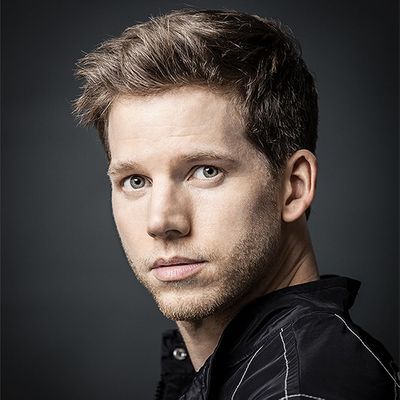
About
In this episode of Broadway for Democracy, co-founder and host Tony Vincent reunites with fellow American Idiot cast members Stark Sands and Rebecca Naomi Jones for a conversation about theatre, activism, and the power of using your voice. They reflect on the legacy of American Idiot, what it means to be an artist in this moment, and how Broadway can help inspire civic engagement.
This episode is powered by WelcomeToTimesSquare.com, the billboard where you can be a star for the day.
Intro and outro music produced by SoundShop370. Voiceover by Meredith Patterson.
Transcript
This transcript was automatically generated and might contain errors.
[0:01] Tony Vincent: Welcome to the Broadway for Democracy Podcast, where Broadway meets civic life.
[0:06] Tony Vincent: A nonpartisan podcast about storytelling, citizenship, and why every voice matters.
[0:12] Tony Vincent: Brought to you by the Broadway Podcast Network.
[0:17] Tony Vincent: Hi, I'm Tony Vincent, a Broadway actor and producer and co-founder of Broadway for Democracy.
[0:23] Tony Vincent: This is the Broadway for Democracy Podcast in partnership with Broadway Podcast Network.
[0:28] Tony Vincent: And today we're here to talk about the intersection between creativity and civic engagement and what does that mean.
[0:34] Tony Vincent: Today I am joined by two dear friends of mine, Stark Sands and Rebecca Naomi Jones.
[0:40] Tony Vincent: Stark has had a massive career on Broadway. Obviously, we have a history of being together, the three of us in American Idiot, but from and Juliet, and now you're producing chess and Rebecca from Oklahoma to Passing Strange.
[0:57] Tony Vincent: And so I'm really excited to talk to you guys. It feels so good to be in the same room. So thanks for your time. Really appreciate it. This is important.
[1:05] Tony Vincent: So we're here today because Broadway as a community is using its voice collectively to inspire civic engagement and participation. And what does that mean exactly? But American Idiot, the show that we were all a part of, seems like a really good place to start because, you know, when we were involved in that show, there was, you know, a lot of tension and frustration in these big questions about where we are as individuals, a lot of sort of self-seeking and personal finding of who we are and validating what our voice is.
[1:37] Tony Vincent: Um, and I think what I'd like to open our discussion with today is when you think about American Idiot and your involvement. What's the first thing that comes to mind?
[1:49] Rebecca Naomi Jones: I often think about when I think about American Idiot, I often think about um that the Jesus of Suburbia scene. And the collection of all of us, you know, in that in that moment of the play, sort of uh all sort of adapting the personae of being like disillusioned suburban American kids who are fighting against something, and some in some cases not sure what they're fighting against, but sensing that there's something that is wrong, and um, yeah, this disillusionment with their country and um with sort of the American promise and the American dream and um just that that like sense of tension um that was in our physical bodies, but also in our voices and in our songs and in the lyrics, and that that's what I think of often when I think of American Idiot, I think of this sort of like tension against something bigger. And often I just think about how frankly I think about how that show would be frighteningly, frighteningly pertinent right now.
[2:58] Tony Vincent: Well, that'll be another question of the clear today, but Stark.
[3:02] Stark Sands: You know, it's a good question. I think that the word that comes to mind when I think about American Idiot is energy. And I was just listening to the album. I don't listen to it a lot, but um I just was listening to it on the way over here, and I get full body chills at certain moments when I listen to that. And Jesus of Suburbia is one of them. Whenever um Johnny is singing to live and not to breathe, that we're all sort of there's this thing, dun dun, dun dun, bum, bum, and there's this one moment. I lost, huh? And we all go, huh? And I just got it right now because I remember it's like building this energy up to this moment of release, and it happens a lot in that show. And um, I have such uh affection for my time and how lucky I feel to be a part of that.
I've been working on Broadway for 20 years now, and I've been lucky to do a lot of shows. But the show that comes up the most at the stage door with like an old playbill is American Idiot. It means so much to the people who loved it, and it always will. People who didn't get to see it but are obsessed with the album. It's a really special piece of theater.
[4:11] Rebecca Naomi Jones: Yeah.
[4:12] Stark Sands: For certain. For certain. That record just it sounds amazing to the day. You know, a little off topic from what we're talking about today, but I remember being in a studio, you know, because we all have done Broadway before, usually we're only given that moment of you have 48 hours to sing or track an entire album. And I I actually came to Broadway as a recording artist, so I'm used to spending weeks on a record. And to, you know, to have that Green Day backing and the the fact of we're gonna actually create a cast album that sounds like a rock record, was so artistically satisfying to me. And it sounds just it sounds killer today. That was my first original Broadway cast album. That was my first musical that I did, and I was so spoiled by it because even though we were recording the album while we were in rehearsals during the day, and I was learning the show because I joined the show for the Broadway cast.
[5:06] Rebecca Naomi Jones: Right.
[5:06] Stark Sands: Every album I've done since then is you get one day. You get one day of recording, and maybe maybe you can come back and tighten some things up if you need to. But it is uh it's outrageous how little time you get.
[5:18] Rebecca Naomi Jones: I know.
[5:18] Stark Sands: So there's a reason it sounds as good as it does. People play those songs, like our recordings of those songs in exercise classes. My mom, you like went through a spinning moment.
[5:28] Rebecca Naomi Jones: Spinning phase.
[5:29] Stark Sands: Yes, and it she has she definitely had a couple of times where she could be like, excuse me, that's my daughter. Fabian.
[5:37] Rebecca Naomi Jones: That's great.
[5:38] Stark Sands: It's so good. It's so good. That's what we do it for. Um this is interesting. Uh at that time that we were in American Idiot, which is how many years ago now?
[5:48] Rebecca Naomi Jones: Fifteen?
[5:48] Stark Sands: Almost the 15 anniversary, almost into year 16?
[5:51] Rebecca Naomi Jones: It's 16 years.
[5:52] Stark Sands: 16 years. It was 2010, it's 2026. Did you feel that that show at the time was was political or did you feel it was much more of a more of a coming-of-age kind of situation?
[6:06] Rebecca Naomi Jones: It was hard for me to detach the um identity of the album and what I knew about the album and why the album was written by the Green Day guys with the experience that we were having on stage. So I was able to have both lanes open at the same time, but I always felt that it was a political statement.
[6:24] Stark Sands: Um they wrote and recorded and produced the album.
[6:33] Rebecca Naomi Jones: Exactly. That's exactly how I felt. It was it felt that it did have um political spine to it, but that it wasn't exactly the time i i in our in our present day history at the time that we were performing it, that the that the political stuff was landing as much as the personal uh, you know, the storytelling of the characters in the play, their their personal sort of journeys and their coming of age um generally in this country, um, that sort of thing. But um, but there definitely were still political undertones for sure.
[7:11] Stark Sands: Yeah, I mean, just when that, you know, that when that curtain raises, those 40 plus monitors are projecting content, political global political content from all over the world. I mean, it's riveting.
[7:22] Rebecca Naomi Jones: Yeah.
[7:22] Stark Sands: You couldn't not be taken aback by just the the onslaught of imagery. You know, I mean, what an amazing artistic thumbprint to start a show.
[7:36] Tony Vincent: Um if American Idiot opened today, what if anything do you think would land differently?
[7:45] Stark Sands: It's so much more appropriate now, in this particular time in this particular place. And seem it seems like every day it gets more appropriate to have a uh to to represent the voice of the disillusioned and people who are unhappy with the way the country is being run. It's a really great vehicle for that. When we were doing it, the politics were completely different. And I don't know that there was the same anger from the same people about the same things. I can tell you guys that there is an effort being made now by myself and some others to find a new version of the show to happen, even if it's just a concert between now and the next couple years, sometime so that it can uh have an effect, even if it's just to energize voters and to get people um to sort of come together in a way uh to go out there and make their voices heard.
[8:44] Rebecca Naomi Jones: Yeah.
[8:45] Stark Sands: And it's exciting to be a part of the genesis of something I I it is so close to my heart. And um, we will be in touch about that when the need arises.
[8:56] Tony Vincent: Great. Well, you know, and that you know, it's one of the reasons that Broadway for Democracy was formed. I mean, it really at the core of of who we are. It's it's truly about voter engagement, voter participation, and being aware of what's going on civically, you know, whether it's at a at a national level or what's going on in your backyard. And this isn't just for New York, you know, this is, you know, it's the impact of what happens with tours all across the country and the the opportunity to get voters to get engaged, either uh disillusioned voters, voters who haven't registered before. I mean, that's that's the core of why Broadway for Democracy, you know, is has been created by by Raven Chapman and myself, because we have to engage people.
We have to sort of demystify the the sometimes complicated and convoluted you know, map because so much happens that I think most of us are unaware of until after the fact. And I think that as citizens we have an opportunity, I think an obligation, but an opportunity to to help, you know, make our voice matter.
[10:01] Rebecca Naomi Jones: Yeah, I'm so glad that that you're doing this because I as we were talking offline earlier, I was saying that it it just is so easy to feel overwhelm and to feel like you want to get involved, but you don't know how, and there's so much noise with social media and with people's opinions and with sort of this sense of, as you said absolutely correctly, you know, this sense of sort of duty to get involved, but also there's like there's everybody has a different opinion about what that looks like, and there's so much um negativity, and and that's fair, but it it's just it it is so overwhelming sometimes, I think, to know where to begin. And so I just want to say I really appreciate that you you two have started this, because it is it it's another channel where somebody can say, okay, here's a direction I can go in, and how can I get involved? I see something very clear. Let me do that.
[10:59] Stark Sands: Absolutely. It's it's crucial right now.
[11:01] Rebecca Naomi Jones: Yeah. It's crucial in general. But right now it seems much more you know volatile.
[11:05] Tony Vincent: Yeah. Um, but that goes into our my next question. Uh when the world feels overwhelming, like I think it feels right now. What does what does showing up for each of you individually? What does that look like?
[11:21] Stark Sands: One thing that I've noticed because of of my age, our age, we remember life before social media. We remember life before 24 hour news cycles, we remember life before notifications, before cell phones. And uh what I and have done in my house, and uh what my wife and I have endeavored to do is to emulate the old way of receiving news. And so in the old days, you would get the newspaper or you'd watch the morning news. You'd read it in the morning, you put it away, and you'd go live your life and have your day. And then maybe you'd watch it again at the end of the day, or get one more update. And that's what I try to do every day, not just when it's overwhelming, just every day, because there's so much bad news out there, and there's so many things that can trigger you and make you feel scared, which by the way, is the point to make you keep checking.
And that I refuse to buy into that. I don't want to be manipulated by this phone in my pocket. Um, and so that's how I move through the world in a way to sort of just keep myself centered and live the life that I'm living and not be distracted by really um you know horrible things that might be happening somewhere in the world but don't directly affect me in this moment right now. And uh it it seems to be, I mean it's hard to do because it's you know, we we we are living in 2026, but that's that's that's what I endeavored to do.
[12:48] Rebecca Naomi Jones: That's great. And I'm sure that you, you know, your children will take that, you know, as a massive imprint on their on their lives. I mean, I remember the way I was raised too, it was, you know, it was dinner table dialogue. Like that's what, and I, you know, we didn't have computers in our pockets, you know. I didn't I had an Atari 2600 for those of you who even know what that is.
[13:10] Stark Sands: Me too.
[13:10] Rebecca Naomi Jones: Like, and that's right. And like that was that that was the bad thing, the negative thing that was really like you can get 60 minutes, you know, on this computer that was incredibly slow and antiquated and and that sort of thing. But, you know, it that with that dialogue did it happened together as a family, and it happened for a moment, and that was it, you know. And so anyway, that's that's interesting. I I I think your kids will cherish that, you know, as they as they age.
[13:39] Tony Vincent: So, Rebecca, what does that look like when to show up? What does that look like to you?
[13:42] Rebecca Naomi Jones: I would say for me to show up, I'm trying my best also to just be as present as I can with anybody that I come in into contact with. So that first of all looks like tuning in for myself in private, like um, even if it's on the train, trying to do a meditation possibly to just like quiet the noise.
[14:06] Rebecca Naomi Jones: Yeah. Um sometimes that looks like journaling just to get get the all of the the the rotation of thoughts through my mind because I'm not even sleeping right now just for all the reasons but so sometimes it's just like a matter of like getting some thoughts down or just tuning in quieting the noise like you know all of that exercising it helps so much just get into my body instead of my brain um I've put apps on my phone to to not be allowed to open Instagram you know the like the the ways that I can show up for other people and myself and be as present as I can and I and truly like mantraing my way through the day to remind myself to have an open heart and just be open to people and like give and receive love.
[14:54] Stark Sands: Because I think so much of the problem that's happening right now is that everybody is so scared and scared to be with each other and scared to love one another.
[15:08] Stark Sands: And so I just think it's very helpful if we can show up and smile and be truly with each other as opposed to sort of like, you know, one eye on the screen or just distrustful and all of that.
[15:23] Stark Sands: So you know what you touched on something that I think is important is how well do we listen anymore really because we because there is that barrier of fear and right there the walls go up.
[15:36] Stark Sands: The moment fear is engaged we like our ears shut off. I mean it's a natural kind of human response I think whether it's when there's panic or like if you have an accident it's like it's tunnel vision and your ears stop working properly.
[15:50] Stark Sands: And so I think that that quieting yourself allows us as humans to hear better. I think. Um, because there's just so much and it's the onslaught, and so what do we do? We just, you know, there's a certain limit that I think we can absorb, whether that's from social media or news or people in general.
[16:14] Stark Sands: And so when you sort of like strip that noise away, it allows us to hear better. And I think, you know, not to wave the flag of democracy, but I think that's a crucial moment that we all myself included, probably more so than not, to be better listeners, you know, to not just have this opposition or this pushback, this knee-jerk reaction that seems to be just, you know, defense all the time.
[16:47] Stark Sands: You both played characters who struggle with identity and responsibility in multiple shows. When did you feel confident in your own voice as an artist, as a creative?
[17:03] Rebecca Naomi Jones: For me, it was pretty recent. I think actually I came back to some confidence more recently. I think as a kid, even though I was always a little bit overly humble and a little bit overly apologetic, which I don't know if that's being a woman or a woman of color or a Jewish woman of color or just my personality, but I was, I mean, you guys know I used to be just like a little I used to poo on myself a lot. Let's say that.
[17:30] Rebecca Naomi Jones: And then I've just done a lot of work on it in the last five years or so. And I would say, since coming back from the pandemic, I sort of made a deal with myself. I was like, if you're gonna come back to performing, because my performance anxiety got really bad before the pandemic.
[17:49] Rebecca Naomi Jones: And I was like, if you're gonna come back to theater, you're gonna have to just be kinder to yourself. You're gonna have to like talk yourself through it and be better at your tools. And it's been so dreamy.
[18:02] Rebecca Naomi Jones: So I would say for me, in the last couple of years, especially even the last six months, I've just gotten so much nicer to myself on stage, which is thrilling because you can just do your work in a much more, I don't know, more seamless and more clear is really the way that the word for it, just like a more direct way, yeah.
[18:45] Stark Sands: So I was in terms of theater. So I was identified theater as the thing that I love to do when I was about freshman in high school. And then it was clear that I was dedicated to it, and so I was the guy who got the parts that I wanted to get, you know, and it's also because there wasn't a ton of competition.
[19:31] Stark Sands: And so I got a lot of practical experience. Then I went to college, I went to USC, I got my BFA, and I was also, you know, in any of those conservatory style programs, at least in the one that I went to, they picked 20 kids to be in each BFA class.
[19:31] Stark Sands: And because each class is designated a different show every semester, they kind of have to vary the casting of who they choose to be in these shows. They can't have a bunch of the same type.
[19:31] Stark Sands: So the type that I got was the leading man type. I was the one in my class who would typically get the leading man role. So I got a lot of experience and practice doing that.
[19:36] Stark Sands: So I left college and I was in LA and I went into the world of movies and TV, and I had this really big confidence in myself. And it wasn't cockiness, I don't think. I mean, maybe it was, but it worked, right?
[19:49] Stark Sands: In a sense that it worked. I wasn't a jerk, but I also believed in myself. And I started working pretty quickly in the world of TV and film.
[19:57] Stark Sands: And then that work gives you more confidence. Sure. I will say that even today, and I'm 47 years old, when I am working, I feel great.
[20:06] Stark Sands: When I am not working, or when I don't have a job lined up, yeah, it can be a little dicey. I can wonder, all right, is that it? Is it over?
[20:13] Stark Sands: Yeah. Am I done? Have I okay? Is that oh, all right, that was that well, that was fun. That was a good season, wasn't it? I had a good go for 20 years. It was a really good career.
[20:21] Stark Sands: Yeah. So it totally depends on the scenario. But I do, you know, my mantra when I'm working and what I try to share with the sort of younger generation is it's for me, it's really simple.
[20:32] Stark Sands: It's three things. It's show up, work hard, and be kind. And if you do those three things in your career every day at work, it'll be okay.
[20:43] Rebecca Naomi Jones: What would you say to somebody who thinks their voice doesn't matter? And I don't mean necessarily on stage. In fact, I don't I don't mean on stage.
[20:57] Rebecca Naomi Jones: I would say that's absolutely incorrect. We need you, we need you. We need your voice. We need to know what's inside of you.
[21:08] Rebecca Naomi Jones: And we need your color and we need your opinions, we need your reminders, we need your soul, all of it. Aligning with us or not, yeah.
[21:18] Stark Sands: Correct. Oh, absolutely. And I think that's really where it's important that that listening piece of the puzzle has to come into our dialogue because I don't want to answer on your behalf, but it's I think it's unless that listening part happens, we don't grow as individuals.
[21:35] Stark Sands: We stay and we I think we actually revert in this we because if there's not growth, I think there's atrophy in a lot of ways. You're not being challenged on thought, on involvement.
[21:48] Stark Sands: And so I think that with that, or without that engagement, without that listening, without well, your own fun you kind of having your own individual voice, that everybody is valid.
[22:01] Stark Sands: Everybody's perspective should be heard, or we don't grow as individuals.
[22:07] Rebecca Naomi Jones: And it's really hard sometimes. It's hard to hear something, especially somebody's opinion or voice that is different from your own.
[22:18] Rebecca Naomi Jones: And sometimes you have to admit that things are not black and white.
[22:23] Stark Sands: Yeah, that's tough. I think it's a really common misconception that if you that what what can my one vote do? What can my one voice do?
[22:31] Stark Sands: Um, and enough people believe that that we have something like, you know, 89 million people who didn't vote in the last election, right? Correct me if I'm wrong. I think that's what you that's what I read.
[22:42] Stark Sands: And if we could just get to those people and explain to them that if everybody votes, we will have the government that we are that our country wants to have.
[22:55] Stark Sands: And that goes for anywhere in the world that has a voting sort of democracy. If everybody shows up and votes, then the country will go in the direction that most of the people want it to go in.
[23:03] Stark Sands: But if people sit out and decide, oh, I don't care, then it's a good idea. Or my voice doesn't really matter, right? But it's it's a sentiment that is kind of feeds on itself.
[23:13] Stark Sands: Yeah. And it pulls people out of being engaged. You know, I come from a family where I have people on both sides of the aisle.
[23:20] Stark Sands: Um, I grew up in Dallas, Texas, you know, it's like I have so and it's pretty generational, to be honest. So the people that are in all of my most, I think of my cousins feel the same way about things, but the older folks feel differently.
[23:30] Stark Sands: It's a d they were different, they came up at a different in a different time. Um, so what I believe is that if everybody shows up and casts their vote and makes their voice heard, then we will go as a country in the direction that that the country wants to go, wherever that is.
[23:47] Stark Sands: Um, and I think that that is fair.
[23:50] Rebecca Naomi Jones: Last question for you guys. If you could share one slice of hope for people that are listening or watching, what would you say to them?
[24:07] Rebecca Naomi Jones: I'm trying to think of a way to answer this without being too, you know, leaning on any political like recent happenings. Um I don't know if I can I would say one thing that gives me hope is that I do feel like, and I could be wrong about this, but it does feel like more people in general are engaged, more people in general are paying attention than was the case a few years ago, and especially a few years before that.
[24:44] Rebecca Naomi Jones: Um, I do feel like people have started to wake up. Um I do feel like people are starting to have the difficult conversations with family members that think differently from them.
[25:00] Rebecca Naomi Jones: Um I'm I feel like I'm hearing more more of that, more bravery in terms of reaching across the aisle and listening.
[25:09] Rebecca Naomi Jones: Um I think there's also kind of a lovely wave of people also trying to go more analog these days, which is really exciting to me.
[25:21] Rebecca Naomi Jones: It's scary also to me, because I'm also attached to that thing. But um the idea that we could all lean a little bit away from it and be more engaged with each other as human beings is brings me a lot of hope.
[25:34] Stark Sands: What about you?
[25:36] Stark Sands: Oh, well. I do believe that we all have an opportunity, you know, to move the needle wherever that is, to actually have a and like you, Stark.
[25:48] Stark Sands: I have family on both sides, and it you know, how do you walk that line of allowing someone you may disagree with to feel like they're heard?
[26:01] Stark Sands: I think that I come back to this listening thing all the time because I think when people actually feel heard, there's an opportunity where their ears might open a little bit more.
[26:16] Stark Sands: Regardless of what perspective or, you know, a two-party system you're siding with. The moment that I think an individual feels heard, they feel respected, and that's I think a natural human response is to that initial guard that is just defense or separation, or you're different than me, or I have to convince you.
[26:41] Stark Sands: It dials back a bit, I think.
[26:43] Rebecca Naomi Jones: Yeah, I'm so with you on that. I think that I would encourage people listening to do just that, to have the conversation, ask the questions and sit with someone who they disagree with and say, Let me listen to you.
[26:58] Rebecca Naomi Jones: Tell me why you believe what you believe, and let me listen, and then I'll do the same. Because the only way forward is through dialogue.
[27:06] Stark Sands: If we all continue to bunker up and go in our silos, I was at Ezra Klein spoke at Sarah Lawrence a few weeks ago. My wife and I, my wife is a graduate of the MFA program.
[27:17] Stark Sands: And Sarah Lawrence is known for its like student activism and the ability to protest. And so they told us ahead of time, be ready. You know, there might be some students who have something to say.
[27:27] Stark Sands: And there were. And it was disappointing because they wouldn't listen to him. As soon as they started at the beginning of his introduction, they stood up with their signs and they had a problem with the fact that he speaks to people on both sides.
[27:42] Stark Sands: That was what they were they because he spoke to people they didn't agree with, they wanted to have him canceled. And he said, Hey, hey, stop, stop, stop, let's talk, let's talk.
[27:49] Stark Sands: And they couldn't do it. They couldn't do it. They he tried multiple times, and eventually they had, you know, they had to, they were given their time, and then they you know willingly walked out and continued in the hallway outside.
[28:02] Stark Sands: Um, I just want to encourage people to actually have that dialogue when it happens. When you have the opportunity to talk to somebody that did you disagree with, do it.
[28:10] Stark Sands: And the other thing I would say, in terms of hope, um, we are members of the Museum of Natural History here in New York City, which is an amazing place.
[28:19] Stark Sands: And recently, we have wandered through the hall of the universe where you see the entire history of the planet and the universe itself.
[28:29] Stark Sands: And we were reminded that the world and this country has been through a lot of really scary stuff and survived.
[28:35] Stark Sands: And it doesn't, you can't just sit back and let it happen. You do have to stand up and do something.
[28:40] Stark Sands: But it gave us some peace to know that this moment we're living in right now is not everything.
[28:48] Stark Sands: Truly. Well, I thank you both for being here. It's great to see you. Stark, Rebecca, thank you.
[28:58] Tony Vincent: You've been listening to the Broadway for Democracy Podcast. To find out more, visit us online at www.broadwayfordemocracy.org.
[29:07] Tony Vincent: Today's podcast has been brought to you in collaboration with the Broadway Podcast Network.
© Broadway Podcast Network, All Rights Reserved