

5 time Tony Nominee Ben Stanton stops by Behind the Awards to share his process on lighting such shows as Maybe Happy Ending, The Notebook and Spring Awakening. Ben goes into detail about the innovative tech that went into Maybe Happy Ending and his collaboration with the video design... Read More
From the show: Behind the Awards with Eila Mell & Bruce Gotlieb
Featured Shows
About
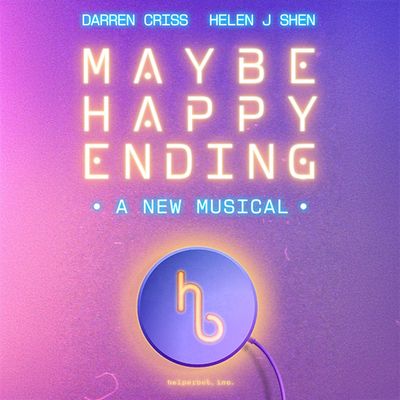
5 time Tony Nominee Ben Stanton stops by Behind the Awards to share his process on lighting such shows as Maybe Happy Ending, The Notebook and Spring Awakening. Ben goes into detail about the innovative tech that went into Maybe Happy Ending and his collaboration with the video design.
Also in this episode - 2026 Broadway Season announcements are in full swing. Revivals of Ragtime, Chess and Mamma Mia lead the way.
Ben is a lighting designer for theater, concerts, dance, installations, and events. He is a four-time Tony Award nominee as well as an Obie, Lortel, IRNE, and Ovation Award winner. Ben is currently represented on Broadway by Maybe Happy Ending at the Belasco Theater. Recent Broadway credits include The Notebook (the Schoenfeld Theater) Mary Jane (starring Rachel McAdams), Days of Wine and Roses (Starring Kelli O'Hara & Brian Darcy James), Goodnight, Oscar (starring Sean Hayes); The Collaboration (Starring Paul Bettany & Jeremy Pope); Charles Dickens’ A Christmas Carol (Featuring Jefferson Mays); The Rose Tattoo (starring Marisa Tomei); Derren Brown: Secret (James Earl Jones Theater); Regina Spektor: Live On Broadway (Lunt-Fontanne Theater); Ayad Akhtar’s Junk (Lincoln Center); Six Degrees of Separation (starring Allison Janney, Corey Hawkins, and John Benjamin Hickey); Deaf West Theater’s Spring Awakening (Lena Horne Theater); Fully Committed (starring Jesse Tyler Ferguson); and Fun Home (Broadway, Off-Broadway, 1st National Tour, London).
Ben has designed concerts and tours for recording artists including Beirut, Ben Platt, Iron and Wine, The National, Regina Spektor, Sufjan Stevens, and St. Vincent, and has collaborated on several large-scale concert/theater hybrid performances including Road Trip featuring Bang On A Can All-Stars (BAM Opera House / Ford Theater, LA), Reconfiguration – An Evening with Other Lives (BAM Opera House), Planetarium featuring Bryce Dessner, Nico Mulhy, & Sufjan Stevens (BAM Opera House / Disney Concert Hall, LA / Sydney Opera House), and Black Mountain Songs featuring Bryce Dessner, Richard Reed Parry, & the Brooklyn Youth Chorus (BAM Harvey Theater / Barbican, London).
Ben serves as an Assistant Professor at Brooklyn College where he teaches lighting design and programming, and he’s the founder and principal designer at Stanton Collaborative, a full-service design firm specializing in concerts, events, and art installations. Ben graduated from the University of Massachusetts at Amherst with degrees in theater and jazz performance. He lives in Brooklyn with his partner, the projection designer Lucy Mackinnon, and their two children.
Make sure to check out Eila's book, "The Tony Awards", and all her other amazing books: https://amzn.to/43WMu5Y.
Connect with Eila and Bruce:
Transcript
This transcript was automatically generated and might contain errors.
[0:00] Eila Mell: Hi, I'm Geoff Cooperman. And I'm Rick Cooperman. And you're listening to Behind the Awards.
[0:14] Eila Mell: Hello, and welcome to Behind the Awards. I'm Eila. I am here with Bruce. Hello there.
[0:20] Bruce Gotlieb: Hello. How are you doing today?
[0:22] Eila Mell: I am good. How are you today, Bruce?
[0:25] Bruce Gotlieb: I'm great. I'm great. We have some exciting 2026 season announcements already coming to be.
[0:34] Eila Mell: Already? There's so much going on.
[0:36] Bruce Gotlieb: I know. I mean, well, Call Me Izzy, which is the first show of the season, started previews the other day.
[0:42] Eila Mell: Yeah.
[0:42] Bruce Gotlieb: It feels weird, though, because we were still, we still have a foot in this season.
[0:47] Eila Mell: A big foot.
[0:49] Bruce Gotlieb: Tonys and, you know, drama desks and all, you know, we're not done with awards yet.
[0:53] Eila Mell: No, no, I'm not ready to move on to the new season just yet. I need, the Tonys is sort of the wrap up for me of that season, and then we'll move on to the new season.
[1:04] Bruce Gotlieb: But there is a lot of news. So bring me up to date.
[1:07] Eila Mell: There's a lot of news. I mean, what's exciting is, obviously, Ragtime was announced the other day, officially. I mean, we knew it was coming, but they tried to keep it a secret.
[1:16] Bruce Gotlieb: Is that going to be in the Palace? Is that where that's going?
[1:19] Eila Mell: No, Lincoln Center.
[1:21] Bruce Gotlieb: Oh, right, right, right. Okay.
[1:23] Eila Mell: Yeah, so we've known since Encores! that that was the trajectory of it all.
[1:28] Bruce Gotlieb: Yeah.
[1:29] Eila Mell: So we have pretty much the Encores! cast, with some ensemble members still to be announced.
[1:36] Bruce Gotlieb: Okay, but Nichelle Lewis is moving?
[1:38] Eila Mell: Yes.
[1:39] Bruce Gotlieb: So that's great.
[1:41] Eila Mell: Yeah, it's great news. Nichelle Lewis is going to continue along as Sarah, Shana Taub as Emma Goldman, Colin Donnell as Father, Joshua Henry as Coalhouse, Cassie Levy as Mother, Brandon Uranowitz as Tata.
[1:59] Bruce Gotlieb: He's going to be so good.
[2:01] Eila Mell: It's, you know, it's a star-studded cast, talent-bounding. So, and it's just such a beautiful show. The score and everything is, it's going to be beautiful, I think, at the Vivienne Beaumont.
[2:11] Bruce Gotlieb: Well, the other exciting thing, which came out today, our listeners will hear about this in a couple of days when this episode airs, is the Chess revival.
[2:21] Eila Mell: Yes, I love the music for Chess. How about you?
[2:25] Bruce Gotlieb: Absolutely. So this revival is going to be starring Lea Michele, who's been rumored for quite some time.
[2:31] Eila Mell: Right.
[2:31] Bruce Gotlieb: Aaron Tveit and Nicholas Christopher.
[2:34] Eila Mell: Nicholas Christopher. I don't know how well people know him, but he was so good in Sweeney Todd.
[2:41] Bruce Gotlieb: He was Pirelli, and he understudied Sweeney Todd, and he's just going to be amazing.
[2:46] Eila Mell: Yeah, he's great. He's great. He did a short one, actually, in Little Shop with chair Renee Scott at the West End Theatre.
[2:53] Bruce Gotlieb: Who was he in that?
[2:54] Eila Mell: He was Seymour.
[2:55] Bruce Gotlieb: Oh, okay. He doesn't seem like a Seymour type to me.
[2:58] Eila Mell: Well, you know, sometimes you got to stretch your boundaries.
[3:02] Bruce Gotlieb: Right. I guess Seymour has also changed from the original production to what he is now.
[3:07] Eila Mell: The type has sort of changed a lot.
[3:10] Bruce Gotlieb: Yeah, I think that the way that, I guess, the boundaries get pushed in storytelling, so do the characters' evolution.
[3:17] Eila Mell: I think also, you know, the times reflect how the characters cast. Seymour is way hotter now than he ever was. He was never hot in the original. Never supposed to be.
[3:29] Bruce Gotlieb: Well, yeah, I guess. I mean, I guess that's also subjective, too.
[3:33] Eila Mell: Well, somewhat.
[3:35] Bruce Gotlieb: Well, one person's hot is another person's not, so.
[3:39] Eila Mell: All right. But, you know, on the whole is what I mean, you know, like Jonathan Groff and Milo Manheim and, you know, all these other people who have done it.
[3:48] Bruce Gotlieb: Sure.
[3:48] Eila Mell: Not typical nebbishes, as he's referred to in the script.
[3:52] Bruce Gotlieb: Right, right. Well, I will say, you know, what's exciting, too, about this is it's going to have a new book, which I know a lot of people love the music but have felt the book was always lacking a little bit.
[4:05] Eila Mell: So the book is going to be written by Danny Strong, who not only an actor in his own right, but also wrote the script for that miniseries Dope Sick with Michael Keaton, which was really good.
[4:17] Bruce Gotlieb: It was.
[4:18] Eila Mell: And he's written some other things also, but that, you know, that's probably the most recent high profile writing. So that'll be interesting. I think that even creates more excitement to see what's going to be done with it.
[4:26] Bruce Gotlieb: Yeah, for sure. Because it's a fresh take, right, with a fresh perspective for now. And also, I think that the book isn't as strong as the music from the original. So, you know, so we'll see.
[4:39] Eila Mell: Right.
[4:39] Bruce Gotlieb: And that's very exciting. Lea Michele is going to sing it incredibly well.
[4:43] Eila Mell: Absolutely. I think the three of them are going to be outstanding.
[4:46] Bruce Gotlieb: Yes.
[4:46] Eila Mell: Yeah. So we already have, you know, a revival race that is.
[4:51] Bruce Gotlieb: I know.
[4:52] Eila Mell: It's heating up the 26th Tony season.
[4:55] Bruce Gotlieb: So quickly. Any more of the cast announced? No, right? Just the three.
[4:59] Eila Mell: Just the three of them so far. I know last, was it the last week or the week before that, there was an article that said that there was a posting for, you know, all of the characters understudies and so forth.
[5:11] Bruce Gotlieb: All right.
[5:12] Eila Mell: So which made me wonder, you knew something was coming, but it made you wonder, like, oh, well, do they have people for these parts already?
[5:20] Bruce Gotlieb: Right.
[5:20] Eila Mell: Obviously, these three had to have been sewed up already, you know?
[5:24] Bruce Gotlieb: Yeah. Yeah.
[5:25] Eila Mell: And it'll be interesting to see where it's going to go.
[5:28] Bruce Gotlieb: What do you think the lag time is between signing a deal and announcing it?
[5:32] Eila Mell: I guess it depends. Sometimes it feels really quick.
[5:37] Bruce Gotlieb: But because of this show has been rumored for so long, it feels longer. So who knows? I mean, they could have signed last week for all we know.
[5:45] Eila Mell: Right. Or a month ago, and maybe they're just waiting for timing. We don't know.
[5:49] Bruce Gotlieb: Right.
[5:49] Eila Mell: We need to get one of those producers on and find out.
[5:52] Bruce Gotlieb: That's right. That's right.
[5:53] Eila Mell: Let's get someone from Lincoln Center.
[5:55] Bruce Gotlieb: There you go.
[5:56] Eila Mell: All right. The guys from ABBA aren't going to be having a bad season between Mamma Mia! this summer and now Chess.
[6:03] Bruce Gotlieb: As if they needed any more stuff, because they've been pretty successful. Good for them.
[6:09] Eila Mell: Well, there you go. You have Mamma Mia! 2, which would be another revival for the season, even though it's a summer show.
[6:14] Bruce Gotlieb: Yeah.
[6:14] Eila Mell: So it feels a little bit early.
[6:16] Bruce Gotlieb: But that is a revival.
[6:17] Eila Mell: You wonder if it'd be remembered, but it's Mamma Mia! Who could forget?
[6:21] Bruce Gotlieb: All right. Here we go again.
[6:23] Eila Mell: That's right. Now and forever at the Winter Garden.
[6:25] Bruce Gotlieb: Exactly. Exactly. Like cats.
[6:27] Eila Mell: That's right. Well, let's not get too ahead of ourselves because we still have to talk to Ben Stanton, who is involved in a hit of this season.
[6:31] Bruce Gotlieb: I mean, Maybe Happy Ending is, I think, favored to win for Best Musical. I don't know that it will, but it's a pretty hot ticket right now.
[6:45] Eila Mell: It is. It is. And he's going to share with us, you know, how we helped to create the atmosphere that theater goers are loving.
[6:52] Bruce Gotlieb: All that magic of Maybe Happy Ending.
[6:54] Eila Mell: That's right. Well, let's not wait any longer. Here's Ben.
[7:00] Bruce Gotlieb: So, Ben, here's something that Marvin Hamlisch said that I think is very true. He said, lighting is exciting.
[7:06] Ben Stanton: It certainly is. And we are so excited to welcome Ben Stanton onto our show today. Lighting designer. Hello.
[7:15] Ben Stanton: Hi. How are you guys?
[7:17] Eila Mell: Good.
[7:18] Bruce Gotlieb: Good. Lighting is exciting.
[7:20] Ben Stanton: It is.
[7:20] Eila Mell: Thank you so much for joining us. It is.
[7:23] Ben Stanton: My pleasure.
[7:24] Eila Mell: I think that people don't think about lighting all that much, which is probably what you want, right? If you're doing your job right?
[7:31] Ben Stanton: Yes. I definitely don't want to pull people out of a play or a musical. I want them to be in the moment. And hopefully my job is to enhance the moment.
[7:40] Eila Mell: But what, you know, since it's something that I think about now, just because of the work that I do, you know, I realize how lighting really on stage is the only way to transform you quickly from one place to another. In a second, you can go from one scene to another. And I think that in a play, it can't be replaced, right? There's nothing, you can't move scenery that quickly. You can't do anything else. Can you speak to that a little bit?
[8:08] Ben Stanton: Absolutely. I mean, over the course of my career, one thing that I've noticed is actually as lighting technology has gotten more sophisticated, we've also seen a change in the way people are writing plays. I think playwrights and set designers are more comfortable knowing that lighting can actually transform the space, as you said, very quickly and instantaneously. I think in older times, you would see a lot of plays that in one or two locations, because while lighting has always had the ability to kind of shift the reality, more recently, we have much more control over color. We have moving light technology that is much more sophisticated. We can transform our space in ways that we couldn't 25 years ago.
And I've noticed a difference in the way people are writing plays. I actually think people now, you know, even especially off-road, right? I think on Broadway, you might see something like Angels in America where you really could do something with all the resources that they have, and for musicals as well. But off-road where I spent years and years just doing graph to play to play, you know, new work all the time, I noticed a change, for instance, when LED technology started to become more common and more affordable, that I would do a show at the Lortel, or I'd do a show at Second Stage, or I'd do a show at Playwrights Horizons, New York Theatre Workshop. And all of a sudden, you know, we were doing shows at 30 locations or 25 locations, and they definitely weren't doing Keenik changes for those. So it's been really fascinating. I've always been really interested in the way these technical advances have actually affected the art that we're creating.
[9:45] Bruce Gotlieb: When you sit down, and I guess when you sign on to do a project, I'm sure the director has some vision. I don't know at what point you guys sit down to start that collaboration, but I'm sure as you're reading a script or as you're looking and doing your own research, you start to formulate an idea of ways to use lighting, and you start designing. At what point, I guess, do you start your process? Like, do you have to have that initial conversation first? Or is it really yours to kind of take the reins and then they tweak it?
[10:19] Ben Stanton: I learned a long time ago to figure out a way to read a play and absorb the material, the source material without getting too specific in my knowing that there are all of these other artists. I like to say that one of the things that I love about lighting is that I have the ability to validate the other artists' choices. Once I see the set design, the costume design, the blocking, the point of view of all of these other artists, part of my role is to support all of them. I think that's really something that excites me. In my former life, I was a jazz drummer, and it was a very similar role that I played as a jazz drummer. Hearing the horns, hearing the music, hearing the orchestration, supporting all of it, being omnipresent, but always validating those choices. I've been drawn to that since I was 10 years old, for whatever reason. I've been doing a version of that my whole life.
[11:12] Ben Stanton: When I first started designing plays, I think I did make the mistake in a way of getting super specific in my head about what the show would look like on stage. And inevitably, I would eventually be introduced to a set design that was very different, or a point of view that was just very different. And over the years, I think I've learned to absorb that source material in a way that's a little bit more open. I understand what the lighting could do to tell the story, but I don't necessarily know until I've had those early creative conversations. Kind of what envelope we're going to present it in, what overall. So it's always a conversation. Ideally, I'm in very early conversations where this has been fully fleshed out, but more often than not, given everybody's schedules and the way most directors work, I'm often, by the time I'm brought into the project, usually there's already a bit of an idea of what the scenic design is going to be.
So I'm already kind of in a world and kind of figuring out the challenges and the opportunities within that. Right, because the set designer has to come on much earlier than the other designers. They don't have to, but they typically do. I mean, we're all freelance artists, we're all working in different states, in different countries, on different projects. And what I found is that usually directors kind of, and also I think for most directors, although not all, they like to kind of start incrementally with the world of the play. So they're going to start with the physical production. And costumes can kind of work independently, but within that framework. And then it's up to lighting and sometimes projections and video to kind of come in later and figure out how to tell the story.
So now that you mentioned all of that, let's jump in real quick to Maybe Happy Ending, which is a technical feat. One of my favorite things about this season on Broadway is that we're getting a lot of lighting, projection, just pushing the envelope of storytelling more than they ever have. Your show, you know, is one of those as well. How did the project come to you and what hands did you have in creating this environment that is just so captivating?
[13:19] Ben Stanton: I have a pretty long history of working with Michael Arden and Dan Laffrey, who we did the Deaf West Spring Awakening together. We did the Jefferson Mays Christmas Carol together, done a few other small projects with Michael. So when I got the call, I was not part of earlier iterations of this. I know there was a production in Atlanta that I didn't design, but I got the call I think last summer to come on board. So there was, you know, to our earlier point about kind of how you get into a collaboration, I kind of joined a team that had already been formed. And there was a lot, they had already done a whole version of this kind of approach, the set design. It wasn't the same set design, but it was similar elements.
I think our show benefited a lot from the production and what Dan and Michael were able to kind of figure out at the Alliance. When I joined, I mean, the first thing that hit me was that there was going to be some pretty significant challenges to lighting this, to lighting this set. What makes it so special is the immersive nature of the design. There's video and scenery everywhere. There are walls and ceilings and portals and apertures everywhere. And so every single scene was a sort of a bit of a math problem to figure out how I could get light into these spaces and not just get light into the spaces, but do it in a way that would tell the story and create beauty and be able to track the emotion.
And also what was really exciting was this is a musical that takes place in the future. So we also got to define what, you know, what sunlight looks like in the future. What is the pollution of the future due to the light coming through a window? So we were able to take liberty with kind of the reality lighting and how we wanted to tell the story. So that was all really, really exciting. Michael and Dan will tell you, one of the first things Michael said to me was we've given you no place to put lights. Like there are huge regions of the stage where there's just video tiles, floor to ceiling, essentially. The lighting designer, we're always looking for, you know, we have a fairly limited amount of tools that we can use to tell the story.
Direction and angle are the big ones. You know, how we create, how we use direction and angle to write people, to write spaces, to create the idea of sunlight or moonlight or, or drama, you know. And because we were really confined to certain areas of the stage where we could put light, that kind of got taken off the table fairly quickly. There are moments that are big and full stage where we can use direction and angle. But what I realized as soon as we went through all the storyboards and went through all the different iterations of the set, and there are so many different configurations, was that we were going to have to find a different way to use lighting to tell the story. And when I saw those beautiful kind of tiny white boxes that a lot of the early parts of the play take place in their helper box apartment, but they're just white cubes.
I got really excited about how I would be able to paint those with different colors. Yeah. And also, you know, the sort of beautiful pictures that have this, these, we use LED neon that we have inch by inch control of, of these lines of lights. There was also this really thrilling vocabulary of geometry and aperture and kind of following kind of Michael and Dan like to think of it almost the way we absorb, you know, any kind of content these days is in these sort of small pictures on our phones or on screens. And everything is kind of in this new, you know, we absorb information in a new way in this age. And here we are telling a story that takes place in the future. I think we wanted to very lean into and use that as a storytelling.
So the geometry of these white cubes, this sort of simple austere architecture within these apertures, these geometric apertures, interestingly kind of immediately reminded me of some modern artists like James Turrell and Dan Flavin, these artists who use light and color and space. And it's very simple. It's all linear. It's all lines. It's all color, rich color, and just what that does to you emotionally to see a white wall bathed in a, you know, in a fluorescent, lit yellow light or something like that. We actually did the lighting team. We did a bunch of research. We looked into all the rest stuff. We looked at Seoul, South Korea, where this show takes place. And while it takes place in the future, there's also a lot of source material now that's really interesting to explore the sort of downtown urban Seoul, South Korea, all of these beautiful colors, all of these, the light and geometry.
And so all of that got really exciting for us. And because I didn't feel like the brief was to create naturalism, I thought we were kind of creating something heightened and something a little bit futuristic, but not fine. Something that kind of tipped, you know, pipped the mood into something that was both beautiful, but also a little, like, why is the sun like orange? You know, like, what is this future? You know, what is the atmosphere in this future? And what, and what are, what does the light look like in the future? So it was great, but it became a lot about color. And for video, for working with George Breed, the video designer, it was, we both understood very clearly what we needed to do for the P. We had some conversations early on, but also I find with most video designers I work with, I'm constantly watching what they're doing and adapting.
They're constantly watching what I'm doing and adapting. It's like Jen, it's like what I used to do when I was playing drums. You know, you're sort of seeing and responding, seeing and responding. And, you know, I would put something on stage and I would notice like two days later, like, oh wow, George is pulling from this, this color and this geometry and creating, adding extra content. And vice versa, when I would see the world she was building, I would respond. I think that's when lighting and video are sort of their best. I'm also married to a video designer, Ruth McKenna. She's incredible. I love her work. She knows some light designers that are not a huge fan. You know, if you're using LED panels, it can be very bright and it can actually kind of overtake the stage.
But I think if you know that and you understand when, you know, Maybe Happy Ending has some pretty, very bright video moments. But I made sure that I equipped in the room that could compete with, so that we could, so that there wasn't this sort of disparity there that we were in. And then there are a lot of moments when video is used incredibly. It sounded really beautiful. So I really love working with video and, and that was, I thought that Maybe Happy Ending, it felt like each of us had like a role to play. Each of us, you know, I think my role was to kind of infuse this world with color and tell the story that I think Dane created this beautiful, almost ballad movement of automation. I mean, we spent weeks fine tuning every single move in the show and we don't stay anywhere for very long.
I mean, this show, I think one of the things that's so special about Happy Ending is the way the show moves. It moves, it's sort of constantly undulating and changing and pictures are opening and closing. There are parallax moments and there are, you know, there are these moments where, where there's a whole sequence that takes many, many minutes where nothing ever stops moving. Like we're actually just flowing through scene to scene to theme. And ideally it just washes over the audience as a sort of, as a, as a, I like to think of it as choreography or it's like a melody. It's everything working in concert, lighting, video, automation, then blocking, of course, the music, which is what we're going to be singing to.
But you know, those things, we have to break down every single moment of that. And each one of those moments. It's funny because it's like, you know, for something that, a story that is about robots and would in theory be robotic, it's not because of what you just spoke of. It's, it is so fluid.
[21:57] Ben Stanton: And they're traveling. Yeah, right. They go on this whole journey. So we, yeah, I think, and it's also fun. It's fun to see that on stage. We're so used to seeing montages, right? In movies and TV, we're so used to seeing this vocabulary of like, they're on a trip and we get this snapshot in this. And it's so easy for them to put that together and everything around. To try to do that on stage and have it feel as fluid, you know, not sort of halting or like, now we're here, now we're here, you know, to have that feeling of fluidity is, was our goal. And I think, I hope we achieved it. You know, I love the way this playing. I think, I think the saturation of color, the sort of beauty of the movement, the integration of all the design is, is, is, is what, I mean, I'm still praying, Maybe Happy Ending. And also, it just doesn't look like anything I've worked on before.
[22:01] Ben Stanton: Was I all haggard with my hair standing up?
[22:03] Eila Mell: No, no.
[22:04] Ben Stanton: It was challenging. It was a great room. I mean, the energy in that room was always so good.
[22:08] Eila Mell: Yeah.
[22:08] Ben Stanton: I think we all, you know, none of us had any idea what kind of response we would get for the show. So it really was just something we wanted to make because we all love the piece. And I feel that because, because of what I spoke about before, it was challenging. Lighting can be edited very quickly. And so what I was
[22:46] Eila Mell: No, absolutely not. I mean, there's a hologram in the show.
[22:49] Ben Stanton: There are holograms in the show. Yes.
[22:51] Eila Mell: It's crazy. It's so beautiful. I was fortunate enough to be able to visit your tech. So I got to see a little glimpse of, you know, putting it together and it was really fascinating.
[22:25] Ben Stanton: At that time, what I was doing was just sort of keeping up with these tweaks in automation. Like we'd spend a lot of time working one of those sequences and it'd just take hours, sometimes days. What we were trying to do was just keep up with each incremental change, meant a lighting change, meant a video change, meant a timing change. And so, you know, it was stressful at times just because there was so much information you had to respond to.
[22:47] Ben Stanton: So I know that designers, you know, you work on not just one show at a time, but you can work on up to, you know, well, I guess it's endless the amount of things that you can do at once. For lighting designers, I need to be there when we're talking. So yeah, I can have overlapping shows, but I know set designers and some other disciplines can literally have shows tacking at the same time and they just run back and forth.
[23:11] Ben Stanton: I write my own light cues. I need to, I need to, I'm a little bit more beholden to a schedule that I don't have any control over. I have had to turn shows down because they just fall smack on top of another show. But yes, usually I'm in pre-production or previews for multiple.
[23:27] Eila Mell: Do you feel like when you're working on more than one show at a time, you know, when you're designing, do ideas from one bleed over into another?
[23:33] Ben Stanton: Yes and no. I mean, but I think that has more to do with my artistic practice than, than like, oh, I'm doing this kind of show and this kind of show. And so they kind of, you see a little bit ending in this play that I'm doing. I'm really religious about sort of the point of view of a production. So, you know, I did maybe the ending, but I also did several off-Broadway plays this season. There's just no, I mean, the worlds are so different. The storytelling devices are so different. One is sort of rooted in a theatricality, you know, we had a world that's rooted in the sort of, in a theatrical presentation, but it's, it's grounded and it's, you know, there's almost no color in the show. It's really about the storytelling device. Every happy ending has a totally different view and story. So you don't find that those things influence each other.
[24:17] Ben Stanton: But what I do find is that I am constantly learning and growing. I occasionally end up having to revisit a work I did a decade earlier. Maybe they're remounting something that I did. I don't have a lot of that in my history, but I do remember unearthing a few, like a show I might've been in, Lamestown, going off runways. I look at some of the choices I made 10 years ago, and they're very different than the choices I'm making. So I think that our tastes and, or choices, I'll do the technology changes, but I think of lighting design as a sort of a, it's a lifetime pursuit and all design, I think. And every year, every project, you learn something new about the world, people, and about yourself.
[25:03] Ben Stanton: I've learned a lot. Technology has changed a lot. I think that 10 years from now, the world has changed more and learned more. I teach college, I teach work in college, and I talk to students who want to be lighting designers and want to do what I do. I try to explain to them, this is a 30-year project. You're at the beginning. It takes a really, really long, hundreds of shows to develop. I couldn't even describe to you what I do. I know that when directors who hire me, hire me, they do because of a certain debt to the work that I just think no one can manufacture. It just takes years and years.
[25:36] Eila Mell: When you started and you were an associate and an assistant, who did you work with?
[25:40] Ben Stanton: I was the second assistant on Wicked. I worked with Ken Posner a lot. Yeah. And had two kind of design mentors who I worked for, and they couldn't be more different as designers, so I was so fortunate. Ken Posner was one, and then this was the other. So I assisted and associated Kevin in like his first four or five Broadway shows. I got to watch Kevin, I mean, who now is a four-time Tony winner. I mean, incredible lighting design. I was there supporting him when he was figuring all that out, pre-Spring Awakening, pre-Infinity and all. And he designed one of my favorite musicals of all time, Strange, which I thought was so beautiful.
[26:22] Ben Stanton: Yeah. And Ken Posner, I got to work with him on several musicals. I did Wicked as a second assistant. I was the associate on The Frogs at Lincoln Center with Nathan Lane. I didn't go to school, so those were my grad school.
[26:36] Eila Mell: Yeah, for sure.
[26:37] Ben Stanton: Wicked alone was my grad school. I learned more about lighting design and also just about how a Broadway musical is made. So much stuff that you really can't learn in school.
[26:49] Eila Mell: Yeah.
[26:50] Ben Stanton: Very, very grateful for those influences. So I feel that projection and video design has evolved to the point where they need their own category at the Tonys.
[27:01] Eila Mell: I agree.
[27:02] Ben Stanton: But, you know, a lot of times they get combined with lighting. How do you feel about that?
[27:08] Ben Stanton: I feel, I think it should be on a case-by-case basis. I mean, sometimes it's combined with scenery. Yes. Sometimes it's combined with lighting. Right. I believe it was even combined with Dune once.
[27:18] Eila Mell: Yeah, it was, which I find so interesting.
[27:20] Ben Stanton: And I didn't see that show, so I can't speak to why that was. But I think as long as it makes sense, it makes sense. I think there are times when a scenic designer starts designing a play or musical and builds video into it. I think maybe Happy Ending was that. So, you know, obviously, like, Dane's conception of the set design, you know, he sort of birthed the idea of video for them.
[27:46] Ben Stanton: And I believe that the video design, the set design for maybe Happy Ending work in concert to create the environment. And even though George and I were riffing with each other, I really do think that video in maybe Happy Ending is more of a scenic device. I've done shows, a couple of shows with my wife that, Notebook being one, and Rose Tattoo with Marissa Tomei, where I felt that the lighting, video were kind of working in concert in a way, particularly on Notebook, where most of the video design was just additional water texture.
[28:25] Ben Stanton: It was essentially just more sophisticated lighting design, and sort of all these textures and beautiful reflections and all this stuff. So, you know, we didn't get on it for Tony for that, but we were, I believe, committed to get Lucy and I for Notebook. And that made total sense to me. The set design, there was no built-in video, there were no screens. There was no, it wasn't a set that was conceived with video in mind, frankly. Video was sort of another layer of lighting that was put onto this, so it made a lot of sense.
[29:00] Ben Stanton: It was the kind of design where you might not even notice there was video.
[29:04] Eila Mell: Yeah, and when Lucy and I work together like that, that's our goal. We don't want you to know which is lighting and which is video. We're excited by that challenge, not because we're trying to show off, but because we've achieved that. I think we can trust that we have integrated these two elements so organically that it's not, that it's going to steal through to the page. And I think that's so important to us.
[29:31] Eila Mell: Absolutely. So we know that you have to go teach. So we have one last question for you. Are there any sort of, I'm going to say tricks, but it's not a trick, it's skill, but is there anything that you like to bring to a lighting design that sort of is like a trick that pleases audiences?
[29:51] Ben Stanton: For a long time, when I worked with my assistant Kevin Adams, he used a lot of texture and rich color. But you couldn't really tell exactly what the texture was, but it was this dot. He would just put dots in a lot of his shows. And it worked. And audiences loved it. And sometimes people were like, why is he putting dots in there? Hedda Gabler or something, but it was perfect.
[30:13] Ben Stanton: What are my tricks? I, what I like to do, there's two things that I think I do with every project that I think are, I don't know if they're unique to me, but the first is that I spend a lot of time early in pre-production thinking about the set, how it wants to be written. I look at it, think about almost separate from the string. It's just this exercise of trying to bring out the truest form of the objects on stage. But the scenery, I sort of treat it like a sculpture. I think of myself as an artist. And I think that one of our jobs as lighting designers is to reveal things in a way. So I'm just interested in exploring and unpacking any possible way of revealing the physical production in new ways.
[31:00] Ben Stanton: Because I know that even if I'm not sure where I'm going to use that yet, that if I have that in my toolkit, when I'm in tech and the director says, you need something that's a little bit more of a lift here, or I feel like we need to be departing from this thing we've seen before. I have these other views that I've kind of been keeping in my pocket that I can turn to. And I've found that that is really, really useful and often gives my... We started this whole interview by saying it's best when people aren't noticing the lighting. For some reason, I tend to get... Like people do, hopefully not in a distracting way, but people do notice my work. And I think sometimes it's because I'm doing something a little bit elevated. I'm doing something that's a little bit, like I say, just revealing something in a new and surprising way and having a kind of a deep bench of ideas and ways of doing it, if you will.
[31:55] Ben Stanton: And then the other thing is just, I'm always prepared for... I always think I know what I'm going to do. I'm still a jazz musician. I find that in the moment of building the world, in the real, I'm riffing and exploring, trying to work quickly so that I can turn on this light, come, scrap it, start over, turn on. Like just sort of... I'm not overly beholden to kind of like an intellectual framework that I decided before I've been in that room. I'm sort of, when I sit down at the tech table, doing the same thing that I used to do when I sat down at the gym, which is stay open and see, sort of absorb everything that is around me.
[32:39] Ben Stanton: And in this case, everything that constituted. And then have essentially an artistic impulse. I hate to have a miscord. And I just found that, you know, if to the extent that like a so like maybe happy ending moves so fluidly or notebook, you know, feel so emotionally deep or whatever, you know, I do think that there is an organic nature to the way that I create the work, which lends itself to a sort of emotional resonance that I think is important.
[33:07] Ben Stanton: So I don't know if those are tricks, but I do. I don't know if other people were.
[33:12] Eila Mell: Yeah, no, that's that's how I do work, because it's just that's what's in my bones.
[33:17] Eila Mell: Well, thank you so much, Ben. We have to send you on your way because your students won't be happy with us. But come back anytime. This was so much fun.
[33:28] Ben Stanton: That's wonderful to talk to you. Thanks for your time today.
[33:30] Eila Mell: Thank you. And we will see you all next time on Behind the Awards. Bye bye.
© Broadway Podcast Network, All Rights Reserved