

Actor/Musician Cathryn Wake joins Behind the Awards to chat about Copperfield the Musical. Cathryn talks about not only playing 2 starring roles in this production but also playing both clarinet and drums... Read More
From the show: Behind the Awards with Eila Mell & Bruce Gotlieb
Guests
About
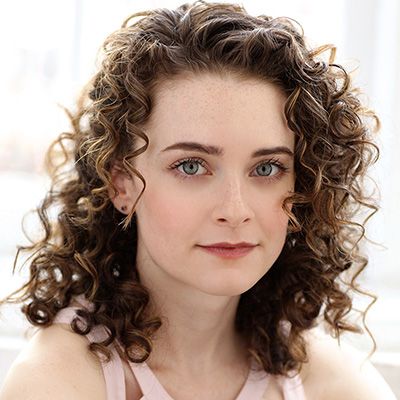
Actor/Musician Cathryn Wake joins Behind the Awards to chat about Copperfield the Musical. Cathryn talks about not only playing 2 starring roles in this production but also playing both clarinet and drums. Cathryn also reminisces about her Broadway Debut in Natasha Pierre and the Great Comet of 1812 where she also played clarinet in the ensemble. Copperfield the Musical is running through December 6th at The Duke on 42nd Street.
Also in this episode - The Visitors Off Broadway at Signature Center starring Celia Keenan-Bolger, Will Pullen, Danny Wolohan, Mary Wiseman and Esco Jouley
Broadway: The Great Comet. Off-Broadway: 53% Of (Second Stage), The Fantasticks, The Other Josh Cohen, The Hello Girls. Select Regional: The Glass Menagerie (Pittsburgh Public), Conscience (George Street Playhouse), The Cottage (TWN), Ragtime (Bay Street Theater), The Second Girl (CATF), Loch Ness (The Rev). Cathryn wrote the book, music and lyrics to Red Giant, a five-woman actor-musician musical about the planets. @cathrynwake
Make sure to check out Eila's book, "The Tony Awards", and all her other amazing books: https://amzn.to/43WMu5Y.
Connect with Eila and Bruce:
- Instagram @behind_the_awards
- Eila @eilamell
- Bruce @cominghomewithbruce
Transcript
This transcript was automatically generated and might contain errors.
[0:00] Cathryn Wake: My name is Cathryn Wake, and this is Behind the Awards.
[0:13] Eila Mell: Hello and welcome to Behind the Awards. I'm Eila. As always, I'm here with Bruce.
[0:18] Bruce Gotlieb: Hello there. Happy almost Thanksgiving.
[0:21] Eila Mell: Yes, that's right. Do you have big plans for Thanksgiving?
[0:25] Bruce Gotlieb: Yes, just family and the norm, of course, the turkey and mashed potatoes and all of the fixings.
[0:31] Eila Mell: So I'm not doing a turkey because I don't eat meat anymore.
[0:35] Bruce Gotlieb: So what are you going to do, a tofurkey?
[0:38] Eila Mell: No, no, no, nothing like that. I don't know. No one that I'm spending the holiday with really cares about the food, so we are going to the parade.
[0:47] Bruce Gotlieb: Okay.
[0:47] Eila Mell: And then I think we're just going to wing it food-wise, if you can believe that.
[0:51] Bruce Gotlieb: I mean, that seems very unconventional.
[0:55] Eila Mell: It is. Oh, yeah, it is. But, you know, by the time we're done with the parade, we'll have had enough of Thanksgiving, probably.
[1:03] Bruce Gotlieb: You might need a nap at that point.
[1:04] Eila Mell: I know. I'm thinking we should go out to eat the night before and then just bring leftovers home.
[1:09] Bruce Gotlieb: I mean, that's a wonderful idea.
[1:11] Eila Mell: So, yeah, keep it low-key. The parade is fun, so.
[1:15] Eila Mell: And speaking, you know, in the news lately, there's been a little because of the, I guess, megamix, if you'll call it that, of the Broadway shows that are performing.
[1:24] Bruce Gotlieb: No, this is bullshit. I do not like this.
[1:27] Eila Mell: I don't think it's respectful of the Broadway community. What do you think?
[1:31] Bruce Gotlieb: No, I agree. I think there's, you know, the majority of people are feeling like, you know, Broadway is getting a little bit slighted in this because, you know, shows, especially leading into the holiday season, shows use this as a piece of a way to get tourists in and see what's going on.
[1:52] Eila Mell: So let's explain for those who don't know. So every year, the Thanksgiving Day Parade has songs, you know, little scenes from Broadway shows. And it's amazing. It's so great. It's not exactly the same because they don't have the sets, but it doesn't matter. It's fun.
[2:08] Bruce Gotlieb: Yeah, they get, what, a minute and a half or so to perform right outside of Macy's.
[2:13] Eila Mell: There's a little, like, you know, part of the parade, that green map that's set up.
[2:18] Bruce Gotlieb: Yeah. So for me, this is the reason to watch the parade.
[2:21] Eila Mell: Sure.
[2:22] Bruce Gotlieb: Now this year, I don't know who got this horrible idea, but there are no scenes from shows. There's a 10 minute medley of like, not even this season necessarily. It's like Broadway from the beginning to now, or I don't know, some ridiculous thing that nobody needs.
[2:40] Eila Mell: So I'm very upset about that. Now, when I, you know, when I go to the parade, I'm not at the section where they do the performances. So I won't be missing it anyway. And it's fun when you're there to see the floats and all, but.
[2:53] Bruce Gotlieb: Of course.
[2:53] Eila Mell: So watch it on TV. I just fast forward everything through, you know, to the Broadway shows.
[2:59] Bruce Gotlieb: Right.
[3:00] Eila Mell: So I don't know. This is not good.
[3:03] Bruce Gotlieb: Yeah. I don't know who's, you know, why this new, this change was done. I haven't been able to, in my investigation, have not been able to crack that.
[3:13] Eila Mell: No, I'm very mad about it. But something I'm not mad about is The Visitors, which we both got to see.
[3:19] Bruce Gotlieb: Yes. Off-Broadway at Signature Center. It is a drama with some comedy, I'm going to call it.
[3:25] Eila Mell: Yeah, for sure. A mix.
[3:28] Bruce Gotlieb: It's definitely a mix. It is a really, really strong written play.
[3:33] Eila Mell: Yes.
[3:34] Bruce Gotlieb: It knows its purpose. It knows what it's setting out to do.
[3:38] Eila Mell: It doesn't give it away too quickly because there are, you know, some twists and turns in the plot.
[3:43] Bruce Gotlieb: Right. As it starts, it unfolds really slowly, but not at a slow pace. You just don't get all the information immediately. You get it pretty soon in, but not immediately. So you have to sort of figure out, you know, you think one thing and then it flips. So it's really interesting.
[4:00] Eila Mell: And I like that. I like to not have everything spelled out for me in the first, you know, minute and a half. And I love a twist. Give me a twist in the middle of the end.
[4:09] Bruce Gotlieb: The more twists, the better.
[4:10] Eila Mell: Me too. So do you want to say what it's about?
[4:15] Bruce Gotlieb: Sure. It's a family dynamic. So you have these three siblings. Nope, sorry, four siblings, as well as a significant other of one of the siblings that are all joined together for a weekend. And there's, I don't want to give too many spoilers. There's something that's needed. One of the siblings needs something from their other siblings.
[4:38] Eila Mell: It's a serious ask.
[4:40] Bruce Gotlieb: And within that ask comes, you know, dynamics of feelings of how people feel about each other as adults, how people felt about each other as children and growing up.
[4:51] Eila Mell: How things change, how they don't change.
[4:53] Bruce Gotlieb: Yeah. Everything that changes stays the same somehow.
[4:56] Eila Mell: I know. Now, the highlight for us is our guest and friend Celia Keenan-Bolger is one of the stars of this play, and she's outstanding in it.
[5:06] Bruce Gotlieb: She really is. I mean, I can't even think of one thing that I've ever seen her do that I haven't liked. But this is, it's a nice slice of where she probably resides in her life currently, like as an adult.
[5:20] Eila Mell: Right. And period wise. And, you know, so if you like The Gilded Age, they have three cast members of The Gilded Age in this show. There's Celia, who plays Mrs. Bruce. There's Danny Wolohan, who plays, he's George Russell's, like, what would you call him, assistant in modern day terms?
[5:39] Bruce Gotlieb: Sure.
[5:39] Eila Mell: And then there's Will Pullen, who, Bruce, how caught up are you on The Gilded Age?
[5:46] Bruce Gotlieb: Just say what you have to say.
[5:47] Eila Mell: No, I'm not going to say it. I'm not going to say it. Who was in an early season, Katie Finneran played his mother, and he's back this season in a very pivotal scene. So I'll just leave it at that.
[6:00] Bruce Gotlieb: And they also played, all three of them played together in To Kill a Mockingbird.
[6:05] Eila Mell: I know.
[6:06] Bruce Gotlieb: Which is great.
[6:06] Eila Mell: I know. So, yeah, so much fun.
[6:09] Bruce Gotlieb: So we definitely recommend this show. Eila told me how outstanding the set was, and it is.
[6:16] Eila Mell: Yeah, it is really, really just extraordinary. Kate Knoll, let's give her a proper credit.
[6:26] Bruce Gotlieb: Definitely.
[6:29] Eila Mell: The attention to detail and the nuance that she has created for this apartment is one of the best I've probably seen in quite some time.
[6:40] Bruce Gotlieb: Yeah. And it feels like a show that actors will love to do because every role is meaty, has a lot to it. No one's the hero. No one's the villain, really. Everyone has a point of view that you can sort of understand. I mean, a couple of them are not great. Those brothers could be better.
[6:59] Eila Mell: I mean, listen, like life, right? You're going to go in and you're going to feel whatever you're going to feel. And, you know, you might not agree with the person next to you, the interpretation.
[7:09] Bruce Gotlieb: No, you know, it doesn't tie everything up neatly, which I appreciate.
[7:14] Eila Mell: Yeah.
[7:15] Bruce Gotlieb: And so what do you make of the title, The Visitors?
[7:17] Eila Mell: Well, going into it, I didn't know what to expect of it. My interpretation after was that the title is in the perspective of the one sibling whose house it is. And she has these people coming in to visit.
[7:30] Bruce Gotlieb: Right. Clearly, there's that. But then I think it's kind of twofold. It's like the siblings are now visitors in her life. They're not, you know, they're not day to day people anymore.
[7:39] Eila Mell: Well, that's true. And I think much like life, right? It is hard as adults to maintain, you know, the same contact that you would, whether it be siblings or friends. You know, on a day to day basis, you know, ebbs and flows as it is. And, you know, one of the siblings has just, you know, has a baby and one of the, you know, the other sibling is navigating having a teenager in their life. And it's like, it's just real.
[8:07] Bruce Gotlieb: That's the thing. The play is so real. And I think it hits very real, too.
[8:13] Eila Mell: Right. I think that a lot of people can relate to more than one character in this play. And I think that's a really good way in for the audience.
[8:21] Bruce Gotlieb: And the fun of it is that even that you relate to different characters throughout, based on the perspective, based on what's going on, based on how it's making you feel, while you have the opportunity, you should go see the show. I almost want to say for Thanksgiving, it has that, you know, kind of Thanksgiving family vibe. Let me tell you, it's going to make you feel a lot better about your own family if you see the show. So you'll have a very happy Thanksgiving compared to that.
[8:50] Eila Mell: Right. Well, speaking of troubled families.
[8:50] Bruce Gotlieb: Yes. You know, David Copperfield was left by, you know, not left, but, you know, circumstances were...
[9:01] Eila Mell: He didn't have it easy. Yeah.
[9:03] Bruce Gotlieb: He didn't have a home life that was easy. And we have Cathryn Wake with us today, who plays both his mother and his wife.
[9:13] Eila Mell: That seems very Freudian, but we'll get into it with Cathryn.
[9:15] Bruce Gotlieb: In a non-Oedipus kind of way.
[9:17] Eila Mell: No. Well, OK. Let's bring out Cathryn.
[9:20] Bruce Gotlieb: Well, Eila, we saw Copperfield the Musical on opening night.
[9:28] Eila Mell: Yes, we did.
[9:29] Bruce Gotlieb: So much fun. And it is astounding how talented this cast is. So let's bring out Cathryn Wake.
[9:38] Cathryn Wake: Hello.
[9:39] Cathryn Wake: Hi, Eila. Hi, Bruce. How are you both doing today?
[9:42] Eila Mell: We're fantastic. Thank you so much for taking time out of your busyness to come chat with us.
[9:48] Cathryn Wake: Of course, I'm happy to. I'm bright and early.
[9:52] Eila Mell: That's right.
[9:53] Cathryn Wake: So how is this show going?
[9:55] Cathryn Wake: The show is going so tremendously well. I think something that is just so exciting about this show is the fact that it is an actor-musician musical in that the entire cast is the orchestra. We do not have a single pit musician in this, meaning that every single actor is assigned to an instrument. And in fact, in this musical, every single actor doubles, which means that everyone plays at least two instruments in this.
[10:24] Cathryn Wake: Not just one, at least two, and some people, several. It was crazy. Eila and I were talking about the show after we were giving a little review for our listeners, and I said, you know, it's a rarity to find a cast of triple threats, but you guys are like quadruple. I don't even know what number to go up to because the acting, the singing, the dancing, and now multiple musical instruments, it just blows the mind.
[10:51] Cathryn Wake: It's really so exciting to be a part of something that utilizes all of our talent. You know, I feel specifically in my track that I'm leaving nothing on the table, meaning that you've got all of me. You've got some drama in the first act, and we can get into that in a second, but I play two characters in this. I play Clara Copperfield, David Copperfield's mother in the first act, and then in an interesting kind of twist in the second act, I play his wife when he grows up.
[11:24] Cathryn Wake: It's very Freudian.
[11:25] Eila Mell: Very Freudian, in fact. But I get to play a very dramatic character in the first act, and then in the second act, I get to play a very comedic character. But then I'm also playing clarinet, and then I also play drums for a quick moment in the storm. There are a couple of dance moments as well, so I feel so excited that there is no stone left unturned in terms of my performance in this show, so it feels fulfilling to do every single night.
[11:58] Bruce Gotlieb: Oh my gosh, I can only imagine. You're so good in this, and your characters are so vastly different. You forget, I mean, obviously we know that you were his mother in Act One, but you really forget, because Dora, is that her name?
[12:12] Cathryn Wake: Yes, Dora.
[12:13] Bruce Gotlieb: Yeah, Dora is so different. It's really, really great job.
[12:20] Cathryn Wake: Thank you. I mean, it's a privilege to do. It's a privilege to be able to not only flex the dramatic muscles, but flex the comedic muscles, and if anything, it's a release for me as well. For those of you who have seen the show or about to see the show, there's just a very fun love song that happens in the second act that involves a swing, and as someone who has played Evelyn Nesbitt before in Riding Time, I am no stranger to being the girl on the swing.
[12:47] Cathryn Wake: But it's just a blast, and I do feel that it's such a release to be able to perform in that zany, wild number. Dora, specifically, shall we say, a child-like, and it's just very fun to be a little zany, but then, I don't mean to give any spoilers away, but something happens to her as we progress through. I mean, it's a 150-year-old book, so I think—
[13:15] Bruce Gotlieb: Yeah, I think we probably know.
[13:19] Cathryn Wake: But basically, she falls ill, and then I get to be dramatic again.
[13:25] Bruce Gotlieb: And she grows up a lot.
[13:27] Cathryn Wake: Yes, yes. I think she comes to terms with a lot of realities of their relationship as she nears the end of her life, and I get to sing just a really heartbreaking and beautiful duet with Bobby Conte at the end of Act Two. So we go dramatic, we go zany and comedic, and then we go dramatic again. It's a wild ride every single time.
[13:50] Bruce Gotlieb: When you started the process with this piece, were those tracks always together and assigned to you, or did things evolve as the piece grew?
[14:02] Cathryn Wake: Those two roles were always sort of intertwined, I think, by design, because in the book, there are a lot of similarities between Clara Copperfield and Doris Benlo. And so I think, you know, very astutely, our writer, Jeffrey Scharf, noticed those similarities and decided to double cast that track accordingly. But yeah, in terms of the reading that we did earlier this year, and the workshop, those two roles have always been coupled together. And it's fun. It's just a lot to chew on. It's a blast.
[15:05] Cathryn Wake: At the beginning of this, they were trying to figure out what instruments, you know, what is the talent that we have? What are the actors we are interested in? And then what do they play? And so I can only imagine that not only did they need to find actors who are right for the role, but then they need to basically find out what they play and do they fit in the orchestration that they have in mind for this show. So, gosh, it just must have been an absolute puzzle to figure out. But I have to tell you that the cast that our director, Gabriel Berry, and Sonny Palladino, our orchestrator and music arranger, assembled, and Jeffrey, I mean everybody who had a hand in the casting process, assembled not only a kind and talented cast of actors, but one of the most talented groups of musicians I've ever had the privilege of.
I mean, I'll never forget the first day of the workshop because the 29 hour reading that we did, there were no instruments. It was just us singing, you know, and, you know, acting and doing our roles. But then when we did the workshop, a couple weeks later, we all brought our instruments in and then I was like, Whoa. Oh, everybody is amazing. Oh, everyone can slay. Yeah, you guys, you guys, I would say, are accomplished enough musicians with your instruments to be in like a Broadway pit or be like, you know, take all of the other things that you're doing on stage out of the equation, you could have a career as a musician. Oh, sure. And some of some of us are actually some some of us are pit musicians, which is wild.
But the craziest thing is that I got to know everyone is a wonderful actor first, not knowing a thing about how they play. Yeah. And then later, I realized that everyone can tread. It just was it's almost like actor musician shows are so exciting, because finding out what people play is like people's superpower. Yeah, for sure. They're hidden superpower that they are also an amazing violinist. Right in the audience, you're watching and you're like, Okay, this person's great. They play this, but then they're playing this also, like, and playing multiple roles as an actor. It's, you know, it's it's a big heavy lift. 100% Yes. And there's something about the off Broadway setting. Also, it's a little more intimate, right?
I mean, we're at the Duke theater on 42nd Street. So the audience is quite close to us. And there are there is this phenomenon with instruments being used as props in shows, that unfortunately, audiences are being trained to not believe that people are really playing, right? I'll never forget, we were in previews for Great Comet, which is where I made my Broadway debut. And I was also playing clarinet in that show, as a full ensemble member who just happened to be tootin clarinet every once in a while. And an audience member chatted with me because you know, pre show, we kind of chat with the audience before the show begins. And he said, You're not gonna actually play that, are you? And I was like, No, I'm just gonna hold it.
And to his surprise, and due to the immersive and nature of that show in the proximity to the audience, he found out very quickly that, yes, I can play this clarinet, and I'm going to play for the rest of the show. Wow. So special, like, yeah, because a lot of the times the immersive, I find that sometimes immersive stops at like, the orchestra level. And this in that show, you guys were up in the balcony, you guys were all over the place. Exactly. And the redesign of the theater itself was just, yeah, so like, it's crazy to, to be back to go back to that theater now, try to imagine where things were, and how the setup was, like your brain can't quite reconcile it. Seriously, it's really remarkable what they did to the Imperial Theater and what the Imperial Theater allowed us to do inside it.
But, um, you know, it's going back to Copperfield, it's just what's so wonderful is that we are so close to the audience. So not only are we mic'd, but they're hearing it acoustically, because they're that close to us. Yeah. And I think good. I'm so glad. I mean, um, you know, our sound designer, Shannon Slayton did an amazing job making a sound as good as we feel like we sound on stage. Because it really all is about the sound design. And the fact that are we are we audible? What's so interesting is that I actually wear three microphones in the show, I wear two up here for my vocals, obviously, right, then you have to mic the clarinet. And what's so weird about a clarinet is that sound actually emanates from the side of a clarinet, not out the bell, like you would think.
And so I wear a secret microphone in my sleeve. Oh, how cool. It's so interesting. I wear like a tiny little microphone here. And so as I'm holding the clarinet, it kind of like peaks out there, which is so interesting. But just miking this show, how do you mic this show? Even when we are all roving around when we're grab we're trading instruments. Some people are playing the same violin or the same guitar, or the same drum set, obviously, how do we make sure that everyone is heard? And that everyone can play at all times. There's a lot of tracking instruments like, oh, shoot, I'm stage left, but the violin is stage, right? Now, how do I get that? Like, tech was a very interesting just exercise in trying to figure out, oh, gosh, I need these things.
And stage management is amazing, you know, with helping each us out with tracking instruments, tracking props, tracking costumes, because some of us kind of never leave the stage. We've spoken with swing members and understudy, you know, cast members, the questions always, how do you keep these things, you know, locked in and ready and right, all of these different pieces in your brain, right? But yet you have all of these things that have to be locked in as a main stage member with, you know, dialogue, dancing, singing and music, musicality of it all.
[21:17] Bruce Gotlieb: Is that like, are there tricks? Are there like, you know, ways that you make that happen?
[21:25] Cathryn Wake: Yeah, I'm so glad you asked this question. Because, you know, when you're learning lines, you know, different actors have different kind of techniques. But you can think of mnemonic devices, or some people write up the first letter of each word of their line or something. Everybody has like a technique there. Same thing with learning, you know, music, if you forget the lyrics to your music, you can just kind of go hum, hum, hum to your vocal music, I mean, and, you know, mark your way through and figure it out. And eventually you'll get it. But in terms of memorizing instrument, you know, obviously memorizing, blocking and dance, that's muscle memory, right? You get it in your body, your body knows what to do.
But in terms of memorizing instrumental music, that is a whole different ballgame that as actors, as musicians, it's very rare that you memorize music unless you're in a band, right? Unless you're in like a rock band, and where we're in using a music stand is not usually the vibe. But as a classical clarinetist, I grew up as a classical clarinetist, I never had to memorize anything, you just read the music. And so, you know, basically mastering my own technique of memorizing instrumental music in an actor musician show is a whole new territory. And I found myself, it's a mix of my own muscle memory of like memorizing choreography with my hands. It's really weird. So basically, I'll think, okay, that's like a snake.
And this is 13531. And this is chromatic. And this is a B scale. And this is it. And some of its photographic memory, I'm reading off of the sheet music that I've memorized. But it is a wild alchemy of it's a very meta thing to memorize instrumental music for an actor musician show. Because also with clarinet, I'm playing very specific lines. It's not like I'm comping or playing chords as you would a guitar or mandolin. And so for me, I have to be very specific about memorizing the exact notes that were written for me. So it's a it's a whole different alchemy. It's fascinating. You know, the audience sees you playing your instruments in character as an actor. How do you approach that? Like why?
[23:37] Bruce Gotlieb: Oh, God, you're playing these instruments.
[23:40] Cathryn Wake: God, this is my favorite thing about actor musician shows truly. And I'm very picky about the actor musician shows that I do. I think that in order for me to want to do it, it has to be a role. And there has to be a reason for why I'm playing my instrument. Right. And so what's very, very cool about actor musician shows is that oftentimes in musical theater, you know, say that a character passes away. And in my case, my both of my characters die on stage. Lucky you. I've never died on stage before. Now I get to do it twice. It's a blast. But regardless, my first my act one character, Clara Copperfield, his mother dies. Right. However, there are so many moments where he's thinking of his mother.
And in musical theater, we use musical motifs. We use these melodic motifs that we call back to in order to remember that character. Right. I have a song called Darling Boy. It's the solo that Clara sings and the Darling Boy motif is called back to. But the very cool thing about actor musician shows is that I am playing the motif. Normally, it's like the orchestra plays the motif or the piano plays the motif and the characters thinking of it. We get it right. But now I get the added element of appearing in costume with a clarinet in my hand, though my character has died and I play that motif and he thinks of his mother and he sees me. And that is a whole new dramatic element that is introduced with actor musician shows that isn't quite possible if you don't have that element.
So it's just such a magical new tool that we have in our storytelling abilities that happens very frequently throughout our show where several characters actually die in this show. It's very Dickensian. And, you know, when characters pass away, their motifs are played by the character and on the instrument that they play. And it's very, very, very cool. This is one of my favorite stories. But when Sweeney Todd was brand new, a musician went to see it. And so they taught, you know, there is music when Sweeney Todd is singing about his wife. And then the first time you see the beggar woman, that music comes in. And the musician's like, well, that's her. I know it because I hear the music, like no one else put up on it, but he did.
Exactly. It is a common musical theater tool that we use and that we all as musical theater fans and professionals have come to expect. Right. So, you know, like their theme is going to come in when we are referring to this person. And yet with actor musician, we get to play it ourselves.
[26:23] Bruce Gotlieb: Right. And I and I think when you're a musician, you you are more aware of it than a casual, a more casual audience member.
[26:28] Cathryn Wake: For sure. Absolutely. We pick up on that stuff. All right. Well, I can't believe we're almost out of time, but I have one big question. Of course. Why do you marry him in Act One?
[26:45] Cathryn Wake: Well, you know, this is actually an age old question that people have of the book. Yes. People have this question of the book. I think that after her first husband, Mr. Copperfield passes away, I think that Clara wants a father figure for her son. But I also think that she falls in love. I really think that he charms the pants off of her, him meaning Mr. Murdsten, who comes in. He at first when we meet him, he is just the embodiment of charm. And then we find out that he actually is an abusive tyrant later. But I think that she falls in love. I think that he charms her. He hoodwinks her. She falls in love. And then she realizes that she makes such a grave mistake. And so I really do try to give that moment empathy because we all make mistakes in life.
I realize, though, it's it's listen, it's a hard sell. It's like, but she's a strong, independent woman. Yes. And it's 1850. Yes. No, women had to make choices back then in order to survive. So, you know, I leave that up to interpretation of the reader and of the audience member to to fill in that blank there.
[27:59] Bruce Gotlieb: Yeah. But that's a good choice as an actor. You know, 100 percent.
[28:02] Cathryn Wake: 100 percent. Oh, my gosh. Well, thank you so much for joining us. You are a delight.
[28:09] Bruce Gotlieb: Oh, my gosh. I love Bruce. Thank you so much for having me. I really appreciate it. This is a blast. Our pleasure. Everyone needs to, you know, head on over to the theater and see Copperfield, the musical. You guys are running through.
[28:19] Cathryn Wake: We run through December six.
[28:24] Bruce Gotlieb: OK, so any chat for an extension?
[28:24] Cathryn Wake: No word yet. But I, you know, gosh, it would be amazing to extend because there's nothing like doing a show during the holidays. It's just a blast. Yeah. Yeah. Especially you should feel like Dickens lends itself very well to the holiday season, as we know. Literally, it's so funny. I was chatting with some Christmas Carol cast members and we were in sister shows, the two of us, both Dickensian musicals happening during the holidays. But yeah, if you're a fan of live music and consummate musicianship and just a beautiful story, I think you'll enjoy it. Yes, it's really astounding. And thank you again. And we'll see everyone next time on Behind the Awards. Thank you, guys. Take care.
© Broadway Podcast Network, All Rights Reserved