

Claire-Marie Hall - Operation Claire-Marie. Claire-Marie Hall comes back to Behind the Awards solo this time to chat about her experience on the Operation Mincemeat train... Read More
From the show: Behind the Awards with Eila Mell & Bruce Gotlieb
Featured Shows
About
Claire-Marie Hall - Operation Claire-Marie
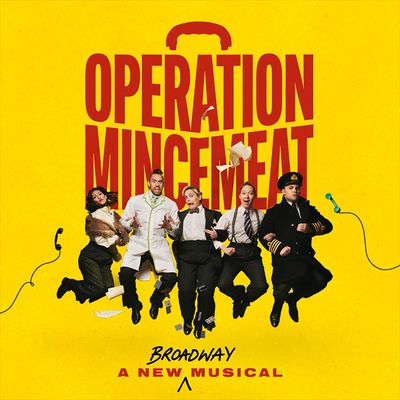
Claire-Marie Hall comes back to Behind the Awards solo this time to chat about her experience on the Operation Mincemeat train. From her teenage theater student start to starring in Les Miserables on The West End to Broadway Claire-Marie’s star rise has taken a path she least expected.
Also in this episode - Jack Nicholson & Robin Williams at The Critic Choice Awards. A Review of Liberation now playing on Broadway at The James Earl Jones.
Claire-Marie trained at Mountview Academy.
Further theatre credits include
Theatre: Jean Leslie in Operation Mincemeat (Southwark Playhouse & Riverside Studios), Cosette in Les Miserables (West End), U/S Dea in The Grinning Man (West End), Cynthia Houston/Mama Mega in Spies Are Forever – West End Concert (Tin Can Bros/Lambert Jackson), Gabriella Montez in High School Musical (Hammersmith Apollo & National Tour), Tuptim in The King & I (National Tour), Innkeeper’s Wife in The Wicker Husband (Watermill Theatre), The Colours (Soho Theatre), On Hostile Ground (Northampton Royal & Derngate), The Wonderful Storybook (Theatre Peckham), A Midsummer Night’s Dream (Outdoor Tour, Scoot Theatre), Jesus Christ Superstar (Frinton Summer Theatre), The Sorrows Of Satan (Tristan Bates Theatre), Between Empires (St James’ Theatre & Edinburgh Festival) and Aladdin (First Family Entertainment, Jordan Productions & Hackney Empire)
Film and TV: Just Up Your Street and Aladdin (BBC Wales)
Radio: When The Dog Dies and My Brilliant Divorce (BBC Radio 4)
Make sure to check out Eila's book, "The Tony Awards", and all her other amazing books: https://amzn.to/43WMu5Y.
Connect with Eila and Bruce:
Transcript
This transcript was automatically generated and might contain errors.
[0:45] Eila Mell: Hello and welcome to Behind the Awards. I'm Eila and I am here with Bruce.
[0:50] Bruce Gotlieb: How are we doing, Eila?
[0:52] Eila Mell: We're doing well. So that was a funny clip you picked. I mean, Jack Nicholson obviously won the award, but Robin Williams going up to accept on his behalf.
[1:07] Bruce Gotlieb: Anytime you put Robin Williams, he doesn't even need to stage, but you put him in a spotlight to be able to do anything.
[1:15] Eila Mell: Right. You just know you're going to laugh.
[1:18] Bruce Gotlieb: I know. Just that mind. He was so brilliant. So sharp, so quick on his feet.
[1:24] Eila Mell: Right. So funny. But yet I think his best movies were his dramatic roles.
[1:30] Bruce Gotlieb: Yeah. And which I think in the beginning, people didn't expect him to be able to do.
[1:35] Eila Mell: Yeah. You know, because you get so used to the comedy.
[1:40] Bruce Gotlieb: Well, right. Because he was introduced as Mork, which was, you know, this pretty silly thing.
[1:45] Eila Mell: But he became just like, you know, for people who weren't around back then, it was like a real phenomenon.
[1:51] Bruce Gotlieb: Right. People were wearing suspenders and, you know, it was a thing. Mork was big. And then, you know, smartly, he started doing movies right away and broke out of that very early on.
[2:06] Eila Mell: So that was a smart move because he could have easily coasted on just being Mork. That's, you know, that's great. Who wouldn't love that? But, you know, but then he became just like an A plus star.
[2:19] Bruce Gotlieb: Oh, my gosh. Yeah.
[2:21] Eila Mell: So do you have a favorite Robin Williams movie?
[2:24] Bruce Gotlieb: I have two of my favorite roles of his, and they are both comedy roles. One is Aladdin, the genie. It was just so good. And his Mrs. Doubtfire.
[2:38] Eila Mell: Yeah. Because it was everything. It was touching. It was heartfelt. It was funny. It had everything you could want in it.
[2:47] Bruce Gotlieb: Yeah. What about for you?
[2:49] Eila Mell: Well, for me, my favorite Robin Williams movie is also my favorite all-time movie. It's Dead Poets Society. I love it so much.
[2:54] Bruce Gotlieb: Sure, sure. And, you know, he's just one of a cast of really great actors.
[3:00] Eila Mell: Oh, my gosh. But obviously, he's the anchor in that movie, and he's just so good. And he brings so much that, you know, that wasn't in the scripts.
[3:07] Bruce Gotlieb: I mean, it's so clear that just the quality of Robin Williams changes, you know, whatever script he's doing.
[3:14] Eila Mell: Absolutely. Absolutely. So, yeah, it's sad that he's not still here making movies and just being in the world.
[3:20] Bruce Gotlieb: I know. I know. But, you know, you do see so many people who he touched that either pay homage or, you know, try to bring something that they learned or saw from him into their work.
[3:33] Eila Mell: So, you know, I think there's a way that people can continue to be around, which is nice.
[3:40] Bruce Gotlieb: Yeah. Yes. So, we both saw a play.
[3:45] Eila Mell: We didn't go together, surprisingly.
[3:47] Bruce Gotlieb: We did not go together. Separate times.
[3:49] Eila Mell: I know. But we saw Liberation. And Liberation, you know, talking about the 70s, as we were.
[3:56] Bruce Gotlieb: Right, exactly. But it takes place both current and in that time.
[4:02] Eila Mell: It's a memory play.
[4:03] Bruce Gotlieb: It is a memory play. So, what were your thoughts? How did you feel about it?
[4:07] Eila Mell: So, you know, I heard, as you did, too, because we ran into our guest, Celia Keenan-Bolger, and she was telling us when it was off-Broadway how special this play was. And we just didn't get a chance to go. So, you know, I was very excited when it announced that it was coming to Broadway, because now we had a chance to go see it. You know, I went in wanting to love it, and I did. But it was an easy sell. It wasn't like, oh, you know, this wasn't what I thought. I had no expectations what it would be. And, you know, it just sort of disarms you from the second it starts, because it starts and you don't realize that it's the play itself that's starting. And, you know, I just love that.
[4:47] Bruce Gotlieb: How about you?
[4:48] Eila Mell: Yeah, I loved it. I thought it was really, really special.
[4:51] Bruce Gotlieb: Yeah, they start breaking the fourth wall immediately because the construct of it, the character who plays an individual in present day also plays her mother in the past. But in order for her to be the narrator and the storyteller current day, she speaks to the audience and she breaks the fourth wall. So the minute she steps on stage to do that, you're right. It just becomes casual, because you feel like you're having a conversation with somebody, even though she's talking to you and the rest of when I went, a sold-out house.
[5:27] Eila Mell: Yeah, and she's so good, too. This is Susannah Flood, this actress.
[5:31] Bruce Gotlieb: Yes.
[5:32] Eila Mell: So good. Wow. I mean, everybody in the cast is just—
[5:37] Bruce Gotlieb: That's right.
[5:38] Eila Mell: —so special. Everybody has a moment to shine. Whitney White's direction is really spot on.
[5:48] Bruce Gotlieb: You feel it, you know, without it being heavy-handed, but you feel that it's in good hands.
[5:54] Eila Mell: Yeah, yeah. And, I mean, Bess Wall is—what a playwright.
[5:59] Bruce Gotlieb: Yeah, yeah. She's really special. I wouldn't be surprised if this won a Pulitzer, or, I mean, definitely we're going to hear it Tony time. I can't imagine that it won't be nominated for a lot of awards.
[6:12] Eila Mell: I think so. And, you know, it has so much layer to it, so much humor, but also a poignant point of view as well.
[6:22] Bruce Gotlieb: Right. Yeah. I mean, it's a liberation, so I don't think it's a secret that it's about women and the women's movement. And it absolutely draws a parallel to where we are today, and, you know, comments on that. And it's interesting, because in some ways we've made great strides, and in some ways we've gone back to where we were.
[6:42] Eila Mell: Right. But what a ride to get there.
[6:44] Bruce Gotlieb: What a ride. And the cast is just phenomenal. To even, like, single one person out feels like you're doing the rest of them an injustice.
[6:52] Eila Mell: I know. But they were just all so, so good. Betsy Adeem as Margie really gives you, like, an anchor from the past with the way that her character is.
[7:07] Bruce Gotlieb: Kayla Devion also is one of my favorites.
[7:10] Eila Mell: I knew you were going to love her. She just, she comes in, she has one scene in the first act, and then in intermission you're like, is that all she's going to do? And then in the second act she does have more, but it's just, her timing and her presence is so refreshing.
[7:28] Bruce Gotlieb: Yes, absolutely. Her, Krystalyn Lloyd I thought was beautiful in this.
[7:33] Eila Mell: So good. Irene Sofia Lucio.
[7:35] Bruce Gotlieb: Yes. I mean, but yes, the whole cast. It's not just any one person. Idina Verson, I mean, you know, like we could just say, just list every cast member, because they were all outstanding.
[7:47] Eila Mell: So if you go to the show, you are going to have to put your phone in a locked pouch.
[7:51] Bruce Gotlieb: Yes.
[7:52] Eila Mell: It's not a big deal. If you want to check it in intermission, they will open it for you. So don't be daunted by that. You know, there is, I guess it's a famous nude scene now in the play.
[8:03] Bruce Gotlieb: Yes.
[8:04] Eila Mell: And, you know, it's definitely not sexual. There's nothing salacious about it.
[8:09] Bruce Gotlieb: No, it's done respectfully, and there's a reason for it.
[8:12] Eila Mell: Yeah. And it's there for the purpose of it. It's not there just to be there.
[8:18] Bruce Gotlieb: No, absolutely not. And I give these actresses a lot of credit, because it's probably not easy to, you know, first of all, you're burying your soul. But then your body on top of that, it's like an extra layer of vulnerability.
[8:32] Eila Mell: Absolutely. Well, Liberation is playing at the James Earl Jones Theatre, produced by our former guest, Daryl Rothman.
[8:40] Bruce Gotlieb: Yes. The one thing I will say, which I said to you after, and having spoken with Daryl and her, sharing with us how she picks projects, I was like, oh, there's no better producer for this show than her.
[8:52] Eila Mell: Yeah. And it has her, it just has her fingerprint on it. Like, the two, you know, when a piece has to find the producer and the actors and everything kind of has to come together, she's the perfect person to bring that all together, in my opinion.
[9:06] Bruce Gotlieb: 100%. Everybody involved with it seems to be the perfect person, like the costumes.
[9:12] Eila Mell: Yeah. Queen Jean designed the costumes, spot on, so much fun. But yet, you know, she's a big activist in her personal life.
[9:21] Bruce Gotlieb: Yeah. And, you know, that's just that, just someone who has that kind of life experience doing costumes for characters that, you know, are becoming activists. I think, you know, just that brings another layer to it.
[9:36] Eila Mell: For sure. Just so smart. Whoever put this team together really knew what they were doing.
[9:41] Bruce Gotlieb: Yeah, absolutely. And let's shout out the set by David Zinn, beautiful.
[9:47] Eila Mell: So, so wonderful. Everything he does is great, but this one, you really feel that place, because it's a place that's so familiar to so many people.
[9:57] Bruce Gotlieb: Absolutely. You know, you've been in this building before.
[10:00] Eila Mell: Yeah.
[10:01] Bruce Gotlieb: Even if it's not in Ohio.
[10:03] Eila Mell: So it's definitely, you know, I think a resounding go see the show from both of us.
[10:10] Bruce Gotlieb: Yeah. And when you do, drop us a DM on Instagram. Let us know what you think.
[10:15] Eila Mell: Yeah, if you have any favorite moments. I think it's a special show.
[10:20] Bruce Gotlieb: Absolutely. Speaking of special people.
[10:22] Eila Mell: Yes.
[10:23] Bruce Gotlieb: We have our friend, she's a special agent over at the Golden. She's returning to our show. We're so thrilled because we had the entire cast of Operation Mincemeat.
[10:35] Eila Mell: Yes.
[10:36] Bruce Gotlieb: And now we have Claire Marie Hall. So let's bring her out. We just adore her.
[10:40] Eila Mell: Absolutely. Bruce, let's extend the absolute warmest welcome back to Claire Marie Hall.
[10:49] Bruce Gotlieb: Absolutely. Thank you so much for coming back and chatting with us one on one without your castmates.
[10:56] Claire-Marie Hall: It's just my seminar. What do I say? What do I do?
[11:02] Eila Mell: Well, Operation Mincemeat has, I'm sure, been a roller coaster this past year. And, you know, all the years leading up to this Broadway run. Now that the Tonys are over, are you sort of more relaxed? Is the schedule a little bit easier?
[11:15] Claire-Marie Hall: Yes. I was saying, like, we weren't prepared for the Tony madness. We were kind of told. We weren't warned. We were literally like, we're going to come. We're going to do rehearsals. We have a show. It's going to be a hard preview season. But after that, it's great. It's fine. It's plain sailing. And then at the end of rehearsal, kind of like all the preview season, we opened. We were like, oh, we can finally settle down now. And they were like, nah, it's award season. It's going to be even busier than the previous season. And we're like, what? What is this? What is award season? But yeah, now it's calmed down a lot. And I mean, award season was so exciting. And we just, we don't want that back at home.
[11:53] Eila Mell: Okay. For us to kind of like, for me, I'm like, I get to dress up every time and like wear a nice dress and put nice makeup on and meet loads of nice people. We got to meet so many other people on Broadway at the same time. And again, we don't get to do that as much at home. And it was a really nice introduction to everybody. A really good, like all in one straight away. And now it's just more chilled, which is, yeah.
[12:14] Bruce Gotlieb: Is there not the same, I guess, build up or, you know, I'm sure it's completely different over there. But for the Olivier's, is it not the same?
[12:23] Claire-Marie Hall: No, I think with the Olivier's, you kind of find out you get nominated and then you don't hear anything until the actual day of the event itself. There is no kind of like, there's no sort of like galas or anything in between. Like it's just the Olivier's. And obviously you have other awards that are set up around that time. But again, they're all kind of like very private entities. Like there's no sort of like, yeah, there's no big meet and greets or anything in between. It's all, this is completely new for us.
[12:51] Bruce Gotlieb: Well, you know, we're America. We do things big. And then I'm like, I get to wear a nice dress.
[12:57] Eila Mell: Welcome back to Behind the Awards. I'm Eila Mell.
[13:27] Bruce Gotlieb: And I'm Bruce Gotlieb. Today, we have a very special guest returning to the show, Claire-Marie Hall.
[13:47] Eila Mell: Claire-Marie is here to share her incredible journey, from her beginnings as a teenage theater student to her experiences in the West End and on Broadway.
[14:07] Bruce Gotlieb: That's right! She has an amazing story to tell, especially about her role in Operation Mincemeat.
[14:35] Eila Mell: Yes, and we can't wait to hear all about it. Claire-Marie, welcome back!
[14:55] Claire-Marie Hall: Thank you so much for having me back! I'm excited to be here.
[15:15] Bruce Gotlieb: We’re thrilled to have you. Let’s dive right in. Can you tell us about your experience on the Operation Mincemeat train?
[15:35] Claire-Marie Hall: Absolutely! It was such a unique experience. The whole production was immersive, and being on the train added an extra layer of excitement.
[15:55] Eila Mell: That sounds fascinating! How did you get involved in that production?
[16:15] Claire-Marie Hall: I trained at Mountview Academy, and after that, I auditioned for various roles. When I heard about Operation Mincemeat, I knew I had to be a part of it.
[16:35] Bruce Gotlieb: And you’ve had quite the journey since then, starring in Les Misérables on the West End. What was that experience like for you?
[16:55] Claire-Marie Hall: It was a dream come true! I grew up loving that show, and to be a part of it was surreal. The energy from the audience is something I’ll never forget.
[17:15] Eila Mell: That’s incredible! You’ve also performed in various other productions. Do you have a favorite role?
[17:35] Claire-Marie Hall: Each role has its own special place in my heart, but playing Cosette in Les Misérables was definitely a highlight.
[17:55] Bruce Gotlieb: I can imagine! Now, let’s talk about some of the awards shows you’ve attended. You mentioned Jack Nicholson and Robin Williams at the Critics' Choice Awards. What was that like?
[18:15] Claire-Marie Hall: Oh, it was amazing! Just being in the same room as such legends was an experience I’ll cherish forever.
[18:35] Eila Mell: It must have been quite the atmosphere! Did you get to interact with them?
[18:55] Claire-Marie Hall: Yes, I did! They were both so gracious and funny. It was a night filled with laughter and inspiration.
[19:23] Bruce Gotlieb: That sounds like a memorable evening. Now, let’s shift gears a bit. You’re currently in a show called Liberation on Broadway. How’s that going?
[19:51] Claire-Marie Hall: It’s going really well! The cast is fantastic, and the story is powerful. I feel honored to be a part of it.
[20:19] Eila Mell: That’s wonderful to hear! What can audiences expect from Liberation?
[20:47] Claire-Marie Hall: They can expect a thought-provoking experience that challenges perspectives and encourages conversation.
[21:15] Bruce Gotlieb: Sounds like a must-see! Now, before we wrap up, is there anything else you’d like to share with our listeners?
[21:43] Claire-Marie Hall: Just that I’m grateful for all the support and love from the theater community. It means the world to me.
[22:11] Eila Mell: Thank you so much for joining us today, Claire-Marie. It’s always a pleasure to have you on the show.
[22:39] Bruce Gotlieb: Yes, thank you! We can’t wait to see what you do next.
[23:07] Claire-Marie Hall: Thank you both! I appreciate it.
[23:27] Eila Mell: And to our listeners, make sure to check out Claire-Marie in Liberation and keep an eye on her future projects.
[23:47] Bruce Gotlieb: Until next time, keep celebrating excellence in theater, film, and TV!
[24:15] Eila Mell: Bye for now!
[24:43] Claire-Marie Hall: Bye!
[25:03] Bruce Gotlieb: Bye!
[25:55] Claire-Marie Hall: You know, very, very, very fortunate. I mean, the moral of the story is right, you can't, you just don't know what a show is going to be. So, you know, if you love it, you should do it. Yes, I also do think as well, like the thing that I've learned from this career is only do it if you love it. Like the first, I think, as an actor, it's not stable enough. And you don't earn enough and you sacrifice so much that only do it if you love it. Yeah. And the difference too in your position currently also is for the love of the art and what you're doing, it takes you away from your home from, you know, and not in a way in like, you're going from New York to New Jersey, like, you're, you know, across in, you know, in a totally different country.
Exactly. So you really saying like, yeah, they're, and you know, that's, I say it's right. And it really is my, so basically, I've got two dogs back at home, one of which has epilepsy. And because we don't want to fly him over. So my husband and I have to live separately because of our dogs. Oh my gosh. Our dogs are like our children. But yeah, that's that. I think that's the massive sacrifice, I think is, is I'm missing my sleep. I do get to live an extremely exquisite life here and get this incredible opportunity. So yeah, it's sort of like, God, it's having your cake and eating it.
[27:10] Bruce Gotlieb: Yeah, it's like a Cinderella moment.
[27:14] Claire-Marie Hall: Exactly. And you get so much love for it, too. I mean, the stage door must be a joy. Like, we, again, we were concerned here that we didn't know how the show was going to go down here. We had such a following that we built up over years in the UK in London. And again, we will, that was all unexpected. We suddenly found that people really connected with the piece. And we did kind of, we got this group of fans called the mince fluences who were that she that they did this all kind of duty, or that they think that their own given duty was that they would bring people to the show, hence mince fluences, they would influence other people to come and see the show. And that's how we built up our pool of fans.
And we didn't know if that was going to translate here if people were going to enjoy the show as much, how it would read here, would it be too British. And then we've come here and it's really lovely because we began to build up the same fan base here. And it's something like our fan base is, you know, international, and it's still the same. I guess it's all when you boil it down. People are connecting with the piece, they're connecting with the characters in the show with the mission. And yeah, and that's obviously that doesn't matter in the UK or the US or whatever country you're in.
[28:20] Bruce Gotlieb: Yeah, well, and it's also, it's funny, because we saw it during previews. And the person who I was sitting next to, random person that was talking to somebody around them. And at that time, and I forget where in previews we saw, but at that time, they had seen it 10 times already. And I was like, how did you do it? Like, not enough time to do that. Like, there are so many people being like, this is my 12th time. Well, like, you can just even like, this is my third time. I'm like, the fact that you've come to see this more than once and tickets are expensive, like, right, tickets are expensive. That people are either like standing waiting outside to go and get rush tickets at any like wee hours in the morning, or kind of spending the money to come and see us like, I mean, number one, like, thank you, like, for supporting our show.
And honestly, like, yeah, I can't get over it. It's so lovely. It's so lovely. I hope that every show for you moving forward is the same experience. It's just, you know, it's got to be the best. It really is. It's just so nice to see people kind of like, properly appreciating the art and appreciating the show and the effort that's gone into it.
[29:23] Claire-Marie Hall: So it's a real heavy lift this show. How many characters do you play? Do you know the number?
[29:28] Bruce Gotlieb: I don't. I should do. I feel like it's changed since it came to Broadway anyway, because like, just because we count all the like, the little small characters as well. I think there's something like, like 80 something characters in total. Right. I think I'm divided by five people, only five people.
[29:42] Claire-Marie Hall: I know. God, I'm trying to think. So yeah, I think I play maybe around, say like something like between 12 and 16. Something like that. Just that.
[29:51] Bruce Gotlieb: So can I talk about how it works? So do you have like your core? So your main character is Gene Leslie. Right. I'm using Gene Leslie. Right. So then you have your core costume as Gene. And then do you sort of like use that in different ways for the other characters? How does that work?
[30:07] Claire-Marie Hall: So up all designers. Basically, yes, we do have we have a base, a base costume. And everyone's is kind of like, it's all gender neutral, specifically, really, it's all kind of like, it's a shirt and work trousers. And then different characters created by basically like, either an accessory, usually like a hat or a tie or glasses. And then you would either change your physicality or change your acts. And it can all be done within the blink of an eye. It's very well choreographed and very everything is very slight of hand. And people can become different characters in one scene. Like, yeah, it's very magical to watch. I think we forget how magical it is. And it's all it's just a well-oiled machine.
Now we've been doing it for again, so long, the poor understudy come to slot themselves into it. But yeah, it's it's very clever. It's just very, it's very clever. And again, yeah, our designer has been fantastic, as is our director and choreographer in sorting how it works.
[31:11] Bruce Gotlieb: Did you have any input? So your designer is Ben Stones. And did you and Ben have a conversation about what your core costume was going to be your base costume?
[31:16] Claire-Marie Hall: I think because it had always been like the shirt and the trousers. I remember him kind of like showing me what it would necessarily look like. And I think it's always it was basically a translation of what we've been using before. And then there were certain things that he'd come up with that we were completely, completely new. I was just like, oh, I love it. I think the only thing I was like, I was like, Tarr needs to still have glasses. Yeah, I think Tarr was like, when I first kind of joined the show, I just remember the first thing that we rehearsed, I think was Tarr. And I was just like, okay, I really want to like, this person is going to be sort of like it takes on someone I know. And I was like, he's going to have glasses.
But you're right, everything is sleight of hand. If you if you're focused on another part of the stage, and someone's doing something, you could conceivably miss it. And the thing that probably would get you to refocus is, like you said, the change of an accent or something like that.
[32:15] Bruce Gotlieb: What is it like in your brain to keep all of I mean, obviously, now it's second nature, but I got to imagine.
[32:23] Claire-Marie Hall: So it's like, that's when you start like, that's when like, Jack says this, he's like, that's when the things start creeping in a like, for me, I overthink things. So as soon as I start actually, like trying to think about what I'm doing, am I saying this correctly? What am I saying? All of this is going through your head as you're saying, mine is so much worse.
[32:44] Bruce Gotlieb: While the scene is going on, probably.
[32:46] Claire-Marie Hall: When like, what are you saying? Why are you saying it like this? And then Jack says, it's kind of like, because that's when you start to have like, random words crawl in that kind of rhyme. And they're exactly the same. But they're like, maybe it's this word. Playing like random garbage in your head. And you're like, sometimes it sometimes it does come out as well. And you're like, that's not the word. Why did I just say that? I can't remember. Like, I think, yeah, Jack thought he was in one sort of part of the show rather than another. And he just walked off stage. We're all kind of like doing a bit of like, it's kind of like a bit of a chain on stage. And we're all intertwined with each other. And we're like, where's Jack? And he's just walked off stage thinking he was doing something else.
[33:26] Bruce Gotlieb: Oh, my gosh.
[33:29] Claire-Marie Hall: So you and Jack really bonded during rehearsals. I remember, because he kind of, he went out and got me a cereal box. And he was just like, I was like, he's like, you're welcome present. I was like, oh, they'd all known each other. They'd already done a run. And the show was so fast paced, having to slot into that, which is why I really relate to the other studies. Like having to slot into what is essentially like a very kind of fast talking dialogue, and that they had all this chemistry with each other. And yeah, that was, you know, it's intimidating. It's hard. And so he was very, and they all were, they were so accommodating. But yeah, he was my little special pal, because they would go off and write stuff. And me and him would be like, let's go and sit by the wall and talk. Right? You got to play. We're going to get to know each other.
[34:17] Bruce Gotlieb: Is it different? Do you think, and I don't know if you can answer this because you're not American, but for the understudies to learn it as, you know, as Americans versus you guys who this is, you know, part of your history and part of things that you might have known, to some extent?
[34:29] Claire-Marie Hall: I think because, well, I didn't learn about Operation Mincemeat when I was younger. I don't know if the syllabus has changed now. I think Operation Mincemeat was a bit of a kind of like, it's not your big sort of school teaching moment. So I don't know necessarily, I think maybe the accents, the accents are a lot, because if you think about on top of everything that you're having to learn, you're having to learn all these kind of like, the slight change of hands, the physical stances, the dialogue, the dancing, all of it, in a very short amount of time. And then on top of that, you've got to slot in a whole new accent plus regional accents. Like at least with UK people, obviously, like number one, all the accents you would have heard, and you're kind of selecting some, hopefully your own sort of like range of regional accents that you can do.
But for these guys, they don't get to hear those accents day in, day out. Like, it's such a feat. And yeah, I think that's kind of like the chubby on top of the cake of like, all these things you have to learn, by the way, you're going to do an array of British accents.
[35:32] Bruce Gotlieb: Is there anyone there helping them? Any kind of coach?
[35:34] Claire-Marie Hall: We had an accent coach back in rehearsals for, yeah, I think for the guys, I'm not sure what happened afterwards. I don't know if they're still seeing her. But yeah, I kind of think as well, I'm putting it out there for the girls, like they learn all three parts. And again, all three parts, let alone all the dialogue, all the music, all the harmonies for those three parts. Like they learn the top, bottom, and then like Tash and Bob intertwine, as do I and Tash. Like, it doesn't always stick, all middle, all bottom, all kind of like, it all goes all over the place. So, you know, absolute kudos to them. It's such a feat. And having to know which is which, you learn the whole thing. It's so much to learn. Yeah, they're doing so amazingly. In fact, there's dates, I think, for some of their second covers to go on, which I'm so excited about. They're probably excited, but really terrified at the same time.
[36:27] Bruce Gotlieb: Well, that's another amazing thing that your show gives them shows every week, and they don't have to do that.
[36:31] Claire-Marie Hall: Yeah, it's a really lovely thing. And again, I think, and I mean, I hope that all shows do this. I know that shows don't, but we really celebrate the understudies in our show. We've got all the understudy bingo, which an influencer created. Like, she created the original bingo kind of board. And yeah, you fill in squares when you see different combinations of people and you can win a badge. There's a collection of badges and there's all 10 of us for the American version. And yeah, you get a badge and then you can connect the badges with people's faces on it. And yeah, it's like a whole sort of just like lovely game to again, celebrate the understudies and celebrate the cast as a whole. And I love how on social media, the understudies are very much a part of your posts and everything. It's all of you. It's not, you know, I was saying when Geri-Ann Perez was on that I love the sort of Jets and Sharks video you guys did facing off with your understudies. The UK versus the Americans.
[37:33] Claire-Marie Hall: Oh, it's so much fun. Yeah, we've got this really kind of like silly, the show is, it's incredibly silly. I'm so glad that like the people that they brought on as well kind of slotted into that. We're all just this big silly group.
[37:42] Bruce Gotlieb: Yeah, and you guys, congratulations recently were extended again.
[37:47] Claire-Marie Hall: Oh yeah, we're going to February now. I think that's wow. I mean, God, yeah, we genuinely, we did not think that we would last this long. I think we're so, we're so chuffed and so humbled. And yeah, we're having an amazing time. We don't want to go.
[38:00] Bruce Gotlieb: No, we don't want you to go. We want you to stay here.
[38:08] Claire-Marie Hall: Stay forever. Bring your husband and your dog.
[38:13] Bruce Gotlieb: Yes, yes, that's the next step. Bring your dog and your husband. That'll be lovely. So I guess you can't plan for anything because you don't know how long this is going to go.
[38:17] Claire-Marie Hall: Yeah, exactly. We'll see. I mean, there's an international tour planned that's been announced now, which is mad. Obviously, it's still running in London as well. God knows, God knows where this show and all of us are going to go next. We'll see.
[38:32] Bruce Gotlieb: Yeah. Right. Because in theory, I guess the way that it has been is the core five of you, we'll say, started the West End and then came here to embark on this. So are you guys the one that take the foray into the national, into the international tour and then bring others in to take over?
[38:49] Claire-Marie Hall: We shall see. We're very.
[38:51] Eila Mell: Welcome back to Behind the Awards. Today, we have the incredible Claire-Marie Hall joining us again, and this time, she's here solo to share her journey and experiences, particularly about her role in Operation Mincemeat.
[39:21] Bruce Gotlieb: It's great to have you back, Claire-Marie! Your journey from a teenage theater student to starring in Les Misérables on the West End and now Broadway is fascinating. Can you tell us a bit about how you got started in theater?
[39:51] Claire-Marie Hall: Thank you so much for having me! I started out as a teenager, really passionate about theater. I trained at Mountview Academy, which was an amazing experience. I remember being so excited to perform and learn everything I could about the craft.
[40:21] Eila Mell: And now you're part of Operation Mincemeat, which has been getting a lot of attention. Can you share what that experience has been like for you?
[40:51] Claire-Marie Hall: Absolutely! Being part of Operation Mincemeat has been a dream come true. The story is so unique and compelling, and the cast is incredible. It's a blend of history and creativity that really resonates with audiences.
[41:21] Bruce Gotlieb: I can imagine! What was it like stepping into such a significant role in a production that has so much historical context?
[41:51] Claire-Marie Hall: It was both exciting and daunting. I felt a great responsibility to portray my character authentically, especially given the real events that inspired the story. The research I did really helped me connect with the material.
[42:21] Eila Mell: That's so important. And you've had such a diverse range of roles throughout your career. How do you approach each new character you take on?
[42:26] Claire-Marie Hall: I always start with understanding the character's background and motivations. I try to find common ground between myself and the character, which helps me bring them to life on stage.
[42:31] Bruce Gotlieb: That's a great approach. Speaking of diverse roles, you've also played Cosette in Les Misérables. How did that role shape your career?
[42:36] Claire-Marie Hall: Playing Cosette was a pivotal moment for me. It was my first major role on the West End, and it taught me so much about performing in front of large audiences. It really helped me grow as an artist.
[42:41] Eila Mell: And now you're on Broadway! How does that compare to your experiences in the West End?
[42:46] Claire-Marie Hall: Broadway has a different energy. The audiences are incredibly enthusiastic, and there's a certain magic about performing in New York. It's a dream come true for any performer.
[42:51] Bruce Gotlieb: I can only imagine! You've also been involved in various other productions. What has been one of your favorite experiences outside of Operation Mincemeat?
[42:56] Claire-Marie Hall: Each production has its own special moments, but I really enjoyed working on Spies Are Forever. The creativity involved in that project was exhilarating, and the team was fantastic.
[43:01] Eila Mell: It sounds like you've had a rich and fulfilling career. What advice would you give to aspiring performers who look up to you?
[43:06] Claire-Marie Hall: I would say to stay true to yourself and keep honing your craft. Rejection is part of the journey, but perseverance is key. Always be open to learning and growing.
[43:11] Bruce Gotlieb: That's wonderful advice. Now, let's talk about some fun moments. Do you have any memorable stories from awards shows or performances that stand out?
[43:16] Claire-Marie Hall: Oh, definitely! I remember attending the Critics' Choice Awards and being in the same room as legends like Jack Nicholson and Robin Williams. It was surreal!
[43:21] Eila Mell: That must have been incredible! What was it like interacting with such iconic figures?
[43:26] Claire-Marie Hall: It was a bit intimidating at first, but they were both so warm and welcoming. It reminded me of the importance of kindness in this industry.
[43:31] Bruce Gotlieb: That's a great takeaway. As we wrap up, what can we expect from you in the future? Any upcoming projects or roles you're excited about?
[43:36] Claire-Marie Hall: I'm always looking for new opportunities and challenges. I hope to continue working in theater and maybe explore some film and television projects as well.
[43:41] Eila Mell: We can't wait to see what you do next! Thank you so much for joining us today, Claire-Marie. It's always a pleasure to have you on the show.
[43:46] Bruce Gotlieb: Yes, thank you! It's been a fantastic conversation.
[43:51] Claire-Marie Hall: Thank you both for having me! It's been a joy to share my experiences with you.
[43:56] Eila Mell: And to our listeners, make sure to check out Operation Mincemeat and all of Claire-Marie's incredible work. Until next time!
[44:01] Bruce Gotlieb: Bye everyone!
[44:06] Claire-Marie Hall: Bye!
© Broadway Podcast Network, All Rights Reserved