

The second of a three-part program featuring Broadway composer-lyricist Craig Carnelia, known for his original score for IS THERE LIFE AFTER HIGH SCHOOL?, and his contributions to WORKING under Stephen Schwartz... Read More
From the show: Anything Goes
Guests
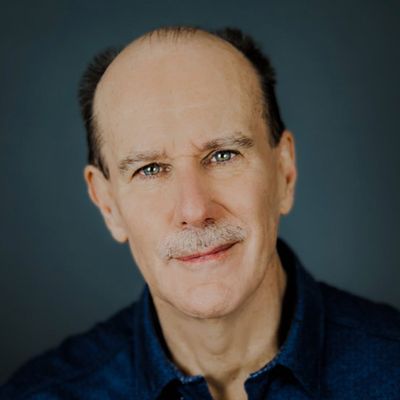
About
The second of a three-part program featuring Broadway composer-lyricist Craig Carnelia, known for his original score for IS THERE LIFE AFTER HIGH SCHOOL?, and his contributions to WORKING under Stephen Schwartz. Carnelia takes us through his songwriting process, including how his work evolves and songs are added even after the out-of-town tryout. He also performs several of his own compositions at the piano.
Featured songs: “Joe,” “Just A Housewife,” “Nobody Goes Out Anymore,” “Something To Point To,” and “Second Thoughts.”
Originally produced and broadcast in 1983. For more information go to AnythingGoesPL.com or BPN.FM/Anything Goes. Theme music arranged by Bruce Coughlin. Associate producer Jeff Lunden. Anything Goes – Backstage with Broadway’s Best – is produced and hosted by Paul Lazarus.
Transcript
This transcript was automatically generated and might contain errors.
[0:00] Paul Lazarus: Hi, this is Paul Lazarus. In the 1980s, I produced and hosted a radio series called Anything Goes, a celebration of the American musical theater. Now the Broadway Podcast Network is bringing back these shows. This is part two of a three-part look at the work of composer-lyricist Craig Carnelia. In 1983, Carnelia came to my New York apartment and discussed the writing of the score for Is There Life After High School and his contributions to the Broadway show Working. In 1977, Craig and Maureen performed an evening of Craig's songs at the Manhattan Theater Club called Notes. Stephen Schwartz obviously saw a version of that show later at the ballroom, I think you said, and asked you to write songs for Working, his show based on the Studs Terkel oral history of American workers. When he approached you to write the show, did he have specific slots in mind at the time?
[1:03] Craig Carnelia: When we first spoke and he asked me to read the book and tell him what I thought, no, he didn't. Or maybe he did, but he didn't say so. I read the book and we talked about specific songs and what interested me. And then he told me what he wanted me to write. And I wrote...
[1:20] Paul Lazarus: Was there a huge discrepancy between...
[1:22] Craig Carnelia: No. In fact, I wrote some songs that I wanted to write, and I wrote some songs that were assignments.
[1:27] Paul Lazarus: I think you more than anyone seem to find a way into Terkel's book. And what I mean by that is it's a difficult book to translate to the stage to begin with. Not in the sense that it's an oral history, you can just take their words, but it's difficult to stylize. And in song, it's much more difficult, I think, to find a way to put those people in song on the stage.
[1:51] Craig Carnelia: In terms of approaching that book, I think I found a way of bringing the book into song in Housewife and in Joe really successfully. I think if we'd had a whole score of songs like Joe, people would run screaming out of the theater. It's so wordy. But that was the first song I wrote on the show. And although Steve had assigned me that character, it was up to me how to do it. And it struck me that the idea of going back and forth between the singing and the talking, that is the idea of that song. This guy is going to tell us what he does with his days now that he's retired. The idea of that song is that he's going to ramble. And it's got to have a structure musically, so it's a song. But it's also got to sound like this guy just is going to talk your ear off.
And he does. And then it becomes totally musical when he's dealing with the past. Also, I don't know if you've ever noticed this, but the pronouns change. When he's talking about the present, he speaks in terms of you do this, you do that. When he talks about the past, it's I and we. And it becomes more real and more immediate and more heated. And then he gets back to you do this, you watch the news. I think it's a really successful song. I've never really seen it work totally. I believe it can. The device of going back and forth between singing and talking is for some reason very, very difficult. It does somehow, to me, capture precisely the tone of Terkel's Book. Studs felt that. I was very pleased that he liked that so much. And it's a case of form matching the idea. I met the man also. I met the character from the book in Chicago.
[3:31] Paul Lazarus: Oh, that's interesting.
[3:37] Craig Carnelia: He was with his daughter. And she came up and she said, you've made my father a hero. It was wonderful. It's a lovely moment.
[3:49] ♪ Musical number: "Joe" — performed by Craig Carnelia ♪
[9:08] Paul Lazarus: Craig Carnelia at the piano, performing Joe, a song he wrote for The Score, to Working. When you're listening to Anything Goes, I'm your host, Paul Lazarus. And my guest today, by way of a pre-recorded interview, is composer-lyricist Craig Carnelia. If you read Studs Terkel's book, Working, people are always talking about life and death and the very meaning of existence. And they're talking about it in terms of coffee cups and little, tiny, tiny details, day-to-day stuff, walking the dog, and they're about to burst into tears. I find those things really, really exciting to write about. I think it's, for me, a more...
[9:54] Craig Carnelia: I enjoy expressing large emotions in small moments.
[9:58] Paul Lazarus: We're on to something that I wanted to talk about in depth, is that one of the things that most attracted me to your work immediately, and I think the first time I really heard your work, was in Working, was just this principle, the notion of, if we can get flighty for a second and call it a subtextual kind of consideration in the song, that the person's thinking about not necessarily what they're speaking to. And a lot of times, you can have that thought be much more predominant than anything the character is saying. Very few songwriters have achieved that. The emotion overriding the detail of the words, so that the words, in a way, although they are incredibly skilled and put together, become secondary to the progress of the emotion of the song. But it's something that you do that very few people do in songwriting.
[10:51] Craig Carnelia: Thank you. I really feel that a song should go somewhere, that... Well, songwriters are always asked whether the music or the lyrics come first. And there are other parts to the song, the idea of being one, and that always comes first. But the other important element that's never mentioned is form, how you're doing what you're doing. In a song like Just
[11:16] Craig Carnelia: I knew basically the beats she was going to have to go through. In fact, when Steve first asked me to do that song, we were still in Chicago with the show at the Goodman Theatre. I didn't want to do it until I found in her chapter that she didn't sit still emotionally for two sentences. She didn't know what the hell she thought. And yet, she did. She was proud of what she did. She was just so embarrassed to say so. So I knew that I had to get her from being, why are you asking me what I do for? It's nothing. It's silly. To, hey, wait a minute. What I do is important. And then, I knew I wanted to have her go, uh-oh, uh-oh, I made a fool of myself. I got noisy. Oh, I didn't mean it. And have her take it back.
[12:07] ♪ Musical number: "Just A Housewife" — performed by Craig Carnelia ♪
[15:44] Craig Carnelia: And it died a thousand deaths. And so did I. That's where it came from. When that happens, you really don't want to go on with it. The song is interesting. I'm very fond of it. I think it's a good song. I know why it failed too, I think. I thought it was a good idea. In the book, Working, there was a man whose job was music. There were several. There was a piano tuner. But there was a piano bar player. And there were two things about him that intrigued me. One, in this musicalization of people talking about their jobs, why not have somebody whose job is music? And two, this man was about to lose his job because this place was closing. This era in which his job was the thing had passed. And with the hotel being torn down, he was going to lose his job.
I found those two elements to be interesting. What happened was the idea of his job being music didn't add a layer of theatricality or a level of theatricality. It took one away. Plus, the style of the song, it's so evocative of saloon songs. One of my favorite things about it is that it's really fine pastiche. It really does nail the style without ripping off any particular song. You don't listen to those songs. You don't. They're wallpaper. And here was this wallpaper song, and it was treated like wallpaper. And yet the lyric is saying something, and yet it's saying it in a kind of a clever saloon-y style so that you weren't really listening to the information or getting it as somebody talking about his job.
To make matters worse, the only thing I can say in defense of the big bomb that hit when the song came at the audience was that it started the second act, and it was almost used as an on-track. And because of the nature of the song, that it's always the kind of song you don't listen to, people coming back in said, oh, we don't have to listen to that. Some guy's up there playing a song. It never could have succeeded in that spot. But I don't think it could have succeeded elsewhere for those two reasons.
[17:51] ♪ Musical number: "Nobody Goes Out Anymore" — performed by Craig Carnelia ♪
[20:43] Paul Lazarus: Craig Carnelia performing his own song, a song cut from the score to Working when the show transferred from Chicago to New York, a song entitled "Hots Michaels at the Piano" or "Nobody Goes Out Anymore." And you're listening, of course, to Anything Goes, and my special guest today is composer-lyricist Craig Carnelia. One of the things I did when I read Working was I would jot down recurring themes, and two of the themes made it into the show. The "If I Could Have Been," it was my idea. I wanted to write a song called "I Would Have, I Should Have," and Steve passed it on to Mickey, which is fine, and the song works well. The other thing I kept noticing, one of the many other things that was recurring, was that need for something to point to.
And in fact, The Steelworker, who speaks throughout the show and precedes that song, actually puts it in those words. And I felt it was a good place to end, a good statement, and the idea of ending, bringing it down to the very essence of I did that, me.
[22:00] ♪ Musical number: "Something To Point To" — performed by Craig Carnelia ♪
[22:31] ♪ Musical number: "Something To Point To" — performed by the original company of Working ♪
[24:49] Paul Lazarus: After writing Working for Broadway, Craig turned his full attention to writing a complete score to the show Is There Life After High School. You first came upon the show by way of Ralph Kai's book of the same name. Isn't that right?
[25:07] Craig Carnelia: Yes. When I was preparing material for the Manhattan Theatre Club show, I read a review for Ralph's book, Is There Life After High School, and I had no intention of writing a musical based on it. It just was something that intrigued me. It was a very good review also, and it really explained what Ralph was doing. And I went out and bought it, and I just loved it. And, in fact, when I was writing songs for the Manhattan Theatre Club, I wrote Diary of a Homecoming Queen for Maureen to sing. And six months later, around the time of doing the Manhattan Theatre Club show, I was looking for what to do next, and I decided to do Is There Life After High School, and I got together with Jeff Kindley. I had met Jeff about six months before.
Bill Guile, who directed Notes, was directing a play of Jeff's at a college in New Jersey that he works at, and it needed some incidental music, and I met Jeff through that and liked him tremendously and liked his work. So we got together on it, and we started working. Right around the time, I started working on Working as well. In fact, before it.
[26:17] Paul Lazarus: Let's talk about some of the specific moments in the show. I remember hearing the title of the song before I heard the song, Second Thoughts, and it's one of those things that we all go through. Was that fun to write? Did you get any revenge out of that song?
[26:35] Craig Carnelia: Second Thoughts was fun to write, actually. Where the idea came from is the show is about how the past comes into the present with you and the various different ways in which it's still with you, one being memory, which is expressed in The Kid Inside and a handful of other songs in the show, another being things I learned in high school, which is about the past having been formative, Second Thoughts, spending your time in the present day thinking about what you should have done or would have done in a certain situation, a song like For Them, which is closest to insanity that the score gets. It's about doing the things you're doing, trying to succeed, feeling sorry you failed, and finding out that the reason you want it is other people.
In this case, those other people were people we went to high school with. But Second Thoughts was just one more level. It's the third song in the show and it's a progression from memory in Kid Inside, formative experiences in things I learned, and active, ongoing, I wish I'd done that in Second Thoughts. In terms of revenge, the only thing in Second Thoughts that is at all revenge is Marguerite told me you were teed because you were convinced I got the lead because Becker would never break the heart of his pet. That's to Marty Lutz. And if Marty Lutz is listening, I just want to say that that goes for you.
[28:05] Craig Carnelia: Second Thoughts about the friend I snubbed, Second Thoughts about the speech I flubbed, Second Thoughts about a creep named Todd, Second Thoughts about Denise, oh God, Second Thoughts about the fight I should have won, Second Thoughts of what I might have said and done while the chance was mine. If I'd only found the words that night, if I'd only had the guts to fight, if I'd only checked the mic, who knows? If I'd only called him back, just suppose. If I'd gotten in her pants, there and then, if I only had the chance, if I only had the chance again. But school is out, there's nothing I can do a thing about. The game is over and there ain't a doubt. The score is final, where we stood is where we stand.
Time ticks on and finds you talking to yourself in grown-up land. The chance is gone, I can't believe I let it slip right through my head. If I knew then what I know now, what I would have said was, hey, Billy-o, I'm sorry about before. I'm sorry I made you sore. You're still my best friend, okay? I'm such a jerk anyway. Forgive me about today. What I would have done was push the mic aside, get my tongue untied, knock them off their feet, and watch my man slide, slide. They would have gone, hey, Judy, yay, Judy. What I should have said was if you dunk me ever again, I'll bust your friggin' head, Todd, God. That would have been beautiful. It would have been.
[32:33] Craig Carnelia: Marguerite told me you were teed because you were convinced I got the lead because Becker would never break the heart of his pet. I got the part cause I'm better than you. It would have been beautiful. It would have been beautiful. Give her what she wanted. I should have known enough to give her what she wanted. She said it was safe, the safest time she said. Safe. I didn't know what she meant, so that was the way it went. If I only was half as good in high school as I am in my second thoughts. Half as good in high school as I am in my second thoughts.
[33:03] Paul Lazarus: I wanted to quote Douglas Watt's review of the show which ended by saying, but the evening's real find is Carnelia. Previously represented on Broadway by a couple of songs in the short-lived Working, I can hardly wait for his next show.
© Broadway Podcast Network, All Rights Reserved