

The first of a three-part program featuring composer-lyricist Craig Carnelia, known for his score to IS THERE LIFE AFTER HIGH SCHOOL?, and his contributions to the innovative Broadway show, WORKING... Read More
From the show: Anything Goes
Guests
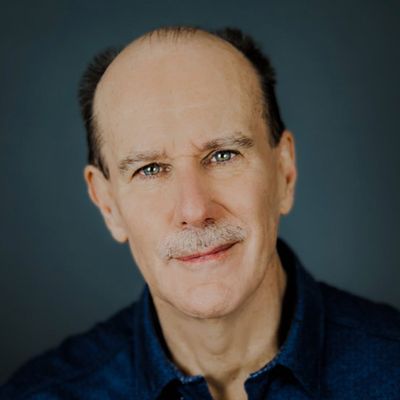
About
The first of a three-part program featuring composer-lyricist Craig Carnelia, known for his score to IS THERE LIFE AFTER HIGH SCHOOL?, and his contributions to the innovative Broadway show, WORKING. Carnelia takes us through his earliest theatrical experiences, his songwriting process, including how shows evolve and songs are added even after the out-of-town tryout. He also performs several of his own compositions at the piano.
Featured songs: “The Kid Inside,” “The Things I Learned In High School,” “Privacy,” “I Met A Man Today,” and “Two Birds.”
Originally produced and broadcast in 1983. For more information go to AnythingGoesPL.com or BPN.FM/Anything Goes. Theme music arranged by Bruce Coughlin. Associate producer Jeff Lunden. Anything Goes – Backstage with Broadway’s Best – is produced and hosted by Paul Lazarus.
Transcript
This transcript was automatically generated and might contain errors.
[0:00] Paul Lazarus: Hi, this is Paul Lazarus. In the 1980s, I produced and hosted a radio series called Anything Goes, a celebration of the American musical theater. Now the Broadway Podcast Network is bringing back these shows. This is the first of a three-part look at the work of composer-lyricist Craig Carnelia. In 1983, Carnelia came to my New York apartment and discussed how he got his start as a songwriter and the songs he wrote for his first shows. Good afternoon, and welcome to Anything Goes. About four years ago, I first became aware of a talented composer-lyricist named Craig Carnelia. It's my pleasure to be featuring Craig's music and lyrics on this program. You'll be hearing excerpts from a pre-recorded interview and song selections from Working and the newly released cast album of Is There Life After High School, as well as the songwriter performing his own songs. Here's the opening number from Is There Life After High School, music and lyrics by Craig Carnelia.
[1:19] ♪ Musical number: "The Kid Inside" — performed by Craig Carnelia ♪
[7:00] Craig Carnelia: It was a wonderful experience seeing that show. I'm glad that was my first. It was also around the time when I started performing in high school shows. The Music Man being the first. I was in the Barbershop Quartet. Actually, I think I was 12 or 13. I started playing other roles in high school shows and going to the theater more regularly with Jimmy. Also, there was something very romantic about my brother and I going into New York alone and seeing something.
[7:33] Paul Lazarus: Would you take the train?
[7:35] Craig Carnelia: Yes, but it was something we were doing together and getting out of Laurel Park, which is where I grew up. It was very romantic and stayed with me.
[7:46] Paul Lazarus: Do you recall when you first got the idea to write songs?
[7:50] Craig Carnelia: Yes. It's not a very good reason. I was in a folk singing group in high school. One of the other members of that group wrote songs, very bad ones. It was one of those things where I would see him producing songs, just making them up and thinking, I can do that too, and I did. Mine weren't any good either. They were vague protest songs and love songs about no one.
[8:18] Paul Lazarus: You played guitar early on.
[8:20] Craig Carnelia: Yes, that was my first instrument.
[8:22] Paul Lazarus: Then you took up piano?
[8:23] Craig Carnelia: Yes. I learned guitar when I was nine and came back to it. I didn't play it for a number of years. Then when folk singing came in, I started playing the guitar again. As I started writing, I needed to play the piano. I could feel that I had to get to the piano, so I taught myself when I was in high school.
[8:45] ♪ Musical number: "The Things I Learned In High School" — performed by Craig Carnelia ♪
[11:20] Paul Lazarus: Craig Carnelia at the piano, performing his own song, The Things I Learned in High School, from the score to Is There Life After High School. You're listening to a pre-recorded interview with the composer-lyricist. I know you were a performer early on. I mean, we talked about Music Man. What other kinds of roles did you do when you were in high school and college?
[11:40] Craig Carnelia: In high school I was a very young Charles Condamine in High Spirits, and Tommy in Brigadoon, and what else? Freddie in My Fair Lady, and also Hugo in Bye Bye Birdie.
[11:57] Paul Lazarus: And did you continue to perform in musicals when you went to college?
[12:01] Craig Carnelia: Yes. In college I did musicals and plays. And I did a lot of summer stock, non-equity. And I quit college to be an actor. I got cast in The Fantastics Off-Broadway as the boy. This was in 1969. I was 19.
[12:18] Paul Lazarus: How did a college student at that point go to do an audition for The Fantastics Off-Broadway?
[12:25] Craig Carnelia: I was still at an age where all dreams were possible. And when I was in high school I went to see The Fantastics, and I fell so in love with it that I called and said, how do I get to be in this show? And they said, get an 8x10 glossy and a resume. You can imagine what my resume would have looked like in those days.
[12:45] Paul Lazarus: Tommy in Brigadoon.
[12:47] Craig Carnelia: Right, Tommy in Brigadoon. In fact, I hadn't done Tommy yet, so it was slimmer than that. But I went out and I got my picture taken and sent it in with my resume, such as it was. And a year later, actually I sent several. I sent them like every six months.
[13:07] Paul Lazarus: You just did this one show?
[13:09] Craig Carnelia: Right. In my freshman year of college, they finally called and asked me to come in and audition. I went in, and I didn't get it. And a year later they called again, and I went in and I got the part.
[13:22] Paul Lazarus: And so after The Fantastics and a few other performing roles, you really decided to not be a performer, I guess. Was that a conscious decision?
[13:30] Craig Carnelia: Very conscious. I tend to slam doors much more than I should.
[13:35] Paul Lazarus: Yeah, I was going to say, with the voice that you have, it's a shame that there's not a possibility of that.
[13:40] Craig Carnelia: Well, things tend to be black and white for me. And right then, it seemed like I had to do the one exclusively and not the other. I don't regret giving up acting. I think that most writers, they like to show off in subtler ways. I like being there, having people like my stuff, and not having my face hang out. It just feels better to me. And also, I thought I was better as a writer than I was as an actor. I wasn't anything special as an actor, and I felt that I could be as a writer.
[14:17] Paul Lazarus: When you decided to be a writer and to forego performing, did you make any conscious decisions at that point how you would approach that? I mean, it's such a difficult thing to start in New York City. What did you do to get going?
[14:31] Craig Carnelia: Well, there are two answers. One is I didn't, in terms of what I wanted to be as a writer, I didn't think about it. I was only, I think, 20 years old. And there's this wonderful force in the universe that I didn't think about.
[15:17] Craig Carnelia: To find a bunch of actors, find a place, have them sing my songs, and invite everybody I knew. And at that point, I did that at the beginning of 1970. It was the first thing I did as a writer. And I did it like two months after I stopped acting. It was the first thing I did. It was what I knew. It was the first step. And it turned out to be very successful. From that, I got an agent and a publisher. And I got involved in a couple of projects with people who had seen the work. We have that wonderful advantage of not only being a good performer of your own songs, but your wife is also a terrific performer. So the two of you together are a pretty strong force. She's my favorite interpreter of my songs. She has a very, apart from having a great warmth in the voice, has just a very simple, straightforward approach to singing that seems to match the material. And of course, we're talking about Maureen Silliman.
[16:25] ♪ Musical number: "Privacy" — performed by Craig Carnelia and Maureen Silliman ♪
[19:20] Craig Carnelia: The song, I Met a Man Today, I know is one of your earlier works, and it's become almost a signature piece of Karen Akers. I think at one point you told me that this was written for a review. In the period of 1970 to about '76, I got involved in a lot of different projects, and one of them was a musical, was a review, it was going to be an anti-war thing, that never got on. And in fact, that song originally had a different verse on the front of it that set it up as a war thing. The person specifically who she was singing about, or singing to, was away at war.
[20:21] Paul Lazarus: Oh. Oh, I didn't understand that. Okay.
[20:21] Craig Carnelia: And when I rewrote the song after that, because I felt it was limiting to the song, and also it wasn't a very good verse. It had some clumsy writing in it. It's interesting, because you really don't need to know that about the song now at all. Not only do you not need to know that, I think it intrudes on it, and yet that's why I wrote the song.
[20:59] ♪ Musical number: "I Met a Man Today" — performed by Karen Akers ♪
[24:34] Craig Carnelia: I talk with Craig about an unproduced musical that he wrote called The Newcomers, based on the immigrant experience. I had no business writing that. I knew nothing about immigrants. I grew up on Long Island. That was the old country. I knew nothing. I didn't even have grandparents. We didn't have Sunday dinner where the uncles were there. I didn't know anything about immigrants except Fiddler on the Roof. You'll agree there's some pretty good tunes.
[25:12] Paul Lazarus: There are some pretty tunes, but the lyric writer had nothing on his mind.
[25:16] Craig Carnelia: There's that old adage of writing what you know. I would take that one step further and say you should write about things you care about. Write about things that are important to you. So not only did I not know, I didn't know from immigrants. I didn't care from immigrants. So I'm sitting there for four years writing songs about immigrants. The song you're probably going to play, Two Birds, which is a very sweet tune and kind of a dopey lyric, is not about immigrants. Who are the characters that sing Two Birds? Their names were Mariam and Stephanos. They wanted to get married, and some meanie would not let them. The play took place in the registry room at Ellis Island. It was kind of a hothouse of activity and very explosive emotions and a lot of double rhyming. This was one song where they went outside and they were looking up at the sky and they came up with a dopey song with a pretty tune.
[26:14] ♪ Musical number: "Two Birds" — performed by Craig Carnelia and Maureen Silliman ♪
© Broadway Podcast Network, All Rights Reserved