

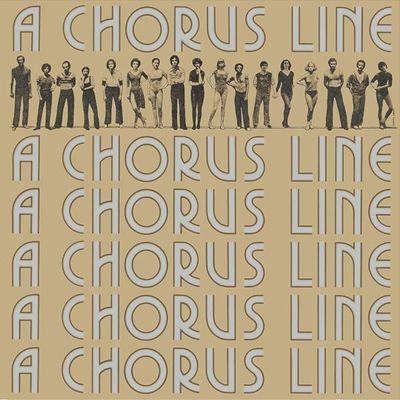
An epic show deserves an epic episode. To honor the groundbreaking musical A CHORUS LINE, we welcome four dancers, all with unique experiences "on the line" to continue the show's legacy of spotlighting what they do for love... Read More
From the show: A Musical Theatre Podcast
Guests

Featured Shows
About
An epic show deserves an epic episode. To honor the groundbreaking musical A CHORUS LINE, we welcome four dancers, all with unique experiences "on the line" to continue the show's legacy of spotlighting what they do for love. Thank you, Caitlin Carter (Original Revival Cast of CHICAGO), Steven Hack (Original Cast of CATS), J Elaine Marcos (Broadway's ANNIE and THE WEDDING SINGER), and Eddie Gutierrez (A CHORUS LINE at City Center) for making this episode funny, touching, educational, and of course, entertaining. Without further ado... A FIVE, SIX, SEVEN, EIGHT!
Be sure to check out our amazing guests:
- Caitlin Carter- After working alongside Ann Reinking during CHICAGO, Caitlin is now a driving force at the Ann Reinking Scholarship Program https://offthelane.org/ann-reinking-scholarship-program/
- Steven Hack- Check out Steven's website https://www.stevenhack.com/ and Instagram @stevenhackactor
- J Elaine Marcos- A guaranteed great follow on Twitter @jelainemarcos and Instagram @jelainemarcos
- Eddie Gutierrez- The future is now, so follow him on Instagram @eddie.ology
Some of the resources we discussed in the episode:
- On The Line - The Creation of A CHORUS LINE
- A CHORUS LINE and the Musicals of Michael Bennett
- Every Little Step
Be sure to follow us on Twitter, Instagram, and TikTok for more great content. Subscribe to PATREON! for only one dollar to receive exclusive content each month. Visit our Teepublic Store for great designs that benefit Broadway Cares/Equity Fights AIDS. And if you want to be our hero, leave us a nice review. :)
Transcript
This transcript was automatically generated and might contain errors.
[0:20] Jeffrey Scott Parsons: Welcome, everybody, to a musical theater podcast where we discuss the cultural and emotional impact of some of our favorite musicals in theater history. My name is Jeffrey Scott Parsons. You can call me Jeff. Today, we are talking about the musical A Chorus Line, which was a listener request by both Mauricio and Richard. I, myself, have been thinking of this episode for, like, well over a year. So much has been documented about this show and its creation, I wasn't even really sure how to approach it. There's a book called On The Line that was written by the entire cast, so I'm not gonna ask just one of them to come on my little podcast and dredge up all of the joy and trauma of creating the show.
There's another book, All About Michael Bennett, by Ken Mandelbaum that's really great, an incredible documentary film called Every Little Step. By the way, I'll put all the links to these in my show notes. But there is honestly nothing I can add to that from a documentation standpoint. But I went back to my mission statement for a musical theater podcast, and that is to reveal the cultural and emotional impact of these shows. And one of the greatest impacts that A Chorus Line gave us, I believe, is the story of dancers, right? Bringing them into the limelight, realizing that these are people, they're not just nameless faces doing everything exactly the same. So during this episode, I am going to have four different guests.
Each one has a unique story and relationship to the show, and with them, we are going to look at A Chorus Line through the characters on the line. So first up, and you guys, this isn't proof that it's a small world after all. I don't know what it is. If you listened to our Amazing Chicago episode, and if you didn't, I highly recommend you do so. You may remember me telling a story about being an LDS missionary in Texas, and one of the members of the church found out I was a musical theater guy. And long story short, I ended up carrying around a signed headshot of one of the original cell block Tango Girls from the revival for about two years. That incredible actor's name is Caitlin Carter, and I can't freaking believe she's talking to me right now. Hi, Caitlin Carter.
[4:43] Caitlin Carter: Hello, how are you? We're talking.
[4:48] Jeffrey Scott Parsons: So trippy. So Sister Tammy contacted you. Did you know who it was going to?
[4:58] Caitlin Carter: She did give me a little bit of background on you and said that you would just so appreciate it. And I'm always happy. I mean, you know, we all have to pay it forward and inspire. And when she told me about you, I said, absolutely. You know, that is not a problem and I'm happy to do it. And if it continues to keep your journey inspired, I love it.
[5:23] Jeffrey Scott Parsons: Well, it was. I mean, because when you're on your mission, you don't listen to any music. You don't watch any television, right?
[5:31] Caitlin Carter: Nothing.
[5:31] Jeffrey Scott Parsons: So my lifelines to my passion, my art form, were my mom sending me printouts of who was nominated for Tony Awards each year and your headshot.
[5:42] Caitlin Carter: So I don't know how everybody would have felt about you having my headshot with you.
[5:48] Jeffrey Scott Parsons: I did not. Full disclosure, I did not show it to any of my companions for fear of tempting them into something that they weren't ready for.
[5:56] Caitlin Carter: Exactly. Good, good, good choice.
[6:00] Jeffrey Scott Parsons: Now, your career just kind of embodies more different dance styles than almost any person I've heard of. And I can't wait to talk about that.
[6:09] Caitlin Carter: Sure. But before we go there, can you tell us your dancer story? How did you discover dance?
[6:14] Caitlin Carter: My background story. So I grew up and I'm from San Francisco, California. I grew up in the Bay Area. My mom was an aspiring actor and director. She did a lot of community theater in the Bay Area. And so I kind of got sucked into that. And she had always wanted to be a dancer. Here we go. Living our parents' dreams. So she enrolled me in ballet and piano and voice lessons. So I really. Oh, and cello. Oh God, I hate a cello. But anyway. Yeah, I know. One year. So I loved ballet. And ballet is sort of all encompassing. It takes over your life if you get serious about it. So around 13, I got very serious. Everything dropped by the wayside. I ended up at San Francisco Ballet. I studied the School of American Ballet in New York. And then I ended up going to the North Carolina School of the Arts in Winston-Salem, North Carolina, for my final high school years as a ballet major.
[7:07] Jeffrey Scott Parsons: Oh my gosh.
[7:08] Caitlin Carter: Yeah. And then out of high school, I moved to Philadelphia and I worked with the Pennsylvania Ballet. And then I got a contract with a company in San Antonio, Texas. And that company sadly went under. And my parents, my father especially wanted me to go to college. You know, that was my parents. Both have been college graduates. They went to Stanford and it was important to them. And I just thought, you know, it's time. I'm going to go to college. And then I ended up going to Rice. And while I was at Rice University in Houston, Texas, I worked with some concert companies on the side because I still love dancing. Couldn't let it go. It's hard. Once you're a dancer, you're always a dancer. And my name got around and I ended up being asked to do a production at Theater Under the Stars, Kismet.
They had a gorgeous. Yeah, I was Princess Samaras. I did this big solo. And the producers there said, hey, you know, why don't you come do the whole season next year? And I was still in college, but they worked around my schedule. And I was fortunate enough at the time this was the 80s to do some productions for Susan Stroman and Rob Marshall. They were early in their careers. And they came down to do some regional productions. And both of them said to me, you know, you should come to New York. You're good. And so I finished my degree in the summer of 1992. I made the big move. I got married that year. And then my husband and I, you know, we decided to move to New York. And within four weeks of getting there, auditioning, auditioning, I got my first Broadway show and I didn't even realize it. I was just auditioning for everything and anything as any good performer does in the beginning and just ended up for auditioning for Randy Skinner for a Broadway show called Ain't Broadway Grand.
[9:01] Jeffrey Scott Parsons: Tap legend.
[9:01] Caitlin Carter: Yes, that legendary show Ain't Broadway Grand. You know, and it was a wonderful experience for me. I was so excited and I got to meet so many people. I managed to get an agent out of it. Unfortunately, yeah, it didn't run very long. As many Broadway shows don't. That's part of the experience of being a performer. By the end of that year, I booked the first National Crazy for You. Went out for a year, came back and Rob Marshall remembered me and he cast me in Victor Victoria. Gosh, yeah. And, you know, going back to the crazy for you, that was Susan Stroman. So, you know, relationships, connections so important in the business. And then Victor Victoria led to Chicago. And then I ended up doing a Broadway musical called Swing after that.
Then I did another Broadway musical that didn't last very long called Bells are Ringing with Faith Prince. Yeah. So, you know, I've been very, very blessed. And I went from one Broadway show to the next. It was pretty wonderful. But, you know, it's as I always tell young performers, you know, you just want to really hone all those skills. Talking about chorus line and triple threats, you know, the people that have lots of tools in their belt, you're going to work a lot, a lot more. So you just really want to hone all those things. But, you know, the more crayons you have in your box, the more pictures you can color, right?
[10:19] Jeffrey Scott Parsons: I love it. Yes, I love that. I'm going to steal that. I like that better than my school belt.
[10:27] Caitlin Carter:
Now, a chorus line is such a special show. And in order to understand it, you kind of need to understand the era in which it was born. You know, we often talk about the end of the Golden Age being around 1968. And yeah, I guess like pre-1968, that's the time when so many classic musicals were written. But probably more accurately, it's when there were so many musicals being written, period. Right? Yeah, there was just so much. So it was just such a prolific period. I mean, they were right. I hate to say it. They were cranking them out and they were cranking out really good stuff. I mean, yeah, yeah, yeah, yeah. Mediocre stuff was good. Yeah, exactly. And then it got to a point when they went from 84 shows a season to 54 shows a season.
And that is a huge blow to the performers who were going from show to show and kind of living what we used to call the gypsy life. That term is not used anymore. But the idea is that you didn't necessarily have a home. You were going from show to show to show.
[11:31] Jeffrey Scott Parsons: Correct. And people I've worked with like Chita Rivera and Ann Reinking, they talk about that period. Annie talks about how she said it wasn't uncommon to do two shows, three shows a season. You would just bounce from one to the next. Now, with less work and then I guess drugs really becoming a thing. The theater district in Manhattan was getting run down and unsafe. And honestly, Broadway dancers were getting sick of it. So now enter two dancers, Michonne Peacock and Tony Stevens.
[12:01] Caitlin Carter: Yeah. Right. Yeah. And they call up a bunch of their dancer colleagues to come late at night, I think to like a yoga studio in January of 1974 to dance and talk and figure out how they could collaborate on something. Right. Maybe it was going to be a dance troupe or a theater group or whatever it was. They wanted to make something happen, create work for themselves, create something for themselves.
[12:27] Jeffrey Scott Parsons: Yes, exactly. So in addition to all these talented friends, they also knew they needed a little artistic muscle in their back pocket. So they asked legendary director, choreographer Michael Bennett to also attend. A lot of them had worked for him in Seesaw.
[12:42] Caitlin Carter: Yes. As well as other shows. Now, little did they know that he had been thinking about doing a project that celebrated dancers as well. He respected dancers. He knew they had stories to tell. So he shows up. He brings a recorder and tapes a conversation that ends up being an all-nighter. Yeah. Everybody sits basically in a circle on some pillows and they share their very personal stories and discuss what it means to be a dancer.
[13:12] Caitlin Carter: Well, and, you know, the beauty of that, I mean, there are so many pluses. There are some minuses. But the beauty of that was that they were with people that they knew. And it wasn't.
[13:22] Eddie Gutierrez: J Elaine Marcos. Steven Hack. J Elaine Marcos. Eddie Gutierrez. Jeffrey Scott Parsons.
[13:52] Eddie Gutierrez: J Elaine Marcos. Steven Hack. J Elaine Marcos. Steven Hack. J Elaine Marcos.
[14:22] Eddie Gutierrez: J Elaine Marcos. Steven Hack. J Elaine Marcos. Steven Hack. J Elaine Marcos.
[14:52] Caitlin Carter: They wanted to see America, they wanted America to see them. Exactly. Exactly. And my mom did get—I had a t-shirt and she bought me the album. I would get my little hairbrush and I would run around our family room and put on the Chorus Line album. So that was my first exposure. Wow. Yeah, and so fast forward to 1989, I got cast at the summer season of Music Theatre of Wichita. Wayne Bryan was running that and he knew one of the producers at Tuts, and that producer said, "Hey, I've got a pretty talented babe down here," and so he came down and held an audition and I booked the part of Val. And then the next year, Theatre of the Stars Tuts also decided to do A Chorus Line, and you know, and I wanted Val. I had done it, I was good, but that director cast me as Judy. So, I know.
[15:23] Caitlin Carter: Yeah, yeah, yeah, but I will tell you, so the Cassie for the production I did at Tuts with Cheryl Clark—Cheryl Clark was our Cassie and she was one of the Cassies that had been cast by Michael Bennett. She had done it in New York, she had done the first national tour, and she was just a wonderful woman. I would sit in the wings and watch her do the Cassie dance, of course, and everything, and just try to soak it all in. I remember we were sitting in the makeup room one day and she turned to me and she said, "You know, you should watch this dance. You're gonna do this part someday." And it's—that's another wonderful thing about our business is people passing it forward, and Cheryl was very generous.
She said, "You really need to watch me." And so fast forward, I was doing Bells Are Ringing on Broadway and I got a call to audition for a national tour of A Chorus Line by Oakley. You're gonna hear about her so much throughout this episode. And you know, my agent said they want to bring you in for Cassie, and it ended up between me and Darcy Roberts, Maginot.
[16:17] Eddie Gutierrez: Damn, Darcy Roberts. I know. Oh my god. I also—fun fact, she had been at Music Theatre of Wichita that summer I did A Chorus Line, she and her sister. Oh, and she had been doing some of the productions, but we're sitting there and by arc—I mean the audition was grueling. She put us through our paces, you know, we had to sing, do the monologue, do the number a million times, and then they asked us to go in the hallway. And Darcy and I knew each other, and Darcy's just a great girl, super talented, and you know, and she looked at me and she said, "You sound amazing," because Darcy really is a great singer, and I'm a good singer. But she said to me, "But you dance so much better than I. I bet you're gonna get this."
And I said, "You know, they're gonna be good with either one of us. We're both capable." I always say that to people when you get down to the final callback, you're more than qualified. You know, it just becomes subjective at that point, and I booked it. And you know, I was thrilled. It was a fast and furious rehearsal period, and it was—it was a hard role.
[17:23] Caitlin Carter: Seriously though, it is. You stand there the entire show, yes, and then have to do the most difficult dance in all of musical theater history. Yes, you shift your hip back and forth.
[17:35] Eddie Gutierrez: So true.
[17:36] Caitlin Carter: Standing on the line is one of the most difficult parts of the show. It truly is, and I always love doing the show because it does speak to you so personally because it's your life, and so we all know it so well. It's easy to tap into. You know, A Chorus Line has such an unusual creative process. It was very naturalistic, very raw, very scary, very vulnerable, and it ruined some people's lives. But it's also why it's so emotional when you—like you can't see it without honestly feeling the sweat, blood, and tears.
[18:06] Eddie Gutierrez: Absolutely.
[18:07] Caitlin Carter: That went into it, and that's what made it such a benchmark musical. It was real, it was raw, and it opened that little door into what our lives are like now. Very quickly, let's talk about Michael Bennett. Okay, because he's a member of the generation of great manipulators: Jerome Robbins, Bob Fosse, you know, love, you know, it's that—it's that—I don't want it. Well, I was gonna say love-hate relationship because I would have killed—I didn't get to firsthand work for any of them, but being a performer, love it or hate it, I would have killed to work for any of them. You know, even with the stories I heard, 'cause you know, we grew up with—that's the way the business is.
[19:02] J Elaine Marcos: Sure, sure.
[19:03] Caitlin Carter: You know, we're sort of in this period in history where we are taking a look at all of that and saying, "Is that appropriate? Is that really the way we have to do things?" And we're sort of questioning that, and it is a conversation that's ongoing because some of it actually does bring out some stuff in people that can be pretty amazing. But you're absolutely right, they were a little manipulative of their performers.
[19:27] Eddie Gutierrez: Absolutely.
[19:28] Caitlin Carter: But the reason that Michael Bennett is a hero to me and will continue to be so is he, above anyone else, figured out how to give audiences what they wanted while giving them something they didn't even know they were getting or didn't know they needed.
[19:44] J Elaine Marcos: Exactly.
[19:45] Caitlin Carter: Yeah, exactly. I mean, his understanding of stagecraft and, as you said, how to bring the audience in—not everybody is good, and there of course is a story about that. The reason that A Chorus Line is named A Chorus Line was because he wanted to be listed, you know, before Chicago because there was always this rivalry between him and—not only him and himself, but him and Bob Fosse.
[20:05] J Elaine Marcos: Yes.
[20:06] Caitlin Carter: But I think that this is another great example of the show is called A Chorus Line and everybody loves a kick line. I went and saw a community theater production of Something Rotten, and by darn it, when all of those community people started doing a kick line, the audience spontaneously broke out into applause, right?
[20:27] Eddie Gutierrez: Yeah.
[20:28] Caitlin Carter: Yeah, it's always—it's kind of a given. It's really hard to mess up a kick line. The audience loves it, and even a mediocre kick line—and I'm not saying that was a mediocre kick line, I'm sure it was a mediocre kick line—it still works because there's something about the fact that all these different people in a show, they come together as one.
[20:50] J Elaine Marcos: Yeah.
[20:51] Caitlin Carter: And I gotta say, every time you do one, every time you're waiting in the wings to, you know, go out and take your bow, it's very emotional because you know that audience knows you and they're looking for you, and you feel it. You feel that there are people that know my story as this character, and they're trying to find me.
[21:10] Eddie Gutierrez: Yeah, it's—
[21:11] Caitlin Carter: I know I've already got the chills so much. We've just like—I know I just started, but just, you know, I haven't—you know, I've thought about these things over the years, but you know, being able to look back on it now, you know, yes, it does give me chills. I—you know, when you're young, you wish you'd really thought about it more as you were doing that number, but now as I look back, I realized how amazing it was. Okay, let's talk about Marvin Hamlisch.
[23:05] Caitlin Carter: Okay, so good old Marvin. One of the only people who's an EGOT—that means he's won an Emmy, Grammy, Oscar, Tony. He is one of only two people, however, to be a PGOT. He won a Pulitzer.
[23:21] Eddie Gutierrez: Oh, that's right.
[23:22] Caitlin Carter: Wow, of course A Chorus Line won everything, including the Pulitzer Prize for Drama. Yes.
[23:28] Eddie Gutierrez: I did not know that.
[23:29] Caitlin Carter: Pretty amazing. Wow. Now at this point when A Chorus Line comes about, he has become a well-known accompanist, and then that led to film scoring. And in 1973, he won three Oscars in one ceremony because he had written the song "The Way We Were."
[23:46] Eddie Gutierrez: Oh, right.
[23:47] Caitlin Carter: And so that was right before A Chorus Line, so he's kind of, you know, the best thing since white bread or since sliced bread. And then he gets hired in to come and do this show with Michael Bennett. His lyricist was Edward Kleban. He's a fascinating guy. I'm really always very interested in Ed Kleban because he was a lyricist, but he was also a composer, kind of in the same way that Stephen Sondheim was first hired to be a lyricist. And not only was one of his crowning achievements A Chorus Line, but he also became very instrumental as a teacher at the BMI Lehman Engel workshop, which—and I've talked about on the podcast before—is if there is a composer that you love post-1980, I guarantee they came out of this workshop.
[25:06] Eddie Gutierrez: Yeah.
[25:07] Caitlin Carter: Alan Menken, Howard Ashman, Flaherty and Ahrens, you know, Jason Robert Brown, everybody. And there's this really cool show called A Class Act that they put together that is about his life and uses all of the music that he wrote that never made it into a Broadway show. It's really, really fun, and I highly recommend that if people want to know about this character.
[25:29] Eddie Gutierrez: Did they go to that show? It's very cool.
[25:31] Caitlin Carter: I'm gonna go to that show because I've heard of it and I've never actually pulled it up. There's some great stuff. There's a song called "Better" that is just about as good as any musical theater song you've ever heard in your life. It's really terrific. I'm writing it down.
[25:46] Caitlin Carter: So they work together on the score, and then you had two dancers, Nicholas Dante and James Kirkwood Jr., who worked together on creating the script based off of a lot of these interviews and tape sessions that had gone into the research for the show. Their job was incredibly difficult because the show itself didn't know what it was going to be until it was.
[26:01] Eddie Gutierrez: Right.
[26:02] Caitlin Carter: And you're kind of—it's like the chicken and the egg. The show didn't know what it was gonna be until it was, and you're kind of—I'm curious as to, as you said, that was such a daunting job for them. But once they came into the picture, did the show finally find its shape? That's my assumption.
[26:44] J Elaine Marcos: The last person I want to talk about is Joseph Papp, who was the producer of The Public Theater in New York City. And his relationship with Michael Bennett really changed musical theater, not just because of the product of A Chorus Line, but the process in which they created it. Instead of just going straight into rehearsals with a finished script and then doing an out-of-town tryout like most musicals did, they started workshopping. And now that's a word that we use very casually nowadays, but that wasn't done.
[27:14] Steven Hack: Oh, casually. Every show. No, up until then, you're absolutely right. And it's interesting you say the out-of-town because that was always the tradition. Like every show went out of town to work on it. It's legendary. You see it, you know, movies about theater and just silly movies like we're doing our out-of-town tryouts. We're in Boston and everyone hates us. We're in Boston. We're up in New Haven. Everybody was in New Haven, you know, doing a show. And when I came into Broadway, late eighties into the nineties, you still had the out-of-town. It's not so much anymore because it was also a way to kind of hide and work on things out of public view. And with the internet and the age group right now, it's almost impossible to do that.
You can't really work on something privately. That's the workshop I think is now much more important because you can kind of work out those kinks without being under a microscope of social media and everybody giving their two cents. And yeah, I, uh, when I worked on Swing, I think we did three workshops. It was like, Oh wow. I mean, thank you, Mr. Papp, because you know, I do think workshops are fantastic means of finding your show, being able to make mistakes out of public view. Um, and, and it's also as a performer, it's a really fun creative process because your input is there.
[28:29] J Elaine Marcos: Now the show that ended up opening on Broadway and becoming the biggest juggernaut of a hit, the longest running show for quite some time, I mean, is surprisingly stark. It's just about a bunch of dancers who are at an audition for a Broadway show. The director named Zach is looking for, Oh, I forget how many, Oh, what's that line? Is it six boys, three, three, I think it's six. It's like three men, three women. I think you're right. I think it's like three men and three women. Yeah. And they're backup dancers for a female star. And the idea that he has is that he wants performers who really share themselves in their performance. So in addition to this opening number, which is just absolutely electrifying, seeing them dig into that grit and really, uh, really serve this choreography over and over again, it's, it's the same combination and yet it never gets old.
You see these different individuals, maybe struggle with certain parts of it or bring their own strengths to it. And it becomes new every time. It's so fantastic. But after a cut is made, he wants to now not just see them dance, but hear something of who they are.
[29:51] Steven Hack: Get to know them.
[29:51] J Elaine Marcos: That's when we begin to meet each of these dancers. And we're going to talk about just a few, you and I real quick. The first one we're going to talk about is Miss Cassie Ferguson. Uh, now Cassie is a really fascinating character. The idea is that she was a chorus dancer and ensemble member, then had a couple of standout parts looked like she was going to be on the track to becoming a star. And that was in many ways, Donna McKechnie, who originated the role, her story, right? She had been in Michael Bennett's shows. She had done Company and Promises, Promises and had stopped the show with her dancing. She moved to LA to start working and nothing really happened.
[30:37] Steven Hack: Yeah. She was squeezing toilet paper. Um, it's a story as old as time. You're always kind of looking to break out of the ensemble. I mean, I have met many performers and dancers who they are just happy as clams to be in the ensemble and that's their ambition. That's their dream and that's okay. It's wonderful.
[30:56] J Elaine Marcos: The show can't happen without them.
[30:59] Steven Hack: Exactly. Exactly. And, um, but you know, I think everybody has a dream when they come to New York of like, you know, what's the most I can do with my talent? How far can I get? We'll see. And, you know, it's happening today. It's happening right now. Whenever you see like a hit show and, you know, people are being singled out, you kind of wonder what their journey is going to be, how their career is going to go. Are they going to be big stars or, you know, in two years, are they going to be back in the chorus? You just don't know. Show business is a tough mistress. Um, you know, and, and, and it's the same thing with Cassie's story. And I will say physically, there are parts of that number that I loved doing. And then there are parts that I just hated. I mean, we're all, you know, physically different. And, and this dance was crafted for Donna McKechnie. It's built for her body.
[32:02] J Elaine Marcos: It is built for her. It's built for her body, her torso, her legs. And admittedly, she and I are not, you know, we're not the same dancer. Um, and I really, and also Bennett's choreography, I always say it tends to favor shorter people. It's, it's, it's very into the ground, low. For those of us who are longer, it's tough. It's hard to get down there in that, you know, that opening number.
[32:21] Steven Hack: It's so tight. You have to stay very tight and small. I totally see that.
[32:27] J Elaine Marcos: Exactly, exactly. And for us long-limbed people, it's a challenge. So, and the Cassie dance is the same thing. You know, Donna had this amazing back. Uh, you know, my strength is more in my legs. Um, and so certain things that Donna did were, were a challenge for me, I have to say. She's a beautiful singer, an amazing dancer, but she was also a good actress. Um, and I always hated that line. Like, I can't act. It's like, oh, but Donna could, you know, but, you know,
[35:00] Steven Hack: but that's what they chose for that character. And maybe.
[35:04] J Elaine Marcos: Is it an insecurity? Is it someone that's, is it something that somebody said once? And so you chose to believe it?
[35:05] Steven Hack: Right. You chose to believe it. Or it's like, you know, when ladies say, oh, I'm so fat and they just want you to say, oh, no, you're not.
[35:11] J Elaine Marcos: No, you're a really great actor.
[35:12] Steven Hack: You're, you're, yeah. And it's like, like, I can't act. Oh no, Cassie, you're an amazing actor. But you know, that, that delves even deeper into the psychology of being a performer, you know, that constant, you know, you always have that insecurity. Like, am I really good? Am I talented?
[35:27] J Elaine Marcos: Am I good enough? Am I good enough?
[35:29] Steven Hack: Yeah.
[35:30] J Elaine Marcos: I mean, talk about like a thesis statement of this show. Am I good enough? And ultimately we're saying who you are is who you are. And that is perfect.
[35:41] Steven Hack: And that is perfect. And you should not, you know, even the kids at the end of Porcelain who don't book the show, that's always such a tough thing. And I always love the audience's reaction when they find out who gets the job and who doesn't, you know, because they become invested.
[35:54] J Elaine Marcos: And I believe when the show first started previewing, or at least started having an audience, Cassie was not one of the chosen.
[36:05] Steven Hack: I agree. I had read that. IARC told me that. Yeah.
[36:08] J Elaine Marcos: And audiences were so upset that they changed it so that Cassie would get, would get the job because she had done everything that could have been asked of her. You know, Zach keeps saying, you're too good. You're too good for the course. And she's like, I want to work. That is all, you know, and how can you not get behind that person?
[36:28] Steven Hack: Exactly. And if I'm, and if I can do the job, why shouldn't you hire me? Because that's his own little agenda. Like he sees her as being a star, but she's not working Zach. It's like, it's great for everybody thinks I'm a star, but I can't pay my rent. I love that. But yeah, I didn't, I remember reading that. And I also remember reading that they wanted to maybe change who got the job every night.
[36:52] J Elaine Marcos: Right. Like it was a choose your own adventure type thing, but then the dressers would get so angry because that costume change at the end between who gets the part and who doesn't and who has to be on stage first for one is like, you cross your fingers and say a prayer and just hope you make it out on time. So there's no way to, there's no way to organize that. Those poor dressers were like, Michael, don't you dare. Don't you dare. You know, and the costume designers and everybody, it's, it's just, yeah, it's a bit of nightmare.
[37:23] Steven Hack: I mean, it would have been kind of fun and exciting, but it's also a little, um, it's a little kitschy probably.
[37:28] J Elaine Marcos: Yeah. That's a good, that's a good word for it. Yeah. Yeah.
[37:33] Steven Hack: So I don't think the payoff's worth it, but yeah. All right. The three other characters that we're going to talk about are from my favorite number in the entire show, which is At the Ballet.
[37:43] J Elaine Marcos: Yes. And I'm not even really a ballet boy, but this song always gets me. You got three characters, Sheila, Maggie and Bebe and all three ballet is their safe place.
[37:58] Steven Hack: Yes. Going to ballet class is their safe place. Sheila Bryant is a veteran. She's got a lot of attitude. She she's no nonsense. And they're done that. Exactly. Played originally by Kelly Bishop, then known as Carol Bishop. Kelly Bishop, if you don't know who she is, the grandma in Gilmore Girls, she's, she's as good with rapid dialogue as she is rapid choreography.
[38:24] J Elaine Marcos: Oh, no, she's, she's amazing. And she's an amazing actor. And she was recently in something else. Oh my God, it's going to drive me crazy because I just watched it. Oh, she was in Halston.
[38:35] Steven Hack: Oh, really?
[38:35] J Elaine Marcos: Yes. She plays, uh, I think a publisher in Halston. She's a friend of Halston's, but she's a publisher. Yeah. I have a quote here from her because she was one of the people who was at the original tape sessions. She says, when it came to my turn, I said, my name is Kelly Bishop. My real name is Carol Jane Bishop, which I really hate. I was born February 28th, 1944 in Colorado Springs, Colorado, and I'm going to be 30 real soon. And I'm real glad. That's exactly what she said. And that's exactly the line.
[39:04] Steven Hack: Yeah, it's incredible. So a brilliant performer and a brilliant character that are basically synonymous. She is so good. I was, I was doing a benefit during Chicago days and, and, and Bebe was there and Kelly was there performing and I did, you know, I knew who she was and Bebe came and she's like, do you want to meet Kelly Bishop? I was like, Oh my God. Yeah. You know, and Bebe just like this with Kelly Bishop, um, cause you know, Bebe played Sheila. She was one of the youngest Sheila's, which is crazy. So yeah, she, you know, I was so, I was like, yes, but I was so intimidated. Uh, cause yeah, she, she does not suffer fools and, and she's a very strong woman. Um, and she was very nice, but you know, I was just like, Oh my God, it's, it's Kelly Bishop. I don't know what to say. I'm probably so stupid, but it was, but it was, it was great. But yeah, no, the character's amazing. One of the highlights of the show. And of course Kelly won a Tony award for it.
[40:07] J Elaine Marcos: Another character in the song is Maggie Winslow. Maggie is super sweet, comes from a broken family and a broken home, and so once again ballet was her safe place. This story about her pretending to dance with her father in her living room, that's actually Donna McKechnie's. Yes, and that line always used to get me. That used to always make me tear up. Then we have B.B. Benzenheimer, the best name in the show. And B.B.'s story about always wanting to be pretty and having her mother tell her that she wasn't pretty, she was different. And B.B. realizing, well, I'm not sure that's better or even as good. Right, what does that mean? What are you telling me, mom? Anyway, that's a Kelly Bishop story. Go figure.
[40:57] Eddie Gutierrez: Oh, really?
[40:58] J Elaine Marcos: Yeah. Specifically that wording about different is nice, but it sure isn't pretty. Pretty is what it's about. Once again, just the strange culture of playing a character and then listening to another character say lines from your own childhood. That's pretty crazy.
[41:17] Eddie Gutierrez: That would be really trippy. And what is that about? Because Kelly Bishop's a beautiful woman.
[41:22] J Elaine Marcos: Gorgeous. What was Kelly Bishop's mom thinking?
[41:25] Eddie Gutierrez: Maybe Kelly Bishop's mom was jealous.
[41:28] J Elaine Marcos: There you go.
[41:29] Eddie Gutierrez: Who knows? But yeah, that is just... But Kelly, you know what? Kelly can probably handle it.
[41:35] J Elaine Marcos: She can handle it.
[41:36] Eddie Gutierrez: Yeah. Kelly Bishop can handle it.
[41:40] J Elaine Marcos: Can the adults please smoke? Thank you.
[41:49] Steven Hack: Hi, how are you?
[41:52] J Elaine Marcos: Good. I'm so grateful you're here. Thank you so much for doing this.
[41:56] Steven Hack: Sure.
[41:57] J Elaine Marcos: Now, you are a veteran of the Broadway, including the original run of Cats. And before that, you were on tour with The Chorus Line. Both of these shows, two of the longest running in Broadway history.
[42:07] Steven Hack: Exactly. That's why they have a history of hiring many, many, many dancers. So, you know, they keep running, you can hire more people.
[42:17] J Elaine Marcos: What years of your life were those moments?
[42:20] Steven Hack: I was 18 the first time I auditioned. And I was still in St. Louis where I grew up. So it was all pretty much, you are too young to be in this show. But I moved to New York. And I used to see T. Michael Reed, who was eventually the long time dance captain at dance class. And many of the kids in class were like in a chorus line. I was like, I want to be in a chorus line. So it was three years later, I had auditioned nine times.
[42:53] J Elaine Marcos: And stop it.
[42:55] Steven Hack: I did. I had auditioned because I would go to every open call they had, including that one in St. Louis that I went to. Finally, there was another open call. And I called up the casting office. And I just left a message saying, this is Steven Hack. And I see there's another open call for a chorus line. And I just wanted to let you know, I'm not going to be there.
[43:17] J Elaine Marcos: The grit and tenacity.
[43:20] Steven Hack: And three days later, they called and offered me a job.
[43:24] J Elaine Marcos: Wow. And you're kidding. Way to set those boundaries.
[43:27] Steven Hack: Yeah, because I was like, I think my message said something like, I've auditioned nine times and I think you know what I can do by now. I mean, I really was. I was way more ballsy than I am about anything now. But yeah, so I did the show. I mean, I was hired for the show to do understudy. Mike, Mark, Larry, Greg. And I did that for a year. And then I took over the role of Greg.
[44:01] J Elaine Marcos: That's incredible. You're from St. Louis. How did you discover dance when you're grown up?
[44:06] Steven Hack: When I was growing up, I was Mike. I literally have a tape recording of my sister teaching me tap in our basement on the cement. Wow. And you hear her saying shuffle ball change. And I'm saying and in a little bitty voice, you hear I can do that.
[44:25] J Elaine Marcos: Stop it. Really? It's true.
[44:27] Steven Hack: Anyway, so my sister. So I was three and my sister was teaching me what she learned in her dance classes. And I would do I just wanted to do anything my sister did. So they my parents sent me to that same dance class, Merle Sheff School of Dance in St. Louis. And I was going to dance class for a year, I think. And then when I was four, my dad decided that little boys don't dance. So I didn't come on dance class anymore until I was about 12. And I auditioned for a community theater production of Good News. And the director and choreographer of that show, they, I guess somehow convinced my parents that it was OK to that little boys can go to dance class. So at 12, I went back to dance class and I was just doing jazz and acrobatics.
In fact, I just talked to some cats friends yesterday and we were talking about doing the double cartwheels in Mungojerrie and Rumpelteazer. I said, sure. When they started teaching us that I was like, oh, I could do that. My sister and I used to do that. Of course, I was 10 at the time. Center of gravity, a little different. It's harder with adults on a raked stage. Anyway, so then I started dancing again when I was about 12. And then through the next several years, I was in shows at high school and at the community theater. And one of the big dance teachers in St. Louis, Michael Sims, said that boy should be come to ballet class because I had not ever been to ballet class. And I learned because I didn't know at the time somebody said, you have a really good feet.
Yeah, I'm not even sure what that means. But thank you. But thank you. I guess, no, it must have still been 15 because when I was 15, the National Ballet of Canada came to St. Louis with Rudolf Nureyev and they needed boys to play the pages. So I got recruited by my dance teacher to stand on the stage with a spear. And I'm watching this Rudolf Nureyev. I didn't really know who that was. I thought, oh, this guy's good. He's pretty good, this guy. One of one of our friends from dance class was invited to be an intern, I guess he was, or in the National Ballet of Canada school. And I thought that was fantastic for him. But I knew at that time it wasn't what I wanted to do. I said, no, I want to be an actor.
[47:14] J Elaine Marcos: I love that, number one, you had these adults kind of all along the way who are seeing your talent and encouraging it. That's really inspiring to me.
[47:28] Steven Hack: Yeah, that was great. I especially my family. And then to see like the guts of this little boy to know what he wanted. Yeah, that's incredible.
[47:37] J Elaine Marcos: I'm remembering back because I really am kind of shy now. But I learned early on that when I was on stage and somebody gave me lines to say, then I wasn't shy anymore because I didn't have to think up what to say. Well, OK, so since you played Gregory Gardner, I did. Let's start talking about him because we're going to go through a few characters here. Sassafras, the embodiment. How would you describe this guy?
[48:06] Steven Hack: Well, first of all, when I got hired, I still looked very young. And they said, what are we going to do to make you look older? And they had me grow a mustache.
[48:13] J Elaine Marcos: Oh, OK. It kind of came in like blondie. I was a kid still. And they and I painted it every night with a mascara. I mean, eyebrow pencil. I wasn't peach, but it needed help.
[48:27] Steven Hack: So, Greg, yeah, he's a little snooty. I think that my was inspired largely by John DeLuca, who was playing Greg when I joined the show. OK, because I loved the way he did it. And he was very, very full of himself on stage and didn't have any qualms about saying so.
[48:53] J Elaine Marcos: That's how he appeared to me. It was someone who was grand.
[48:56] Steven Hack: Yeah, grand. The Gregory Gardner is like the gay male incarnate of, I don't know, Judy Dench.
[49:07] J Elaine Marcos: Yeah, except she's more humble.
[49:11] Steven Hack: Yeah, fair enough. That's true. That's true. And the truth is that I never felt better looking or more confident than wearing that Gregory Gardner costume.
[49:20] J Elaine Marcos: Really? With the boots?
[49:24] Steven Hack: The boots. And well, when I joined the show, they still were having the old costumes that they had made in 1975. And Greg wore velour pants, black leotard underneath with a yellow sweatshirt over it and the boots. Which I love. The boots are so Gregory Gardner. I still have two pairs of boots. And we think that those boots were inspired by someone who wore them to rehearsal who had been in Fiddler on the Roof.
[49:59] J Elaine Marcos: Oh, like they kept their shoes from their run.
[50:03] Steven Hack: Yeah, they always give you your shoes because they're custom made for you. I still have my Gregory Gardner boots because they're made to fit my feet. Yeah, it's actually a little bigger than the other foot, so nobody else.
[50:13] J Elaine Marcos: You're going to have to take pictures of your Gregory Gardner boots for us.
[50:17] Steven Hack: I will. Well, let's go on to Bobby Mills.
[50:20] J Elaine Marcos: OK, Bobby, who is played by Tommy Walsh. And, you know, I actually really connect to the story that Tommy Walsh shared from the original tape sessions, which is that, you know, they were going around and everybody was sharing their dancer story. And many of them had incredibly tragic and serious and profound things to say. And it got to him and he was like, I mean, I don't think I really have anything that good to share. So he chose to be, you know, a little lighter with what he said and, you know, was cracking jokes. And I totally relate to that. I remember being in college and it was like a group voice class and the voice teacher asked us to each go around and introduce ourselves and say something that revealed who we are.
And the first girl said her name and then said that her family was very important to her. Now, remind you, I am at Brigham Young University, which is the capital of love and family. And so once she had said that answer, everybody after her did exactly the same thing, because they would feel bad if they didn't say that family was the most important thing to them. Until it got to me and I was like, my name is Jeff and I really love Broadway trivia. Like, like I just refuse to say family. Yes, family is very important to me, but like I couldn't and I couldn't anymore. And everybody already said it.
[51:48] Steven Hack: Everybody already said it. Exactly. So I kind of connect to Bobby in that in that way. I feel like he's like, all right, I'm going to let you all know a little bit about me and I'm weird. I think that I would have been like that, too. Because I was always so shy, my nervous reaction in almost any situation to make myself comfortable was to say something funny. It often still is. I think I would relate to that. I actually always thought that I should have understudied Bobby, but it was usually the tall guys. After Chorus Line, Tommy Walsh really became a co-director and a co-choreographer with Tommy Tune and won quite a few Tony Awards, definitely made a name for himself as a creator. Let's go on to Don Kerr, who I love that everybody has their numbers, their audition numbers. And Don's audition number is number five, which makes me think he was a pretty eager beaver in terms of signing up. He got there early.
[52:49] Steven Hack: Probably. Yeah. I also whenever I think of Don, I'm just like, oh, bless his heart, because he was a really big part of the show. He had a huge monologue. And as the show kept getting created and shaped and changed, his role just got diminished more and more and more. He was originally kind of a rock and roll type character where he grew up not liking dance and then ultimately kind of found that it made him cool. And so he became a dancer driving a Corvette.
[53:28] Steven Hack: He sits in the audience of A CHORUS LINE, or anyone who's done A CHORUS LINE. They relate to some part of every part, some part of every role. So I know for me, the thing that I relate to that is that I wanted to be an actor. I didn't want to be a dancer. And somebody said, look, you dance. There's a lot more shows that hire dancers than there are that hire actors. So dance. That's like a literal line from the ending section of the show. But yeah, so Don, but he wanted to be a director mostly.
[54:06] Caitlin Carter: Yeah, that's true. And I often wonder if that's one of the reasons why he doesn't get the show in the end. Because on some level, oh yeah, I don't want to hire a director.
[54:11] Steven Hack: Yeah, well, he feels like his heart's not really into it. Speaking of that, I think that's a great segue into, even though this show was groundbreaking, and has created this amazing legacy, it was not exactly a happy one. They were trying something new. And there was a lot of tension. They started rehearsals without even knowing what the script was going to be like. And one of the worst things that happened was the original cast and members of the first taping session that were so essential to the creation were tricked into signing away the rights to their stories for literally $1 plus a single percentage point of I think merch royalties to be split among them. So as amazing as the show is, it comes with a lot of bruises. And I don't know if you're willing to talk about this, but I know that doing it came with some bumps and bruises as well. You've said it wasn't necessarily the most positive place to work.
[55:04] J Elaine Marcos: Yeah, I'm willing to talk about it. I think that I left the show, which I loved doing. I loved doing this show from the point of step kick, kick, leap, kick, touch, which is the first thing ever said, to the very end, even though Greg didn't get the job every night. But the backstage drama is what was hard, because Michael Bennett was tough. And he would come see the show and fire people willy-nilly. Suddenly, we're like, what happened to her? Oh, she was sent out to the international company to understudy. So I always say that it's something he learned from Jerome Robbins. But they each had a little bit of a unique problem in that they were asking dancers who normally had been prior in the dancing chorus, and they just danced.
And he wanted them to be actors. And many of my friends were dancers, never had any acting classes. So he had to get these people who were trained to be fantastic dancers, which is what they needed, and what Jerome Robbins needed for West Side Story, but that they never opened their mouth and said any words before.
[56:21] Steven Hack: Wow, you've really blown that open for me. I hadn't really thought of maybe the, it wasn't just these inner demons that these guys had, it was a need that they needed to get out of people who didn't have training.
[56:33] J Elaine Marcos: Yes, I truly believe that that's why, you know, I never heard him say it or anybody else say it. But I think a lot of us felt it, because we saw the manipulation and the horrible things that he would say to people. One of my good friends was playing Bebe, and he would say to her, you're not even pretty enough to be Bebe. And one rehearsal, she started crying. It's like, that's what I want. Wow. People would lose their jobs all the time, get fired, because he wanted and needed every night for you to be standing on that line going, God, I hope I get it. And with the way that he instilled that in people was, God, I hope I keep my job. So that anyway, that part of it backstage was tough. And also, there were a lot of people taking drugs. I mean, that doesn't help for sure.
[57:26] Steven Hack: No, it was a big drug culture then. But yeah, but most of it was that the stage management and the creative team who would come in would just almost always be mean. I think, you know, he was nice sometimes. When I first met him, I remember he asked everyone he hadn't met to say your name and where you're from, and how old you are, like the beginning of the show figure. And I said, Hi, I'm Steven Hack. And I'm 21. I'm from St. Louis. And he says, you're saying it like you're 15. Say, I'm 21. I said, I'm 21. And he said, How'd you get this job?
[58:04] J Elaine Marcos: Oh, my gosh.
[58:05] Steven Hack: I said, I auditioned for it nine times.
[58:08] J Elaine Marcos: And what did he say to that?
[58:10] Steven Hack: Well, he said, Who'd you audition for? But he gave, you know, he really gave me a tough time the first time I opened my mouth. That's fascinating. And I think he did that for everybody. He wanted you to, from the get go, think in your head, I need this job. I really need this job. The desperation. And that's how he got it. Now that we've talked a little bit about Michael Bennett, let's talk about the director in A Chorus Line, who's named Zach. How much do you think is based on Mr. Bennett himself here?
[58:39] Caitlin Carter: I think a lot of it. And tailored on Bob Lepone playing Michael Bennett.
[58:47] Steven Hack: Robert Lepone was the original Zach, was nominated for a Tony for it. He, of course, is related to...
[58:53] J Elaine Marcos: Patti Lepone.
[58:54] Steven Hack: That is quite the family, brother and sister. And it's probably one of the most unsung roles of the show, even though he is kind of the lead in many ways. But you rarely see him. You only hear his voice. He is in charge of the flow and urgency of the show because he's feeding everybody their lines on stage. It's a huge amount of dialogue. And in many instances, he's sitting right next to audience members doing it.
[59:27] Caitlin Carter: Yeah, I think that on tour, there were some theaters that were enormous, you know, those huge 3,000, 2,000 seat places. They had to put him like halfway up in the middle of the audience. So he really was sitting probably... There probably were seats around him that they left empty.
[59:45] Steven Hack: Now, Zach, as a director, would 100% be cancelled if he tried this crap today. Can we just go ahead and say that? I mean, the idea that a director would make everybody stand in a line and share the most intimate details of themselves to maybe get a job. And A Chorus Line is an introduction of a new type of acting that I don't think was really seen in musical theater much. You know, this very naturalistic, raw sort of, you know, talking out front. It wasn't just about giving dancers an opportunity to act. It was about giving musical theater a very raw, naturalistic form of acting that I don't think really had been seen very much.
[1:00:31] J Elaine Marcos: Oh, in musicals, it hadn't been seen much.
[1:00:31] Steven Hack: Absolutely. But as far as the psychology of it all and how you couldn't do that these days, there were lots of stuff in the show that wouldn't fly. There's the big dance section, the fourth montage, and there's a part in it called The Breakdown. That was because having therapy and stuff like that was becoming more trendy.
[1:00:54] Caitlin Carter: Oh, sure, sure.
[1:00:55] Steven Hack: So, you know, before that, people were telling people they're going to have therapy.
[1:01:00] J Elaine Marcos: Right. A Chorus Line, in many ways, feels like a product of its time. And when you point out these little details, I realize how true that actually is. The idea that psychoanalysis and introspection are new and gaining traction, and this entire show is like a therapy session.
[1:01:21] Steven Hack: I wish I had the original program right here, but I think the original, it said, place a theater. Time now. And they changed that. And now, I think, I'm pretty sure any production that does it, it says time 1975. Because some of the stuff like, I don't know if we would, this is not right. Something's not right about this. Oh, it's 1975. It's okay.
[1:01:44] J Elaine Marcos: Yeah, yeah, yeah. Now we get it. No, you're exactly right. The last person we're going to talk about is Larry, who is Zack's assistant. Now, many people may not know that every well-known choreographer has several assistants. A Chorus Line was no exception. Michael Bennett had both Bob Avian and Bayork Lee. And those people are just essential to the creation of not only choreography, but entire shows.
[1:02:12] Steven Hack: Exactly. I'll tell you, one of my friends played Larry for a long time. For a year, probably. And he hated Larry. Because all the other people got to be on the line. And it was a big deal when an understudy got to go on the line. Or when they replaced someone who was on the line, he'd be like, I'm on the line. Larry was never on the line.
[1:02:43] J Elaine Marcos: Poor Larry. And yet, has to be one of the best dancers.
[1:02:47] Steven Hack: Exactly. Some of my very best friends are from A Chorus Line. Because when you're 21, 22 years old, you're sort of figuring out who you are and everything. And those kids that we went through that every night, eight shows a week, they became my family. And I left the show in 1981. And for every Thursday, except maybe a couple, since last March, we've had a Zoom get-together with seven of my Chorus Line friends. Every Thursday night for 62 weeks. Because they're some of my best friends from long, long ago. And we all sort of became who we are at that time in our lives. I mean, that's a legacy in and of itself.
[1:03:35] Caitlin Carter: That's a lasting memory.
[1:03:38] J Elaine Marcos: I'm with the hilarious quadruple threat, that singer, dancer, actor, comedian, J Elaine Marcos. Jaylane, thank you so much for being on.
[1:03:49] J Elaine Marcos: I'm so threatening. I'm so threatening. The threat, I'm wondering if we're ever going to get rid of threatening. Is that harsh? Yeah, I don't know.
[1:04:03] Steven Hack: Because my dance is threatening.
[1:04:05] J Elaine Marcos: That's a really good point. We want respect wherever we can get it, so we assign threats to our talents. I know. I've got a knife and a great bat mall. You try to get me. I don't know. That's my monologue.
[1:04:24] Steven Hack: No, it's true. That's actually, I am armed with turnout.
[1:04:28] J Elaine Marcos: Yeah. And if I get some rosin, I can hold it. But until then, it's gone. If I were to take a dance class right now, it would really be like, where's the rosin and water so that I can hold the turnout? I'm getting a cramp. I'm out.
[1:04:44] Steven Hack: Speaking of cramping, I was on my period. No, speaking of cramping, I decided to start doing some YouTube ballet videos. One of the reasons I don't often go to dance classes is because I feel intimidated, often because of the threats, right? And so I started doing these videos. Good heavens. I woke up the next day and was like, good gravy. No wonder our booties look amazing. Yeah, no wonder we can wear those costumes in A Chorus Line.
[1:05:16] J Elaine Marcos: Yeah. It's actually, you're saying that, and I'm like, yeah, I know. I know. Ballet. Have to get back. Only, really only if you know that you are going to be dancing and performing anytime soon that I really do take dance classes again. But I need at least six months ahead of time. I know I'm getting ahead of myself with everything, but when Bayork has called and said like, okay, well, we're doing A Chorus Line again in, I don't know, 2021, 22, I'm like, well, it's 2020 now. I'm way behind. I need to get back in the class. I should have started. I should have started. Six months ago.
[1:05:57] Steven Hack: Yeah. Yeah, I get that. So talk to me about how you discovered dance.
[1:06:04] J Elaine Marcos: Yeah. The first thing I think of is just, you know, my parents, my wonderful Filipino parents, they put me into dance classes and that it was jazz started off with jazz. You couldn't sell me with ballet. I did a recital and I feel like also whenever I would see shows like in theme parks, I would just, I'd always find myself glued to one performer. Like I'd want to pick one out and I'm like, oh, I like her. I'm originally from Canada and there was a theme park called Canada's Wonderland and all those all about the rides. It was when my parents, we would see these shows. I would like that. And I think my parents put me into dance classes. I like the jazz thing and I'm so
[1:06:50] J Elaine Marcos: I'm grateful that at one point, a teacher at that studio that I was at, he was like, you're a good dancer, you're a great performer, you should take ballet. And so then I did take ballet, and it was Russian ballet, and Royal Ballet of blah blah blah, and yeah, and so that's kind of where it started, in a sense, you know, just went in and then you just like the people around you, and then you do a recital and you feel like you're Janet Jackson. And then you're like, oh my gosh, I want to keep on doing that. And speaking of Janet Jackson throughout high school, that's when yes, I was still dancing, but I really wanted to be one of Janet Jackson's dancers. That was it. Come on, Rhythm Nation all the way.
Yes, and that's when you learned it, like just how people are learning the TikTok dances. You would tape the Janet Jackson video for when it went on, you'd have to wait, and I would watch it over and over through a mirror, and that's how I would learn the Janet Jackson stuff.
[1:07:53] Eddie Gutierrez: So did you do dun dun dun dun dun dun dun dun dun?
[1:07:56] J Elaine Marcos: Yes, of course. Go go go go go go go. You can hear it, right? And I don't know any of the lyrics.
[1:08:04] Caitlin Carter: Who does?
[1:08:06] J Elaine Marcos: And that's why when you sing a karaoke, you're like, this is it, I'm in it for you. That's my belt. That's how great I am. It's the thread. I trained as if I was going to be a ballerina, but I knew inside that this is just part of it, but I wasn't going to be a ballerina, even though I did what everyone else did. They auditioned for the National Ballet in Canada. I got back a absolutely not response, but I sent in my stuff, you know. But I wasn't heartbroken when I didn't get in. I just went through the motions. So I feel like I'm glad that I had that training to be able to still have a career right now and be able to dance and possibly take a YouTube video and still know that my training is there, even though the angle is a nice 45 degrees. It's like I still have it because of years and years and years in the studio.
[1:09:11] Steven Hack: I think that's a beautiful mantra, this idea of train as though you're going to be a ballerina with the knowledge that your life will probably be happier if you're not.
[1:09:22] J Elaine Marcos: Yeah, but at the same time, my life wasn't fully consistent of that. I was also taking jazz classes. I was a part of a school that had competitions. So yes, I was a competition kid, but I never had any solos except one year my wonderful dance teacher said, I want to put you in the musical theater category where you lip sync. That's all you do is lip sync. And I was like, when you think of it now, you're like, this is the drag queen category. That's what it really should have been called. They called it the musical theater category and all you do is lip sync to a song and people would lip sync and they would do whatever. Show personality. But it would just be a jazz dance, but to Funny Girl or something.
But what I ended up doing is I ended up doing sketch. I would do kind of a sketch because I'm not actually singing. It'd be like going against So You Think You Can Dance. And then next we have Waka Waka, J. Lane Marcos doing... You know, doing... Doing drag. And I beat out the person who was a dancer, but I think of it now because I'm on the other side of the table and being in the business for so long when I have adjudicated dance competitions. When I'm sitting there, I'm like, the bare minimum is dance. What is a special sauce on top? All I had was sauce. I was just saucing it up on that stage. I was all sauce. There was no hamburger. It was just the trajectory of what dance has done is giving me the discipline.
[1:11:01] Caitlin Carter: And then everything else gave you the voice.
[1:11:03] J Elaine Marcos: Yeah. That's beautiful. Now in terms of A Chorus Line, it's kind of a big part of your life.
[1:11:11] Eddie Gutierrez: Yeah. You know what? When I come back and think about it, after I did the drag queen category, my second... The only other one was my teacher said, you're not going to lip sync this one. We're going to have you sing. And I was like, I forgot to mention that. And you know what the song was? Nothing.
[1:11:32] J Elaine Marcos: Stop it.
[1:11:34] Eddie Gutierrez: I know. I was like, oh my goodness. Let's talk about synchronicity. Right?
[1:11:42] J Elaine Marcos: Yes. Full circle. Now I need to use both of my hands to count how many Broadway credits you have, which is amazing. It's in Every Little Step, which is the documentary about casting that revival.
[1:11:56] Caitlin Carter: Yes. That, Every Little Step, is everything. It's an incredible documentary. And the fact that there wasn't some Oscar love for that thing drives me bonkers.
[1:12:10] J Elaine Marcos: I do. I know what you're saying. But I do know when I do teach and I speak at different schools or something like that, we play that. They show that to their students. And I'm like, good. Because in that you will see, first of all, I can barely even watch it sometimes because you look at the cattle call, like all of us just coming in, and you see the amount of people. When I look at that documentary and I see what I put myself through every day, like that's what I go through every day, we normalize it, right?
[1:12:49] Caitlin Carter: Yeah.
[1:12:51] J Elaine Marcos: We're like, this is totally normal. Because everything you're saying, so that's why you go through a pandemic and you're like, yeah, we're on that high level of trauma. But yeah, so Every Little Step, watch it. You will see one of my worst auditions, actually the worst audition I've ever done. And it's at the very end. And then the other part of it, there's another audition moment in there where I do what I usually do in the room. But my worst audition is documented in there. So horrible. I totally forget everything. My worst fear. It's right in there. But then I had gone on to years later working with them again. So in a sense, never really matters. Or it does.
[1:13:36] Caitlin Carter: But it does and it doesn't.
[1:13:38] J Elaine Marcos: It does and it doesn't, exactly. Yeah, the first time I worked with Bayork, I was completely intimidated. She was so wonderful to say, this is your story now. This is your story. She's able to give you that permission because she knows how nerve-wracking it is for someone to be standing in front of her and tell her story. Now, of course, we're talking about Connie Wong.
[1:14:03] Eddie Gutierrez: Yes, Connie Wong.
[1:14:05] J Elaine Marcos: The amazing Connie Wong on the line. She is based on Bayork Lee who, of course, I'm talking to the listeners now, you have heard her mentioned already and I promise you will continue to hear about Miss Bayork, the legend. The story of Connie is hers. Bayork made her Broadway debut at age 5 as one of the little kids in The King and I. She was 5 when she made her Broadway debut. Yeah, where are you all now? You a little lazy? That's going to help you out. Yeah, she was on unemployment at age 8 because she outgrew the role. That is the kind of veteran Bayork Lee is. She grew up and was then in Rodgers and Hammerstein's Flower Drum Song, but when she grew up, she only grew to 4'10". At the beginning of when we were doing the revival, now we're saying that's after I had done it, I toured around with it in '96, '97.
10 years later, went back on Broadway to do it and close out the revival, but while we were doing that, there'd be days we'd be doing a show, the show's running already, okay, this is your half hour call, so-and-so is in the show, J. Lane Marcos, can you go down to meet Jim in the conductor's office? In the pit? And it was always, hey, let's just find that first note. I would just lose it. I would just lose it sometimes. It's not like I came in like it was there. But, yeah, it's not easy.
[1:15:47] Caitlin Carter: Okay, let's talk about Diana Morales.
[1:15:51] J Elaine Marcos: Oh, yes. I love that like I said earlier in the episode that all of these characters have first and last names, they are full people and they also have a number except Cassie, Cassie doesn't have a number but it gives a lot of context to the character. For example, Diana is number two which, when you think about it, that means she was probably the second person to sign up at the audition. So she is like go-getter signing up right at 7 a.m. You know what I mean? I love this. I never thought of that. She ain't scared of anything.
[1:16:30] Eddie Gutierrez: Yeah. And she's really hungry for it. She wants this job. Diana's also another character that's based on the actor that originated the role, Priscilla Lopez Quan. She was born in the Bronx, got accepted to the high school of performing arts and had a big old clash with the head of the drama department and that became the inspo for the song Nothing. I would venture to say Paul, the character Paul is probably the heart of the show but Diana is the musical soul of the show. Both of those songs, Nothing and What I Did for Love, are so synonymous with what Marvin Hamlisch and Edward Claibin created. They're intelligent but incredibly melodic and modern for the time in which they came out. And you can hear the underscoring.
Every time we have a sitzprobe that's when you can really hear all the instruments really because when you're on the stage and they're in the pit you can't hear all of it because we don't get all of that in our monitors. So when you're in a sitzprobe like when we did it here at the Hollywood Bowl, that was another moment where we went to the Walt Disney concert hall.
[1:18:02] J Elaine Marcos: Yeah, gorgeous. Oh my goodness! And so then even more the sound was just the music, I was like why am I acting like I've never heard this before? And it's like the music is just speaking to you and I, oh there's nothing like that. Like hearing how that music has that flair and you're like this is Deanna this is where she lives. She's feisty she's going to tell it like it is. She says everything that we want to say but we don't say it.
[1:18:12] Caitlin Carter: Yes.
[1:18:14] J Elaine Marcos: But it's in that music. Let's go to Judy Turner.
[1:18:16] Eddie Gutierrez: Hot mess Judy Turner.
[1:18:18] J Elaine Marcos: I'm kind of obsessed with her. Her character was created as kind of a dumping ground for all of these really funny anecdotes that needed to be put into one individual and that gave birth to Judy Turner. Nobody goes around singing her song. I don't even, you know what I mean? Like it's I felt so bad. Although my friend Heather who played her is perfect because if you've ever seen a cartoon where that's Judy Turner. She melodically, like it's so difficult. If I thought trying to find certain notes were difficult you have to get someone who really can sing all the way up there and you can hear how fun and quirky and all over the place she is. And then at the same time you need to be a fabulous ballerina.
[1:19:10] Caitlin Carter: Exactly. Such an interesting character.
[1:19:12] J Elaine Marcos: Yeah, I keep on thinking of like during rehearsals by York and I will say this for anyone if you're ever auditioning for if you see a course lines being an audition is being held it is your free master class to be in a room with Bayork Lee because she will just drop these nuggets of like I think that's why there's so many books like about a course line and people's perspective and you're like whoa you hear it from the perspective of whoever's writing it but then when I add up all the perspectives of like people said this about Judy and this and this and this and you have a full, it's like dinosaurs. Why do I make it sound like these people are so old? It's like dinosaurs. I'm so sorry. I'm so sorry. I'm so sorry.
[1:20:12] J Elaine Marcos: My analogies are off. No, no, no, I get what you're saying, though. There's like, there's history there. Yeah. And you see the relationships of how when certain people talk about certain people and you get a sense of who these characters are. Whenever you look closely at art and because of the podcast, I've had the opportunity to really dig into a lot of the storytelling of our musical theatre history. You realize that there are reasons for pretty much every single decision that's made in these artistic pieces, and particularly artistic masterpieces. The thing that's special about A Chorus Line is that those reasons are usually actual living human beings. Yeah, we forget. You know, it's not just something, it's someone. Yes.
[1:21:00] J Elaine Marcos: All right, let's go to Christine Urich DeLuca. Christine is the other half of the married couple in A Chorus Line. And we'll talk more about that when we talk about Al. But Christine is probably best known as the girl who can never really sing. Yes. The really couldn't sing story is pretty much word for word Renee Bauman. I think that's how you say her last name. Who was the original Christine, but not the original married couple. If that makes sense. Those are two separate people. Yes. I love Christine and I guess by the transitive property, love Renee Bauman, because this idea that a traveling salesman came to her home and said, this girl's got it because she could like touch her toe to the back of her head.
Like all of that is totally real. And then God bless the person who loves musical theatre, but couldn't really hold a note in a bucket. Right? Like, that's like, that's LA, that's LA. You know, it hasn't changed. It hasn't changed. No. But I'm saying, you know, there's, there is the working, but then there's also the perception of, hey, if I look this and I look like this, oh, I'm gonna make it. You know, there's other things in the middle, like training and stuff. But sure. Yeah. Contortionist, you're going to make it in Cirque du Soleil. Perfect. Fine. Yeah. I like that specific, you know, but that is very specific. No fair point. Fair point.
[1:22:39] J Elaine Marcos: Now it's time to talk about Valerie Clark, because while Deanna Morales was audition near number two, Valerie Clark is number 179. Hers is the highest number of all of the auditioners. I just, I love the idea that Valerie was like, oh, I mean, I guess I'd rather just get a speaking role in a film in Los Angeles, but I'll show up to this dance call. I love how we do that. That's my favorite part is what was their moment, literally their moments before when they got the call. Like, I always think about that for, but I mean, she was ready to go and she was looking fab. She didn't bring her heels until later on for some reason. Yes. She was just in sneaks. She's like, so she might've been busy. She was originally played by Pamela Blair, who is a, just a je ne sais quoi of a woman.
Yeah. And I have this quote from her. She says, whenever I don't seem to be getting anywhere in this business, I try to remember I was almost a hooker and that I've come a long way. Isn't that amazing? You know, she had a very conservative upbringing, but then became like a very sexual liberated performer would, uh, would dance topless at bars, kind of got involved with a pimp who tried to get her killed. Like it was like this whole, this whole situation. And she ends up playing, you know, this character named Valerie Clark, who has a very similar story, shows up to shows up in New York from small town wanting to be a rocket. She has one of the best songs in the entire show called Dance 10 Looks 3 in which she complains about how she never got jobs looking the way she did. And so she went to the doctor and got some little help and, uh, pumped up those tits and pumped up that ass. And that's the song.
[1:24:38] Caitlin Carter: Yeah. Now you played Val too, right? Yeah. I was so intimidated, uh, by even the thought of going in for it. I remember when I heard that they were going to be doing it again. And I was like, okay, Connie Wong, here I come again. Let me see if I can get it again. And I will say also, even though I've worked for Bayork in all these productions, you will always have to audition for her. And, um, playing Val when they said to come in, I was like, I mean, that's funny and all, but that ain't never going to happen. That is not going to happen. All I could picture also the last time I did it was Jessica Lee Golden. She's great. And I was like, uh, I don't know if this is going to work, but then I realized what is my connection to it?
And how can I make the underlying themes, which is not feeling like you're fitting in you, you come to a place and you're being judged physically. Um, and then it got me like, when I say the line, it's because of the way I looked and that always got me. And I was like, Ooh, this is not a drama. Jay Lane, put yourself together. Stop crying here. But the deep root of it is so many times we just don't feel like, ah, I fit in. This is how I look. And you think I don't have it in me. Let me tell you. And then the comedy comes on top of that, but finding the root of what it was. And no one has ever really told me because yes, I'm Asian, but I, I felt it. I have felt it. They're like, you're just so great.
We just don't know what to do with you. And I was like, Whoa, that is equivalent to saying it was because of the way I looked or whatever. And you know, I make up my own story. And yes, but bottom line was, we have to be this thing that society says we are. So I am doing it. I am playing your game. Here you go.
[1:26:33] J Elaine Marcos: Wow. That's huge. I love when things surprise me while recording the show. And I never thought that one of the most profound characters that we would be discussing is Val. That's really, really special. Thank you so much for bringing that to my attention.
[1:26:49] Eddie Gutierrez: Hey there! It's Eddie Gutierrez! Hi! I'm so grateful you're here. Eddie, you really represent to me the new musical theater generation that like truly understands the legacy of A Chorus Line and is carrying it into the future.
[1:27:07] Eddie Gutierrez: Oh, well, thank you for having me, first of all, because this is truly, um, I am such a fangirl for A Chorus Line while also simultaneously being very involved with the show in its, uh, in the current generation. And so thank you again for having me. I remember the first time I realized this show was kind of a big part of your life. It was on social media. I can't remember who posted it. It may have been Steven Rada, but it was a video of you in a hotel room.
[1:27:33] Caitlin Carter: Oh god. I feel like I know what you're about to say.
[1:27:44] Eddie Gutierrez: Performing the entire dance break of Music in the Mirror in the space between, like, the bed and the television.
[1:27:52] Caitlin Carter: Yeah. It's like two by four feet, and you were killing it like it was the Shubert Theater.
[1:27:58] Eddie Gutierrez: Oh my god, I literally have not thought about that until you just brought it up. Not since it happened. That is nuts. I totally forgot about that. Yes, yes, I love the Cassie dance. How do you know all of it, though?
[1:28:15] Caitlin Carter: Yeah, like any sensible Paul, you learn the dance while you're backstage waiting for your monologue, and then by the time you finish your run, you know the dance. I imagine Paul comes out on stage after Music in the Mirror, and he's, like, breathing really hard, and Zach's like, what? Why are you out of breath, Paul? And I'm like, oh, nothing. Nothing. I was just practicing the dance.
[1:28:39] Eddie Gutierrez: Before we get into your relationship to A Chorus Line, can you share with us your dancer story? How did you discover dance?
[1:28:45] Eddie Gutierrez: Yeah, absolutely. I mean, I think one of the reasons I really connect to Paul is a lot of our stories are very similar. I wasn't really involved in the arts growing up. I discovered theater and dance and music all very late in life, around the age of 16, which is when Paul started dancing as well. A friend randomly dragged me to an audition in high school, and I got a part. It was, like, in Romeo and Juliet, and then from there, just, like, everything started happening. I started taking voice lessons. I started taking dance classes, so it all happened very late, and then I basically had a year from when I started till I did my first production of A Chorus Line. I did it. It was in high school.
[1:29:21] Caitlin Carter: Oh, my gosh. You guys did A Chorus Line in high school?
[1:29:28] Eddie Gutierrez: Yeah, at a private Episcopalian school with none of the book edited, except for F-words, so it was mucho escándalo. Sure. Our headmaster was very upset, but doing that show really ignited in me the fact that I really wanted to do this for the rest of my life. So that happened a year after I had started everything, and then I had one more year before I was like, okay, what am I doing for college? I just discovered this thing that I really, really love, but I haven't really spent a lot of time at doing it. Is this a path I want to go down? And I just, on a whim, decided yes, and I applied to NYU and got in, and then the rest is history.
[1:30:07] Caitlin Carter: And boom.
[1:30:12] Eddie Gutierrez: Yeah. That's awesome. That's cool. So yeah, it all happened very late for me, but it ended up being my life. See, now, we have very different stories because growing up in Utah, there was no way in H-E double hockey sticks that I was going to do A Chorus Line in high school. In fact, I don't think I saw A Chorus Line until I moved to California.
[1:30:29] Caitlin Carter: Ah, yeah.
[1:30:34] Eddie Gutierrez: And what did you think about it when you first saw it after not having been exposed to it?
[1:30:39] Caitlin Carter: Oh my gosh, I loved it. Yeah. I loved it so much. Absolutely. I mean, I knew it. I had the cast album memorized. I had seen the film, which we won't be talking about. Please, let's not. But still, I hadn't seen a live production of it. And it reeks with tradition to me. I always say that my favorite moment in the show is when everybody hits their iconic pose, that melts into the iconic pose. You just feel like the ghosts of every dancer who's ever been on stage, every person who's ever played those roles and stood in those stances, and it's really overwhelming to me.
[1:31:12] Eddie Gutierrez: Oh, absolutely. I think what's so ironic about that, but also beautiful, is the show was anything but tradition when it came out. Right? No, exactly. But because of how iconic it is, it has become tradition.
[1:31:28] Caitlin Carter: Wow. That's a very good point. Now, you have become part of that tradition. Can you talk to me about how that came to be?
[1:31:34] Eddie Gutierrez: Yeah. So any major life pivot that I've made in my life, A Chorus Line is lurking somewhere around the corner. Like I said, it was my big first musical that I ever did in high school that set me on this path. It was my first big professional show out of college. It's what got me to the Hollywood Bowl. It's what got me to City Center. It was a lot of landmark moments for me the show was a part of. Through that, because all those were productions, for the most part, with the estate and working with Bob Avian, Peter Pileski, his partner in life and in art, and Bayark Lee, who is now one of my biggest mentors. But after Hollywood Bowl, I mean, I'd always been very obsessed with the show and knew that was very special to me.
However, I always knew that I was very interested in every facet of the show. And I knew that I wanted to be directing at some point in my career and choreographing and setting choreography. And I knew I wanted A Chorus Line to be a big part of that. And so after I moved back from L.A. after the Hollywood Bowl, I contacted Bayark when I heard that another national tour was going out. And I was wondering if I could assist in any way, get her coffee, I don't know, like literally just stand in a corner. But she told me she was like, how about I teach you the show and get you ready to pass this piece on to the next generations? And I went, OK, that's more than I expected. And that's exactly what I want.
And I passed out and I passed out. I died. I was reincarnated and I was in the rehearsal room. It was and it was an amazing experience. So I cut my teeth on directing, choreographing the show on the last national tour that went out in 2018, I believe. Yeah. So through that, Bayark trained me in Michael Bennett's original choreography and the direction of the show. And since then, I've set three or four productions here in New York as well as in Texas. And it's allowed me to pursue a path.
[1:33:34] Eddie Gutierrez: I think one of the most powerful things about "A Chorus Line" is that it really captures the essence of what it means to be a performer.
[1:34:04] J Elaine Marcos: Absolutely, and the vulnerability that comes with sharing your story on stage.
[1:34:34] Steven Hack: And the way it highlights the struggles and triumphs of dancers, it resonates with so many people, not just in the theatre community.
[1:35:04] Caitlin Carter: Yes! It's like a mirror reflecting our own experiences, and that's what makes it timeless.
[1:35:34] Eddie Gutierrez: And the music! The score is just as impactful as the storytelling.
[1:35:44] J Elaine Marcos: I agree, the songs are so beautifully crafted to enhance the narrative.
[1:35:54] Steven Hack: Each character's song reveals their inner thoughts and feelings, which is such a unique aspect of the show.
[1:36:04] Caitlin Carter: It really allows the audience to connect with each dancer on a personal level.
[1:36:14] Eddie Gutierrez: And the choreography! It's iconic and tells its own story.
[1:36:24] J Elaine Marcos: The way the choreography is integrated with the music and lyrics is just genius.
[1:36:34] Steven Hack: It's a perfect example of how all elements of musical theatre can come together to create something extraordinary.
[1:36:44] Caitlin Carter: And the fact that it was created from real-life experiences makes it even more powerful.
[1:36:54] Eddie Gutierrez: Exactly! The interviews and stories from actual dancers really add authenticity to the show.
[1:37:04] J Elaine Marcos: It’s like a celebration of the art form and the people behind it.
[1:37:14] Steven Hack: And it challenges the audience to think about the sacrifices performers make for their craft.
[1:37:24] Caitlin Carter: Yes, and it also highlights the importance of community and support among performers.
[1:37:34] Eddie Gutierrez: That sense of belonging is something we all crave, especially in such a competitive industry.
[1:37:44] J Elaine Marcos: And "A Chorus Line" captures that beautifully.
[1:37:54] Steven Hack: It’s a reminder that we’re all in this together, no matter the challenges we face.
[1:38:04] Caitlin Carter: And the legacy of the show continues to inspire new generations of performers.
[1:38:14] Eddie Gutierrez: Absolutely! It’s a timeless piece that will always resonate.
[1:38:24] J Elaine Marcos: And it’s so important to keep sharing these stories.
[1:38:34] Steven Hack: Yes, the more we talk about it, the more we honor those who came before us.
[1:38:44] Caitlin Carter: And it keeps the spirit of "A Chorus Line" alive.
[1:38:54] Eddie Gutierrez: I think that’s what makes this episode so special, sharing our experiences and insights.
[1:39:04] J Elaine Marcos: It’s a celebration of our craft and the impact it has on our lives.
[1:39:14] Steven Hack: And it’s a reminder of why we do what we do.
[1:39:24] Caitlin Carter: Exactly! It’s all for the love of the art.
[1:39:34] Eddie Gutierrez: And for the love of the audience who connects with our stories.
[1:39:44] J Elaine Marcos: That connection is what makes it all worthwhile.
[1:39:54] Steven Hack: And it’s what keeps us coming back to the stage night after night.
[1:40:04] Caitlin Carter: It’s a beautiful cycle of giving and receiving.
[1:40:14] Eddie Gutierrez: And "A Chorus Line" encapsulates that perfectly.
[1:40:24] J Elaine Marcos: I love how it encourages us to be vulnerable and share our truths.
[1:40:34] Steven Hack: Yes, vulnerability is such a strength in this industry.
[1:40:44] Caitlin Carter: And it’s what makes the performances so impactful.
[1:40:54] Eddie Gutierrez: It’s all about authenticity and being true to ourselves.
[1:41:04] J Elaine Marcos: And that’s what audiences connect with the most.
[1:41:14] Steven Hack: It’s a reminder that we’re all human, with our own stories to tell.
[1:41:24] Caitlin Carter: And that’s what makes "A Chorus Line" such a groundbreaking piece of theatre.
[1:41:34] Eddie Gutierrez: It’s a celebration of life, love, and the pursuit of our dreams.
[1:41:44] J Elaine Marcos: And it’s a testament to the power of storytelling.
[1:41:54] Steven Hack: I think that’s why it continues to resonate with audiences today.
[1:42:04] Caitlin Carter: It’s timeless and universal in its themes.
[1:42:14] Eddie Gutierrez: And it encourages us to keep pursuing our passions, no matter the obstacles.
[1:42:24] J Elaine Marcos: That’s the beauty of musical theatre!
[1:42:34] Steven Hack: It’s a powerful art form that can inspire change and evoke emotion.
[1:42:44] Caitlin Carter: And "A Chorus Line" is a perfect example of that.
[1:42:54] Eddie Gutierrez: I’m so grateful to be part of this conversation.
[1:43:04] J Elaine Marcos: Me too! It’s been such a joy to share our thoughts and experiences.
[1:43:14] Steven Hack: And I hope it inspires others to explore their own stories.
[1:43:24] Caitlin Carter: Yes! Let’s keep the conversation going.
[1:43:34] Eddie Gutierrez: Absolutely!
[1:43:44] J Elaine Marcos: Here’s to the legacy of "A Chorus Line"!
[1:43:54] Steven Hack: And to all the performers who continue to share their stories.
[1:44:04] Caitlin Carter: Cheers to that!
[1:44:14] Eddie Gutierrez: Let’s keep dancing and telling our stories!
[1:44:24] J Elaine Marcos: Yes!
[1:44:34] Steven Hack: Thank you all for being part of this amazing discussion.
[1:44:44] Caitlin Carter: Thank you!
[1:44:54] Eddie Gutierrez: Thank you!
[1:45:04] J Elaine Marcos: Thank you!
[1:45:14] Steven Hack: Until next time!
[1:45:24] Caitlin Carter: Bye!
[1:45:34] Eddie Gutierrez: Bye!
[1:45:44] J Elaine Marcos: Bye!
[1:47:26] J Elaine Marcos: You know, I think that the beauty of A CHORUS LINE is that it really captures the essence of what it means to be a dancer and to be in this industry.
[1:47:56] Steven Hack: Absolutely, and it’s not just about the dancing; it’s about the stories and the struggles that each character goes through.
[1:50:26] Eddie Gutierrez: Right, and I think that’s what makes it so relatable. Everyone has their own version of being “on the line,” whether it’s in dance or in any other profession.
[1:50:46] J Elaine Marcos: Exactly! And the way the show dives into those personal stories is just so powerful.
[1:50:54] Eddie Gutierrez: It really is. It’s like a mirror reflecting our own experiences back at us.
[1:51:24] Eddie Gutierrez: And the vulnerability that the characters show is something that resonates deeply with the audience.
[1:51:55] Eddie Gutierrez: I mean, when you see them sharing their hopes and fears, it’s hard not to feel connected to them.
[1:52:04] J Elaine Marcos: Yes! That connection is what makes the show timeless.
[1:55:00] Douglas Goldstein: And that’s why A CHORUS LINE continues to be celebrated and revisited by new generations of performers and audiences alike.
[1:55:27] Douglas Goldstein: It’s a testament to the power of storytelling in musical theatre.
[1:55:53] Douglas Goldstein: And as we continue to explore these themes, it’s important to remember the impact that these stories have on our lives.
[1:56:21] Douglas Goldstein: They remind us of our shared humanity and the love we have for our craft.
[1:56:47] Douglas Goldstein: So, whether you’re a dancer or not, A CHORUS LINE has something for everyone.
[1:57:14] Douglas Goldstein: It’s about passion, perseverance, and doing it all for love.
[1:57:40] Douglas Goldstein: And that’s a message that will always resonate.
[1:58:09] Douglas Goldstein: So, let’s keep celebrating these stories and the artists who bring them to life.
[1:58:38] Douglas Goldstein: Because at the end of the day, it’s all about the love we put into our work.
[1:59:06] Douglas Goldstein: You better do it for love.
© Broadway Podcast Network, All Rights Reserved