

"Come and meet those dancing feet!" Why? Because those feet have been through a lot! Karen Prunzik originated the role of "Anytime Annie" in one of Broadway's biggest hits 42ND STREET... Read More
From the show: A Musical Theatre Podcast
Featured Shows
About
"Come and meet those dancing feet!" Why? Because those feet have been through a lot!
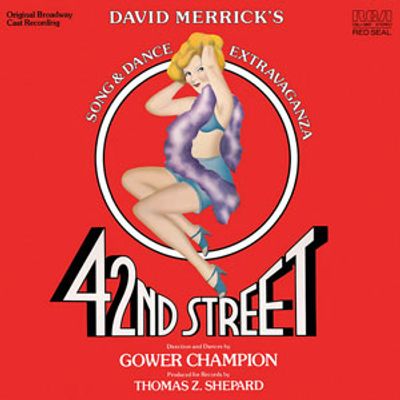
Karen Prunzik originated the role of "Anytime Annie" in one of Broadway's biggest hits 42ND STREET. This 1980 stage adaptation of the 1933 film gave birth to musical theatre lore we still talk about to this day, and Karen had a front row seat for it all. Join us as we discuss the plot twists both onstage and off that came together to create a classic.
Special thanks to Jonathan Blake Flemings for making this episode possible!
If you enjoyed this conversation, check out our drama filled episode about another musical from the early 1980s: NINE with Kim Criswell.
ATTENTION! Now is the time to subscribe to PATREON! for only $1. Big changes are coming in 2025, and if you join now, you'll continue to get it ALL for only $1 a month.
Follow us on Instagram, TikTok, and X for easy ways to share episodes and stay up to date with our latest. Don't forget our Spotify playlists can keep you company in between episodes. And our TeePublic Store has great designs that benefit Broadway Cares/Equity Fights AIDS.
Above all, thank you for being part of this wonderful podcasting community!
Transcript
This transcript was automatically generated and might contain errors.
[0:01] Karen Prunzik: This is an amazing story because things like this don't happen anymore. Tommy Toon called me and he said, hey hon, I want you to come and see something and then I want to talk to you about it. So he gives me the address and it's on 42nd Street and it's one of those X-rated movie theaters. That's the address. And I went, oh my god, is he going to put me in a pornography show? And I was scared to death, you know? And they said, no, no, no, take that elevator, right? You don't go into the theater. Don't go into the elevator. Take the elevator. And so I go up and it was the old Amsterdam Theatre before they renovated it. This is what people don't understand. When you say that you were scared of New York, you had every reason to be scared of New York at this time.
It was not Lion King appropriate, people. No, it was not. It was all X-rated up and down 42nd Street. But I walked out of that elevator and there was the old theater. And of course later I learned that, you know, all of the greats performed on that stage. And out comes, I don't know if you ever saw Day and Holly McKnight in Ukraine? Yes. Okay, the famous veto is called. So he had them do that whole scene. And then he looked at me and said, I know this isn't what you want to do. And I know it's not what you should be doing. But I need someone to cover this for when we open. You won't be on stage unless someone's sick. Sure. Would you would you do that? And I said, yeah, I mean, sure. I mean, it's job's a job, you know.
And I said, but I have an audition for Gower in two days. So I don't know what's going to happen with it. Because in my mind, I was immediately going to be hired as Peggy Sawyer. He took one look at me, as soon as he saw me tapping, he's going to go, okay, auditions are over. Todd says, well, there goes that idea, because Gower's gonna eat you up alive.
[1:55] Jeffrey Scott Parsons: Welcome, everybody to A Musical Theatre Podcast where we discuss the cultural and emotional impact of some of our favorite musicals in theater history. My name is Jeffrey Scott Parsons, you can call me Jeff. Today we are discussing the musical 42nd Street. I mean, I just got done saying some of our favorite musicals in theater history. And guess what, everybody, this is one of mine. Oh, my gosh, I'm so excited to talk about 42nd Street. It was also a listener request from Ian, and a couple of others. So grateful you all wrote in and feel the same way about the show that I do. Here's the thing. There's so much to discuss. Truly so many interesting stories and twists and turns to this show as a cultural landmark.
And it is one. That means we needed a very special guest. Well, we got one. Miss Karen, not only was in the original cast of 42nd Street, she originated the role of Anytime Annie, everybody's favorite, what shall we say, loose hoofer? I don't know. I don't know. We'll hear what exactly Anytime Annie is all about. Please welcome the fabulous Karen Prunzik. Yay!
[3:18] Karen Prunzik: Happy to be here.
[3:20] Jeffrey Scott Parsons: Oh, my gosh. First of all, I got to tell you right off the bat, I've done 42nd Street a couple times. I learned it from John Engstrom.
[3:28] Karen Prunzik: Well, of course you did.
[3:30] Jeffrey Scott Parsons: Yes, he does it everywhere. And he was the original dance captain. And he's incredible on so many levels. But he would also get up and do everybody's role because he knew he knew everything. So I feel like I know you because of how John Engstrom performed your role for me.
[3:47] Karen Prunzik: Right. And he was much better at it than I was actually.
[3:54] Jeffrey Scott Parsons: Starting right off the bat, I want to hear how you came into this show. Were you in New York? Were you hoofing? Did you start out as a tapper?
[4:03] Karen Prunzik: It was truly a miracle. It was a movie in itself because I was a ballerina when I was in my early teens. I was one of the first members of the Pittsburgh Ballet Theater in Pittsburgh when it was first formed by Nicholas Petrov. I was 10 years old. But my parents would make me go take my private tap lesson every Saturday morning at 8 a.m. And I hated it. But I didn't complain. I always did what they told me to do because I trusted them. My dad didn't know anything about showbiz. He was a businessman. He said, you know, something happens to you when you tap that doesn't happen when you do ballet. I mean, I know you love ballet, but tap is more your thing. And I'm like, I don't like to tap. I want to be a ballerina.
That kind of thing. Wow. Come on, Dad. Every Saturday morning before rehearsal for the ballet company, I went to my one hour private lesson in Pittsburgh with Carol Knight. And then when I realized I'm not going to be a ballerina, I transitioned into musical theater with Kenley Players in Ohio. The leading summer stock theater in the world was with John Kenley. And I was 15 years old. And the first show I did was Can Can with Ann Miller.
[5:20] Karen Prunzik: Oh, my gosh. That was your first show?
[5:24] Karen Prunzik: My first show. And I got my equity card.
[5:27] Karen Prunzik: With Ann Miller. Oh, my heavens.
[5:30] Karen Prunzik: And I was 15. And a lot of most of the other dancers were from New York. They were in their 20s. And they were living in New York. And, and there I was this 15 year old and nobody was tapping at that time. See, when my father was making me do that private tap lesson every week, nobody was tapping. It was all about jazz. Luigi and jazz. And, you know, nobody, nobody cared about tap anymore. Those movies were over, you know. But I was still doing that. So when these dancers were when we were in rehearsal, and there's Ann doing her thing, and they're all going, Oh, my God, she's amazing. Oh, my gosh, look at her feet. And I'm thinking to myself, that's not a big deal. I can do that. I realized after that summer, when I went home that, wow, you know, because whatever I did, I wanted to be the best. I wanted to be the best in the world. And I thought this is a good way to be the best at something because nobody else is doing it.
[6:33] Karen Prunzik: I'm already way ahead of them, you know. So I put all my efforts into into tap. And lo and behold, my Carol Knight, my teacher, introduced me to Paul Draper, who is an amazing. Well, he was, but he developed the style of classical tap. So he would tap dance to Bach and Beethoven. And it was a very balletic form of tap, which was really amazing. In fact, she didn't come in handy in a little bit. My gosh.
[7:02] Karen Prunzik: Well, exactly. And that's why the style was perfect for me because of the ballet. But he also was in Hollywood for a short time. He danced with Ruby Keillor. And then his career kind of, you know, didn't pan out because of Fred Astaire came along.
[7:17] Karen Prunzik: That old hack. And I studied for all my teen years, all through my high school years, every other day, three days a week, three or four days a week for about three hours each session, just me with him. So tap was my thing. And in the in the course of that time, I worked with Gene Kelly at Somerset Theatre. And I would go in early and practice on the stage every day. And I was doing this really intricate tap thing with a turn in it. And I turned and I saw Gene standing in the wings watching me. And of course, I got really nervous. And now I'm I think I'm 17 now at this age.
[8:23] Jeffrey Scott Parsons: Oh, my gosh.
[8:24] Karen Prunzik: He struts up to me like Gene walks, you know, and he said, you remind me of myself when I was your age. Always practicing. He said, don't ever stop because it will definitely pay off. And then he gave me the thumbs up and gave me his phone number.
[8:40] Jeffrey Scott Parsons: Oh.
[8:41] Karen Prunzik: Gene Kelly gave me his phone number on Rodeo Drive.
[8:44] Jeffrey Scott Parsons: Hey.
[8:45] Karen Prunzik: 725 North Rodeo Drive.
[8:48] Jeffrey Scott Parsons: I see it's a little nicer than that.
[8:50] Karen Prunzik: Yeah, I sure do. So he said, if you ever come to California, give me a call and I'll do what I can for you. And no auditions necessary. I know your work. I mean, he put that in writing and everything. I have a letter from him that says that. I mean, it's pretty amazing. So I opted to go to California rather than New York. I did not like New York. I was afraid of New York. And in my mind, they were going to bring back those movie musicals. That's what I was hoping for. But in the meantime, I wanted to be an Ernie flap dancer on the Carol Burnett show because I watched it every week and said, I can do that. That would be a blast. So I literally. And then I wanted to do a Dr. Pepper commercial because at that time they had they had this kid tap dancing in this Dr. Pepper commercial.
I said, that could be me. I'm going to California. I went out to California. Three thousand miles from Pittsburgh. Didn't know anybody. Wow. Except the few the stars that I worked with. Right. So I stayed there for about two years and I didn't didn't get any work. But I did do a lot of benefit work with Debbie Reynolds.
[10:01] Karen Prunzik: I did a couple of other things as mostly with Debbie Reynolds. But then after the two years, I thought nothing's happening here. And so I went back east and I did Kenley Players again. And I was working in a show with Tommy Tune. He was the star. And again, I would go in and practice.
[10:20] Jeffrey Scott Parsons: You're just checking off all the boxes in terms of like tap dance legends. My gosh.
[10:51] Karen Prunzik: You're like a butterfly. So then Tommy Walsh comes and Michael Bennett to see the show because they were they were thinking about maybe taking it to Broadway. It was called Walking Happy. It was not a very good show. So when when Michael and Tommy came, Tommy Tune said to them, I want you to watch this girl dance. So they had me. They sat in the in the front row and I went up there and I did all my Paul Draper dances for them. And they just said, well, you know, like, what do we do with her? Like, what do we do with her?
[11:26] Jeffrey Scott Parsons: Your own private audition for Michael Bennett, Tommy Walsh and Tommy Tune.
[11:31] Karen Prunzik: Yeah. I have no words. That's how it was back in the day. Amazing. So then the show was over and they all gave me their phone numbers and they said, if you come to New York and you have to come to New York. Don't go to L.A.
[12:14] Karen Prunzik: The two weeks went OK. I went home for Christmas and I came back. I said, OK, I'm going to I'm going to give it a whirl. So I went back in January and I wasn't there three weeks and I got sick. I had a cold. It was raining. I was miserable. I had to take the subway. I stopped and got one of those. Showbiz magazines that had the Hollywood Reporter or what a variety backstage backstage. Right. And I get home back to Paula's apartment and I make some tea and I'm laying there miserable, wanting to go home. And I open it up and it says, awesome.
[12:50] Karen Prunzik: 42nd Street in search of a girl in her early 20s who must be an excellent tap dancer. And I went, well, there you go. That's my part. There I am, Peggy Sawyer. So then I didn't realize, oh, I have to sing too. I'd never studied singing. I thought I was going to do movies where they could dub your voice, you know? Sure. Paulina Lamont, 100%. Right. So there I am now. I have to sing. And Paula gets me an agent and a voice teacher, and I got an audition in three weeks. It was going to be. So I go to the audition. Well, this is another great story because my friend Paula says, Karen, they're holding the auditions at the Edison Theatre. That's where, at the time, Oh! Calcutta was performing there.
More nudie patooties. So she said, let's go into the Edison Hotel and we'll sneak up to the balcony and we'll watch the girls that are auditioning so you can see what your competition is. Oh my gosh. Cutthroat. I love it. That's what we did. We went up there. It's padlocked now. You can't get up there. I tried. But yeah, we sat up there for about an hour and all these girls came out one at a time and they sang. And then Gower said, OK, thank you. And I said, Paula, I have to dance. He has to see me dance. I can't just go out there and sing. I don't even know how to sing. So she said, well, let's talk to Ron. Claremont was my voice teacher. So he said, all right, darling, here's what we're going to do.
We're going to pick a song for you. You're going to take your own pianist and halfway through the song, it's going to triple time and you're going to go into your tap dance before he even has a chance to say stop. You're like five, six and eight. So the song he picked for me was a Harry Warren song. Appropriate. Very appropriate. And it went like this. Hot ginger and dynamite. There's nothing but that night back in the fellowship to back in the women. And then I ended with 16 for a taste. Oh, my God. And he stood on his feet and just applauded and laughing at me. And I thought he's laughing at my voice. He thinks I'm terrible. Now I'm waiting for him to say, oh, my. OK, my Peggy Sawyer. But he says to me, hey, can you come back in two weeks?
And I almost said, what for? Why? You've seen it all. So I left and turns out I had eight callbacks. It took two months. Wow. And I find out later from Karen Baker, who was Gower's assistant at the time. She told me this much later. She said, you know, when you want when you walk down on that stage and started that song, he leaned forward to me and he said, she just got the part. And she said and I looked at him and said, why? And he said, look at her eyes. But he was talking about any time, Annie. He saw it right away. You know, I had no idea. I never thought of myself as a comedian, not in any way, shape or form. I was I was that kid that was scared to go to New York. I was Peggy Sawyer. Right.
In my mind, it's not what he saw. He saw any time, any instantly. But the problem was Michael Stewart, the writer, said she's never acted before. The musical director said she she's never sung before. Get this, the producer said she's not pretty enough. Yeah. We know where that went. Yeah. We will talk about Mr. Merrick in a little bit. My gosh. So and I think the big thing was that I had not done all these other girls were already in Broadway shows. One was in Fosse or dancing and they were all working. I never did a show before. And Gower said, she's a natural. He said, whatever she doesn't know, I can teach her. But she's exactly what I need for that part for that. I want for that role. Anyway, so they audition every different type of character personality you can imagine for any time, Annie.
I mean, from one extreme to the other. And after eight callbacks, it was down to six or seven of us. And we all had to go up there one at a time, one more time. And then he then he then he called each person over to him after it was over. And I was the last person. And he says, Karen, and he calls me over. And he said, I knew it from the first time I saw you. But I had to be sure. You're anytime, Annie. And I just went. So but meantime, and by that time, of course, I knew I was I was auditioning for Annie. But then this girl comes in. I'm in Frank Hatchett's class at Broadway Dance Center. My roommate, Paula, my friend calls me and says, Karen, you just got a call from your agent. They want you at the Amsterdam Theater right away.
I'm bringing up your clothes, regular clothes and makeup because I didn't take makeup to the dance studio with me. So she takes a cab up and I got all dolled up. Then we went to the new Amsterdam Theater and which was the old Amsterdam Theater. But there was a girl up on stage with Gower. And she had on blue jeans and a black satin theater jacket that had a chorus line on the back. And she had bleach blonde hair. And Gower said to her, Do you have a song? I don't have anything prepared, she said. And he said, Well, sing Happy Birthday. So he sang Happy Birthday. And then he said, sing it with a little bit of, you know, sexually like, like sexy, you know? Yeah, yeah, yeah. And so she does. It just made me think of Marilyn Monroe.
Then he said, Okay, go, go sit with those two other girls over there, or three other girls, three of us. And she came and sat with us. And he went and talked to whoever and then he comes over to us and he says, Okay, here's what I want to do, ladies. Oh, by the way, points to her and says, you're Peggy Sawyer. That was her audition. Wanda Richard. She didn't even dance. Wanda. How did you? How'd you book that one, girl? That's crazy. He was touring with the chorus line. And Karen Baker went to Chicago, which is where the show was at the time. And Wanda went to a non-equity call. Wow, to a to a chorus non-equity call. And of course, stuck out like a sore thumb. Yeah, Karen Baker went, Okay, you got it.
Gowers got to see you. Wow. So they made arrangements for her to go to New York. And he called us in to then go up on stage with her and have conversation to see who who gelled with her the best. So and of course, I did. Yeah, there's sparkling personality. And then he said, Okay, girls, go get you can thanks for coming in. And they all went, Okay. And I went, anytime, Mr. Champion. Stop it. I didn't even know that was in the show. But that's what I did. I put my hands on my hips and did a little wiggle. And I had two more callbacks after that. I mean, he should have just given you the part, but I'm gonna blame Michael Stewart for this one. I think it's Michael's fault for sure. Yeah.
[20:46] Jeffrey Scott Parsons: That is fascinating, Karen. Oh my gosh. So do you mind if we go now back in time and talk just a little bit about the property itself? The fact that this came to Broadway, I would say was a big deal, especially at this point in time on Broadway.
[20:59] Karen Prunzik: It was brilliant timing. It reminded me of my father making me go to those private tap lessons and saying, well, now tap isn't in. But when you're old enough, it's going to be and I want you to be ready for it. And it's exactly what happened. You got to hand it to Mr. David Merrick, because he had been trying to make the old school new again for quite some time. I mean, certainly he had tried that with Gower for Mac and Mabel, and that was a flop. And it hadn't necessarily been going his way in the same way that it had been in the golden age when they were pumping out Hello, Dolly!, which at that point was the longest running musical on Broadway. And he had six, seven, eight shows running at the same time.
All hits. All hits. Yeah, insane. Then the 70s hit and we're getting more experimental theater. We're getting artists like Sondheim and Schwartz and huge blockbusters like The Wiz, but they're not these tap dancing musicals. You had Annie, which I think was maybe a callback to an earlier time in musical theater. But the idea that this huge tap dancing musical was going to be a cultural reset or revolution was maybe not predicted. How about that? That being said, 42nd Street has always been in the cultural conscience from its inception, which was, and I don't think a lot of people know this, which was a novel. How much do you know about this novel, Karen? I'm sure you've heard of it.
[22:41] Karen Prunzik: You know, honestly, I did not focus on the novel.
[22:45] Jeffrey Scott Parsons: Yeah, well, it has very little. On the 1933 movie, in fact, when I was going through all those auditions, it took almost three months for all those callbacks. And right up the street from where we lived was a little movie theater and they were playing 42nd Street. I would go to dance class, I would practice, and then I would go to that movie theater and I would watch it three times in a row. And I did it every single day. I knew those characters like the back of my hand. So when I knew that I wasn't up for Peggy anymore, I knew I was up for any time, any of the Ginger Rogers role, I knew exactly how to be. Although I didn't realize that I truly was that way in real life. I thought I was Peggy Sawyer. Yeah, I thought I was like the innocent, sweet little Peggy Sawyer. No, hardly.
[23:35] Jeffrey Scott Parsons: Well, the novel comes out just the year before the film. It was a really quick turnaround. But the novel, it doesn't take place during the Depression, and it's been out of print for a long time. I think it finally was just reprinted and you can find it on the internet, but a lot of people haven't read it. It doesn't take place during the Depression, it takes place during the Roaring Twenties. And the whole kind of idea behind the novel is that this is an opulent, extravagant time. And yet just down the street are all of these artists who can't pay their bills, who can't find a decent meal, trying to entertain all of these rich, opulent, crazy people in order to highlight the plight of artists.
And in terms of it being naughty body, sporty 40, the novel really earns that because it's dark. Peggy Sawyer is not the wide-eyed innocent that she is in the film. She's constantly attacked by Me Too type experiences, if we want to frame it in that sense. Billy Lawler gets his job in Pretty Lady in the production because of his relationship with Julian Marsh. So there are definitely gay relationships being used in order to climb this ladder in the theater. Anyway, it's really kind of seedy and interesting, but of course, you turn that into a movie with the Hays Code and all of the restrictions about what you could put on film in the 1930s, that's not going to happen. So instead, when they put it on film, it's now a story of the Depression.
The plight of these dancers is the plight of everyone in America. We see them desperate for a job, desperate for work, and at the same time, falling in love, falling out of love, everything that goes into that. And it becomes a sensation.
[25:40] Karen Prunzik: 42nd Street is absolutely huge, not only because I think it was representative of so many people that were experiencing the economic hard times of the Great Depression, but also because it was giving you the glitz and glamour of the escapism of what it could be to be in the money, right? And you had Busby Berkeley, who was putting his spin on these numbers. You had the great Warren and Dubin songs. Another thing that people might not realize, there aren't that many production numbers in the original film, right?
[26:13] Jeff Parsons: Right. No, there really aren't. There's just the really big one at the end, of course.
[26:18] Karen Prunzik: Of course. Yeah, but there weren't... And of course, the shuffle off to Buffalo was pretty funny.
[26:24] Jeff Parsons: Yeah, adorable.
[26:25] Karen Prunzik: 100%. So then, fast forward all these years later, they're putting it on stage. They're being much truer to the film because that's what they're bringing to life. And it's kind of poetic when you think, once again, what New York is going through in terms of whether or not it's safe, whether or not people are economically sound. It is, once again, looking at these people who want so badly to have a job, but also want so badly to be a part of something beautiful. In order to fill it out and make it a full-fledged Broadway musical, they go into the catalog of Warren and Dubin, who were these amazing Hollywood songwriters and just wrote hit after hit. And so, they had a treasure trove of music to interplot into there. And that's where we get all of the incredible musical numbers. And then, David Merrick very wisely brings on one of his long-term collaborators, Gower Champion. I mean, he's one of the true greats.
[27:27] Jeff Parsons: Can you talk a little bit about him? Because you clearly knew him.
[27:33] Karen Prunzik: Yeah. Gower was a lovely man, a very, very sweet man. You always hear stories about the choreographer being rude and mean and this and that. He was always so, so sweet and so nice. The thing about Gower, for me, is I knew who Gower was because I studied the MGM movies all my life. I watched those all the time. So, I knew who Marge and Gower Champion were. I didn't know Gower Champion as a director or a choreographer. I knew him as a dancer. That's how I related to him from the MGM era movies.
[28:15] Jeff Parsons: Yeah. He and his wife, for those who don't know, he and his wife were a huge dance team, right? In the same way.
[28:20] Karen Prunzik: Gower Champion, yes. We didn't know for the longest time until we got to Washington and previews. Let me go back to the opening of the movie. The producer is going to put this big production together and his doctor calls him and says, you were diagnosed with a rare disease. If you do this show, it'll kill you. This is the first scene of the movie. He said, I've got to do the show. I've got to do the show. I don't care if it kills me. Then, when we got the script, I went, oh, but that scene's not in there. I wonder why that scene's not in there. It was exactly what happened with Gower in real life. He was diagnosed with a rare blood disease. He was dying. His doctor said, you can't do this show.
It'll kill you. This show will kill you. It's exactly what the movie was. Of course, they didn't put that scene in, but I knew that scene. We didn't know until later on when we got to, I'd say, previews in Washington, D.C. at the Kennedy Center is when it was really obvious that he was very, very sick. He missed a lot of rehearsals. He was in the hospital on and off a lot. He was real pale. This is your first Broadway show. We're excited. We're working on all these numbers. We're in the money. None of us were thinking in terms of the drama of what was truly happening here. That time was devastating, but the time in New York working with Gower, it was brilliant. It was amazing watching him. He didn't stand up and do the choreography.
He had us do that. He did the movements and said, I want it to look like this. We'd start doing different steps. Then he'd say, yeah, I like that one. I like that one. I like that one. I remember one day, we're doing a Broadway, and it's right before Annie comes running out. It's after all the slow part. I wasn't paying attention. I was goofing off over on the side talking to somebody, and I didn't go out on my cue. He slammed his fist down on the table, and he went into a tirade that was probably 10 minutes long about how disrespectful I was, that I should be paying attention. I was mortified, mortified. Then he got to the point where he went, this is a big Broadway show, a big Broadway show. He started laughing, and he said, you think I'm serious, don't you? I was mortified.
[31:24] Jeff Parsons: That's funny.
[31:25] Karen Prunzik: That was his way of telling me to pay attention. But also, it's not worth my anger.
[31:32] Jeff Parsons: Exactly. He was so great to work with. He just was gracious all the time. I didn't know a thing about playing a role. Really, I didn't. I was a dancer. We went around the table the first day. Well, first of all, I didn't know which room to go into. It's an ensemble go that way, and principals go in that room.
[31:53] Karen Prunzik: Are you going to the kid's party, or are you going?
[31:57] Jeff Parsons: I stood there going, I'm not sure where to go. Somebody went, well, you're playing a character, so you go in that room. I went in there. They went around the table, and he described everybody's character to them. Gower did. When he came to me, he said, anytime Annie, Annie's Karen, and Karen's Annie. That's all I'm going to say about that.
[32:26] Karen Prunzik: Wow.
[32:28] Karen Prunzik: He was an amazing person to work with. When he got sick, that was heartbreaking, heart-wrenching, but none of us thought he was going to die.
[32:37] Jeff Parsons: So, this is kind of a logistical question, but in terms of, because there's so many production numbers, had they all pretty much been conceived and constructed by the time that downfall really started going? Because he had a lot of incredible assistants, including Randy Skinner, who was the tapper on the team. Karen Baker as well. He picked people who really knew how to tap. Leroy Reams was a great tapper. Wanda Richard was a great tapper. I was a tapper. In that time, where people weren't tap dancing, that was a find. That's one of the reasons he picked me, especially. The character was perfect for it, but I was a tapper. That way, he could say, okay, here's the music. This is what I have in my mind.
What do you guys think? We would play around with it. Go into your dance. We choreographed that ourselves. Danny Carroll, Wanda Richard, myself, we choreographed that. He just told us what the story was and what he wanted and how the music would be. He was great at the visual. Dames and the whole MGM era visual, Busby Berkeley look. He was brilliant at that. As far as the intricate tap steps, we all did that ourselves, pretty much.
[34:00] Jeff Parsons: That's really cool. It also makes sense, because I have seen Minnie and Annie really struggle with your dance break during going to your dance. You have a few bars here. Do something. That was just one of the steps. I just always did that step. It was a fun step to do. It was easy. Try to count it out. I can't even count it out. It's got some little intricate syncopations in there that just made sense to me. Count-wise, I was never a counter anyway. I can imagine how that would be a little bit hard to teach.
[34:37] Jeff Parsons: So, you try out in Washington, D.C. You come back to New York to start previews, and you don't have that many previews. What, maybe six, I think, is all I read?
[34:49] Karen Prunzik: It's hard to remember, because we had so many times where we were ready to go on. Did you remember the story of we had a full audience for our first preview? We had a full audience, and there was a fella that was writing for the New York Times. His name was Cliff Jarr. David Merrick saw him come in, and he told him to leave. He said, you're not allowed to come here and previews. You have to wait till opening. He said, I have a ticket. I'm not leaving. So, Merrick went back and told Jerry Orbach to come out and make an announcement. There's a snake loose in the house.
[35:27] Jeff Parsons: Stop it.
[35:28] Karen Prunzik: We're not going to do the show. Everybody has to leave. Because he didn't want it reviewed. Now, I did know this. I did know that at that point, newspapers had gotten a little tired of having the crazy fast turnaround of their critics attending opening night, writing all night in order to get the review out for morning. So, slowly but surely, they had started coming to final previews in order to then have the piece ready to go on opening. So, they hadn't watched technically the opening night performance. David Merrick, during 42nd Street, said, absolutely not. Absolutely not. That is not going to happen.
[36:13] Jeff Parsons: I didn't know about the snake story, though.
[36:17] Karen Prunzik: Snake loose in the house. That's what he told Jerry Orbach to say. And then everybody left, and we had to do the whole entire show full out with no audience. And we had to do this every night until he battled this whole thing out with not having these critics come in. So, every night, we did the show with no audience. So, we came up with this idea to fill the house. So, we all brought in stuffed animals and our headshots. We filmed the first 25 rows.
[36:48] Jeff Parsons: It's a big cast.
[36:50] Karen Prunzik: A stuffed animal. When that curtain went up in the opening number, we saw the stuffed animals and headshots. We were so horny, we could hardly do the dance.
[37:04] Jeff Parsons: That's so stupid and amazing. Oh, my gosh, I love it.
[37:09] Karen Prunzik: So, David Merrick, who is often known as the bonobo showman on Broadway, right? I mean, he was infamous for these types of games and tricks and trades.
[37:24] Jeff Parsons: Brilliant.
[37:25] Karen Prunzik: I mean, truly brilliant. We mentioned one on Patreon, exclamation point, when he was doing Subway's Hour for Sleeping, which got terrible reviews. So, he invited people with the same names as the critics from all the major papers to come see the show and give good quotes, so he could use theirs instead of the actual reviews.
[37:48] Jeff Parsons: He wined and dined them. They all had dinner at Sardi's before the show.
[37:52] Karen Prunzik: And then after the show, he said, say something about your evening. Oh, it was the best. And there it is on the marquee. And he's like, I didn't lie.
[38:03] Jeff Parsons: Guy was brilliant. There's no question about it.
[38:05] Karen Prunzik: I guess I'll skip to the cool thing is that this was the last big hit that he had.
[38:11] Jeff Parsons: Yes.
[38:13] Karen Prunzik: It was also his comeback. He'd been gone since 1974, I think was when he did Back in Mabel. And then he went out to California and did three movies. He was wanting to be a film director, but I guess Gower contacted him about this 42nd Street idea, and he came.
[38:29] Karen Prunzik: Back to New York. And the beautiful poetry of it is that 42nd Street did become an enormous hit and was the thing to break his old record of the longest-running show, which was Hello Dolly, that he also produced. So it's pretty cool for him. I know that he was impossible and all of that, but I know that he took a shining to you. So what did you like about him?
[38:56] Karen Prunzik: Well, I never heard of David Merrick. He was not a dancer. I knew who Gower Champion was because he was a dancer. It's all I knew. My world was nothing but dancing. I didn't even know about Broadway because the last place I ever wanted to go was New York. The whole timing of it all with 42nd Street happening and it being a tap show is what was magical about it for me. And I saw David Merrick as the person making this happen. He's making this dream come true for all of us. Then when Gower got sick, David showed up at the studio rehearsals more often. And of course, when Gower passed, now we did not know that Gower had passed. He passed on our opening night. This is the stuff that Broadway lore is made of. I mean, it happened the afternoon, right? Before opening. And I assume it was Mr. Merrick who kept it secret from all of you.
[40:00] Karen Prunzik: He did. Well, they actually called us into the theater for rehearsal before noon, I think it was. We all had to come to the theater because we didn't have cell phones at that time. We didn't have computers. So, if they could get us into the theater, we wouldn't hear about it. If we were out walking around the streets, the rumors would go around and somebody would say, hey, did you hear Gower died? Did you hear, did you hear, did you hear? He wanted to make sure none of us heard because he wanted that show to go on. Now, he was criticized harshly about that. My feeling was always that he did the right thing because I don't know how we could have really done that show as brilliantly as we did if we had known he died. We didn't know he was gone, you know?
[40:48] Karen Prunzik: I think about the whole Jonathan Larson version of this, right? With Rent, when he passes away, very similarly with the opening of Rent off-Broadway. And they, in respect, they did the show, but it was kind of a set. They just sat down and read the lines so that it would be more respectful. And then, by the, you know, second act, then they felt like they could get up. And you can't do that with 42nd Street. No, no, you can't. And Gower, I mean, David knew that. He knew that we were not going to be able to do our best performance. It would do a disservice to Gower. In fact, I remember Wanda. See, Wanda Richards was having a relationship with Gower. And when Gower went into the hospital, she went to see him a couple of times. But then that particular day on our opening, David Merrick had her refused at the hospital. She was not allowed to go in. And then he called everybody to the theater. So, she didn't get to go.
[41:52] Karen Prunzik: She didn't know. None of us knew. Well, I mean, she famously burst into tears. Okay. Well, keep going. Keep going. So, opening night goes beautifully. I think the only person that really knew what happened was Jerry Orbach.
[42:07] Karen Prunzik: Really? I do think Jerry. I don't know for sure, but I do think Jerry knew. David Merrick sat, we were at the Winter Garden Theater. And David sat in a little room off at the stage area. And I remember everybody's like, oh, he's sitting in there all by himself in the dark. He's worrying if it's going to be a hit or not. That's why he's in there. He's all nervous. No, he was in there trying to figure out how is he going to break the news, not only to the audience, but to us. And he pondered that for the whole length of the show. And then the 12 curtain calls happened. And they just would have kept happening. They just didn't stop clapping until he came out and made that famous announcement that Gower had passed away at one o'clock that afternoon. And there were all the television cameras in the theater. So, they all got that photo of us like this and dropping to our knees and, you know, the devastation on all of our faces. And he turned and hugged Wanda.
[43:12] Karen Prunzik: Who was a mess. Who was a mess. And Jerry said, curtain, bring the curtain in. Because everybody dropped to their seats. At first, they laughed. This is a very, he said, this is a very tragic moment for me. And everybody laughed.
[43:29] Karen Prunzik: They laughed like, haha, yeah, big hit. It was a big hit, right? No, no, you don't understand. And he spoke so quietly. It was hard to hear him. So, the room got really quiet. The whole theater was just so quiet.
[43:42] Karen Prunzik: Yeah, that was history in the making right there. I mean, we were all devastated. I was going to say, like, how did you feel? Was there a party? Like, what did you do?
[43:53] Karen Prunzik: Well, that's, yeah, and that's the thing I try to remember. I know that Gower or David's assistant, I think her name was Helen Nickerson. When we came off stage, we had to go up this long stairwell to get to our dressing rooms. And she was standing right there. And we came off the stage. We were crying. And we were solemn. And she said, I know you are all upset. I know you are. But please, you have to come to the party. And I'm like, I'm not going to no party. I ain't going to no party. You know, how can you go to a party? How can you even think about a party? It's what Gower would have wanted you to do, she said. My parents were there. I ran outside out of the stage door of the Winter Garden and just threw my arms around them and bawled.
And I said, I can't get dressed up and go to a party. But Helen Nickerson talked us all into it. We all decided, okay, we'll do this for Gower. It's what Gower would have wanted, because we were obviously a huge, huge hit. So, we went to the party.
[44:57] Karen Prunzik: And I'm going to give you this little tidbit, and then I'm not talking about David Merrick until the next podcast. Look, I need to get Broadway Podcast Network to give you your own show, Karen.
[45:09] Karen Prunzik: I don't know about that. I'm retired. I don't want to.
[45:19] Karen Prunzik: So, we go to the party. And, you know, it's a big band. It's beautiful. It's at the Waldorf Astoria. I saw David Merrick sitting over there with Bob Fosse. All the big stars were there. And I felt sad for David Merrick. I mean, he just seemed so sad. But everybody made comments about, you know, this is a goldmine for him. He made that announcement in front of all the newspapers and the television. You know, that's what made the show a big hit. I don't agree with any of that. I think he really did go through a whole struggle in that little dark room offstage of whether he should or shouldn't make this announcement. But he knew that if he didn't, it was going to go off into the, you know, atmosphere and different stories were going to be rumored about it. But he was criticized for doing it in front of us and the audience. And that picture went all over the world.
[46:20] Karen Prunzik: So, we go to this party. And when David was leaving, he came onto the dance floor. I don't remember who I was dancing with. But he came onto the dance floor and he whispered in my ear something. And I couldn't hear him because the band was playing and people were, you know. He said, excuse me. And he said, you're my favorite. And I thought, favorite? Like, favorite what? Character in the show? I mean, what? Favorite ice cream? Like, what's he talking about? Favorite? And I forget what I said back to him. But then he left. And we had a limousine, Wanda and I. I was living with Wanda at the time. Because she's right up the street. Now, my friend Paula, who I was living with, Paula Cinco, the gold digger, she lived all the way down on 14th Street.
And her hours were the complete opposite of mine. So, we thought, and she's a studio apartment. It just didn't, it was getting hard. So, Wanda said, move in with me. I'm right up the street from the theater. You know, just half a block. So, I was living with Wanda. We got into the limo afterwards to go to drive from the Waldorf. He had a limo for her. I just tag along. It wasn't for me. It was for her.
[47:42] Karen Prunzik: So, we got in the limo. And the driver said to us, we're going to Elaine's. And I said, who the hell's Elaine? Elaine's was like this famous restaurant that all the, you know, that no newspaper people were allowed in there. That's why all the stars went there. They were safe. And it's David Merrick and just his entourage. And the place was closed. And we sat around this table. I couldn't even remember who all was there. But he was very depressed, very sad. And I, you know, felt like, well, of course he is. He lost Gower. They were so close, you know. And so, Wanda's trying to give him a pep talk and, you know, you did everything you could, David. And Gower would be so proud that this was his swan song. And I really admired Wanda for that. I'm like, she's really good at this. Because I didn't know what to say.
[48:42] Karen Prunzik: And then he lifts his champagne or wine glass and says, I'd like to propose a toast. And we all lifted our glass. And he said, to Karen, a wonderful person. Yes, that's exactly. My face was just like a gape. Wanda's face. You should have seen Wanda's face. She's like, I was the eloquent one.
[49:07] Karen Prunzik: Yeah. And that's what kind of started it all. And then we won't go any further from there.
[49:12] Karen Prunzik: Yeah. Yeah. From that point. But yeah, he was and he was there every night. He came to the theater every night backstage and sat off in that little room where we all said hello to him because he felt like he needed to fill that void of Gower not being there. And people would say, I'm Mr. Merrick, and they'd run. They were all everybody was afraid of him, you know, and I'd go up to him and go, Hi, Mr. Merrick. How are you tonight? And I had my hands on my hips and do the whole anytime anything. And he'd look at me and say, What am I going to do with you? And I went, what do you want to do with me? Right out on the stage.
[49:50] Karen Prunzik: You're like, flat, flat, flat, flat, flat.
[49:54] Karen Prunzik: It was real in my mind. It was just trying to cheer him up. I would take his cheeks and squeeze his cheeks and say, Can I get a smile out of you tonight?
[50:05] Jeffrey Scott Parsons: Wow. Wow. Yeah. Crazy. That's insane. Well, it's such I like I said, it's the stuff that the lore is made of and has been made of. But the story of 42nd Street, like within the show is actually pretty simple. You know, like I said, we're in the Great Depression. There's this famous director slash maybe even producer speaking of David Merrick and Gower Champion maybe put together in one character named Julian Marsh and Julian Marsh is doing a show. It's so funny because, you know, there are so many lines from musicals like Gypsy that have become parts of just my everyday vernacular. Sing out, Louise. You know, these are things that just come out excited and scared from Into the Woods. They're just quotes that I use all the time.
42nd Street, however, has so many that I use. Get out your tap shoes, Francis. There are so many of these lines that are ingrained in my brain. But everyone's thrilled because he's putting on a show, which means jobs, right? People are going to have the ability to work again in this really kind of scary economic times. So auditions are happening. The ensemble's doing crazy, crazy tap. And at the end of that audition, in comes this girl from Allentown.
[51:19] Karen Prunzik: So, Peggy Sawyer is the character that I originated in 42ND STREET, and she is a young girl from Allentown, Pennsylvania, who comes to New York City to audition for a Broadway show. She’s very naive and innocent, but she has this incredible talent and determination.
[51:49] Karen Prunzik: Throughout the show, she faces numerous challenges, including the cutthroat nature of the theatre world, but she perseveres and ultimately becomes a star.
[52:19] Karen Prunzik: The story is really about the journey of a young woman finding her place in the world, and it’s filled with iconic musical numbers and dance sequences that have become legendary.
[52:49] Karen Prunzik: I think what makes Peggy so relatable is her resilience and her ability to overcome obstacles. She represents the dreamer in all of us, and her journey resonates with anyone who has ever pursued a passion.
[53:19] Karen Prunzik: The show itself is a love letter to Broadway and the magic of musical theatre. It captures the excitement and energy of the stage, and I think that’s why it has remained so popular over the years.
[53:39] Karen Prunzik: I remember the first time I stepped onto the stage at the Winter Garden Theatre. It was surreal, and I felt an overwhelming sense of gratitude to be part of such a historic production.
[53:49] Karen Prunzik: The choreography was also a huge part of the show’s success. Gower Champion’s direction and choreography brought the story to life in a way that was both innovative and classic.
[53:59] Karen Prunzik: The tap dancing, in particular, was a highlight for me. It was challenging but so rewarding to perform those intricate routines night after night.
[54:19] Karen Prunzik: I think audiences really connect with the energy of the dance numbers. They’re not just entertaining; they tell a story and convey the emotions of the characters.
[54:39] Karen Prunzik: One of my favorite moments in the show is the big finale, where all the dancers come together. It’s a celebration of talent and hard work, and it always leaves the audience cheering.
[54:49] Karen Prunzik: There’s something magical about being part of a live performance. The energy from the audience fuels the performers, and it creates a unique experience every night.
[54:59] Karen Prunzik: I also loved the camaraderie among the cast. We were all working towards the same goal, and it created a strong bond that extended beyond the stage.
[55:19] Karen Prunzik: The backstage stories are just as fascinating as what happens on stage. There were always unexpected moments and surprises that kept us on our toes.
[55:39] Karen Prunzik: I remember one night when a prop malfunctioned during a performance, and we had to improvise on the spot. It was chaotic, but it brought us all closer together as a team.
[55:59] Karen Prunzik: Those experiences are what make live theatre so special. You never know what’s going to happen, and that unpredictability adds to the excitement.
[56:09] Karen Prunzik: I think that’s why audiences keep coming back to shows like 42ND STREET. They want to be part of that live experience and feel the energy of the performers.
[56:19] Karen Prunzik: It’s a reminder of the power of storytelling and the impact that musicals can have on our lives.
[56:39] Karen Prunzik: I feel so fortunate to have been part of such an iconic show. It’s a chapter of my life that I will always cherish.
[56:59] Karen Prunzik: And I hope that the legacy of 42ND STREET continues to inspire future generations of performers and audiences alike.
[57:19] Karen Prunzik: The show is a testament to the resilience of the human spirit and the joy that comes from pursuing your dreams.
[57:29] Karen Prunzik: I think that’s a message that will always resonate, no matter the time or place.
[57:49] Karen Prunzik: And I’m grateful to have been a part of that journey.
[57:59] Karen Prunzik: It’s a reminder that, even in the face of adversity, we can find our way and achieve our dreams.
[58:19] Karen Prunzik: That’s the beauty of musical theatre—it reflects our lives and our struggles, but it also offers hope and inspiration.
[58:29] Karen Prunzik: I think that’s why people are drawn to it. It speaks to our humanity and our desire to connect with one another.
[58:39] Karen Prunzik: And I’m proud to have played a small part in that story through my work in 42ND STREET.
[58:59] Karen Prunzik: I hope that audiences continue to find joy and inspiration in the show for many years to come.
[59:19] Karen Prunzik: It’s a celebration of life, love, and the magic of the theatre.
[59:29] Karen Prunzik: And that’s something worth celebrating.
[59:39] Karen Prunzik: Thank you for allowing me to share my experiences and thoughts about this incredible show.
[59:49] Karen Prunzik: I hope it encourages others to pursue their passions and embrace the journey, no matter where it leads them.
[1:00:09] Karen Prunzik: Because in the end, it’s all about the journey and the connections we make along the way.
[1:00:19] Karen Prunzik: Thank you!
[1:00:29] Karen Prunzik: I appreciate the opportunity to reflect on my time in 42ND STREET.
[1:00:39] Karen Prunzik: It’s been a joy to share these memories with you.
[1:00:49] Karen Prunzik: And I look forward to seeing how the story of Peggy Sawyer continues to inspire others.
[1:00:59] Karen Prunzik: Thank you again for having me!
[1:01:09] Karen Prunzik: It’s been a pleasure.
[1:01:19] Karen Prunzik: I hope everyone enjoys the show!
[1:01:39] Karen Prunzik: And remember to keep dreaming big!
[1:01:49] Karen Prunzik: Because anything is possible if you believe in yourself.
[1:01:59] Karen Prunzik: Thank you!
[1:02:09] Karen Prunzik: I appreciate it!
[1:02:29] Karen Prunzik: And I hope to see you all at the theatre!
[1:02:49] Karen Prunzik: Bye!
[1:02:59] Karen Prunzik: Thank you!
[1:03:19] Karen Prunzik: Take care!
[1:03:39] Karen Prunzik: Bye!
[1:03:49] Karen Prunzik: Thank you!
[1:04:10] Karen Prunzik: I wanted to be her understudy. Now, it makes sense to me now, but at the time, it didn't. Of course, they didn't want me to go on for her because then someone had to go on for me. That was two understudies on, so I get that now. But at the time, I was the perfect choice for understudy. They didn't have anybody yet, so they were bringing girls in from L.A. and around and whatever, and they brought this girl in named Nancy Sinclair. She was David Merrick's find, not Gower's. Gower was not happy with her. He didn't want her. But time was of the essence, so she got the part, and whatever ended up happening, she left her husband and her three-year-old daughter out in California. She wasn't allowed to take the daughter out of L.A., so she gave the daughter to the ex-husband, and then she came to New York to cover Rwanda and met somebody in the meantime who said, this is a musical in itself, I can get your child back for you, but we need to go to California, so she told David, I'm going to California for a week, and he said, no, you're not.
You don't get to leave. Rwanda may be out of the show, and she said, I don't care. I'm going anyway, so she went, and Rwanda got sick, and there was nobody to cover her. My father would say to me, he's a kitchen salesman, he said to me, you learned that part because you're going to do it, and I said, dad, this is Broadway. It isn't community theater. They're not going to just let me do it, so of course I didn't learn it, but I knew it. I knew it because I listened to it every night, and the dancing was nothing. I mean, I knew that right from the get-go, so it was all just in my blood, and so when Nancy left, Rwanda was so sick she couldn't go on, and they canceled the show. I couldn't believe they canceled the show for one night, and then the next night, I think they got Nancy back for a couple days, and then she said, I'm leaving after I finished, and Rwanda still wasn't better, so I gave up them even considering putting me on, so I went out and had dinner and had some drinks on our day off, and then I come in at 10 o'clock at night.
Remember, I'm living with Rwanda, and she said, David just called. You need to call him back, so I called back, and he said, I need you to go on for Rwanda tomorrow, so they brought us into the theater, and whoever they could get a hold of because they're not really allowed to do that. They have to have their full time off, so they got as many people in as they could. They literally had somebody with a flashlight in the script in the wings that would meet me after each scene, and I would be able to glance through the script to make sure I was on, that I knew what was coming up next, and the two numbers I didn't know was getting to be a habit where she gets all tangled up. Well, that's fine because I didn't naturally got all tangled up.
Oh, and the one where he's drilling her through all the rehearsals. The montage, yeah. I wasn't real sure of that either, so they had to pull me here, and so it was very real, but yeah, I went on, and I remember my father saying to me, we need to splash this all over the newspapers, and I said, oh, no, Dad, don't do that. David Merrick's notorious for promotion. He'll do a big splash, you know, peeps, nothing, nothing, nobody except one little article in the New York Times when they called our apartment, and Wanda got on the phone, and is it true that your roommate's going on, so it's his star's roommate covers role. I have my name in it. Oh, that's hilarious. I played it for an entire week, but I was really happy to go back to my role.
I mean, I felt like a caged animal playing Peggy when I got to put on Anytime Annie. It was like, what? Let loose. I never knew what he was doing when he picked me for that part, because that was my character. I didn't know that I was naturally like that. I didn't see myself like that at all. But he saw it. But he saw it immediately.
[1:08:27] Jeffrey Scott Parsons: Wow. These have been the best stories. My gosh. I have one question for you. What do you think the lasting legacy of 42nd Street is? It's still being done.
[1:08:41] Karen Prunzik: It's being done. Certainly in different ways. Well, that was my point. I mean, God bless Mark Bramble. I was good friends with him. But when he and Randy did the revival, they changed a lot of it. And then I think Mark owned the rights to it. So I knew that anytime anybody ever did 42nd Street, it was going to be the revival and not the original. And that kind of made me sad. But I think the legacy is Gower. It's Gower's legacy. It truly was his lullaby at Broadway. And nobody can do it like him. So when they tried everything, you know, in the first couple months after we opened to change it.
[1:09:20] Jeffrey Scott Parsons: Really?
[1:09:20] Karen Prunzik: And it never, ever worked. Because the way Gower left it, even though it was really kind of somewhat unfinished. I mean, there was a lot more he wanted to do with it. It was meant to just be the way it was. And I think the legacy, true legacy of it is that we played our parts for real. And that's what made it work. We didn't make cartoon characters out of them. And Gower didn't, he didn't direct any of us.
[1:09:53] Jeffrey Scott Parsons: That's, that's, I mean, it also makes sense. You began by telling us the arduous process of the auditions. And yet it really did feel like he knew if he nailed that, if everybody had the role they were supposed to have, then he could just let you guys be yourselves.
[1:10:10] Karen Prunzik: Absolutely. That's a great way to put it, because that's exactly how he worked with all of us.
[1:10:17] Jeffrey Scott Parsons: That's special.
[1:10:19] Karen Prunzik: Karen, thank you so much for sitting with me today. This has been a total joy.
[1:10:24] Jeffrey Scott Parsons: Oh my gosh, I'm so grateful. Well, it's a show that needs to be continued to be honored. It really does. All of the people that were cast in it, the ensemble were so amazing. They were, most of them weren't even graduated from high school yet. I mean, what brilliance. And it was just magic the way it was all, that it was all put together. Gower just had a vision, and he followed his heart. There were a lot of conflicts, a lot of fights, a lot of this, a lot of that between him and Merrick. There always was. But Gower always got his way. And he was always right.
[1:11:01] Jeffrey Scott Parsons: Well, you know, one of the things I'm walking away with from this conversation is that, you know, the drama backstage can sometimes be far more exciting and entertaining than the drama on stage. And that was certainly the case with Pretty Lady, the show within 42nd Street and 42nd Street itself. And yet, even with that web of relationships and mishaps and death even, there's still magic. There's still those specks of stardust coming together to create something beautiful. Man, I don't know if there's ever been anything more meta in musical theater, but...
[1:11:41] Karen Prunzik: And really, honestly, nobody knew how to do it besides Gower, like David Merrick. I mean, if you remember the Tony Awards, and we won Best Musical. Now, you'll have to go back and watch this clip at some point with Elizabeth Taylor introducing the shows that were up. And every show had about 20 producers, and she had to name each and every one of them.
[1:12:09] Jeffrey Scott Parsons: Oh, gosh.
[1:12:10] Karen Prunzik: And she was messing up their names, and she called Niederlander Niederheimer. She made such a big... Like, she was hysterical. It was... Part of you, like, if you watch that, you think, is she drunk? Right? Maybe.
[1:12:26] Jeffrey Scott Parsons: Possibly. But I'm sure also everyone was just having... laughing at it, having a good laugh.
[1:12:30] Karen Prunzik: Oh, it was hilarious. And then all of a sudden, 42nd Street, producer David Merrick. Period.
[1:12:37] Jeffrey Scott Parsons: Yeah, period. It was a brilliant way to show where Broadway was going and where it had been.
[1:12:45] Karen Prunzik: Great point. Because after that, it was, you don't even know who's producing shows. It was...
[1:12:50] Jeffrey Scott Parsons: There's not one person holding it all together.
[1:12:52] Karen Prunzik: No, no. The whole stage is filled now at the Tony Awards when Best Musical is announced.
[1:12:58] Jeffrey Scott Parsons: That's right. That's right. To think that that was all one person at that point. That's huge.
[1:13:03] Karen Prunzik: Well, it was going to be three, I think, and he bought them off.
[1:13:08] Jeffrey Scott Parsons: He did. He knew right away it was going to be a big hit.
[1:13:12] Karen Prunzik: Right. Thanks for your money. Here's your money back. I don't need it. I gotcha. I got it from here, folks.
[1:13:18] Jeffrey Scott Parsons: Yeah, exactly.
[1:13:21] Jeffrey Scott Parsons: As always, if you have recommendations for shows you'd like us to cover on a musical theater podcast, you can always email me at amusicalpodcasts at gmail.com. Look, we got Patreon exclamation point, folks. So much fun. I have a lot of great things planned for 2025. And what I will say is that if you get in now in 2024, it'll benefit you. I promise. Get in now because things might be a changing in 2025. And you want to be grandfathered in. So join Patreon exclamation point. We have bonus episodes and all sorts of great stuff. We also have our social media accounts on Instagram, on TikTok, on X. Share us with your friends and connect with us there as well. We have our TeePublic store. All of the profits we receive from those designs goes to Broadway Cares Equity Fights AIDS. More than anything, thank you for being part of this beautiful podcasting community that I am so grateful for.
[1:14:19] Karen Prunzik: Is there anything you want to plug in terms of like how to follow you or what you're up to or anything like that?
[1:14:28] Karen Prunzik: You know, I'm just living the... I had a performing arts studio for 13 years here and it was very successful and I enjoyed every minute of it. But when COVID hit, I just decided I'd had enough. I just couldn't imagine having three-year-olds with masks on and keeping them six feet apart and trying to have people act and sing with a mask. But it was beyond me.
[1:14:53] Jeffrey Scott Parsons: It's a very smart decision.
[1:14:55] Karen Prunzik: I feel like I did it. It's done. It was great. And so now I'm retired, happily retired. I love every minute of it. I'm an old cat. Not old. I'm not old. I'm an old, old cat lady. Yes. I somehow have adopted ferals that came into my life three years ago. And another Broadway veteran friend of mine, Jill Cook, who lives in St. Croix, is brilliant with cats. And she literally taught me via text how to trap each one of those cats and get them fixed. So I now have eight of them that live in my backyard. I have one at the Humane Society right now that they're fixing that showed up two weeks ago. So I'm truly as a cat sanctuary.
[1:15:44] Jeffrey Scott Parsons: Oh, that's adorable.
[1:15:45] Karen Prunzik: That's wonderful. They come in my house. They watch TV with me. Yeah, they give me a lot of love. But other than that, I teach my two adult classes once a week, which I love because they love it so much. They inspire me. I work with the kids at church and really getting through my Bible for the first time ever because I have time to really focus on that. And it's changed my life dramatically.
[1:16:12] Jeffrey Scott Parsons: That's sweet.
[1:16:13] Karen Prunzik: Yeah, so life is good.
[1:16:15] Jeffrey Scott Parsons: Yeah.
[1:16:16] Karen Prunzik: I'm so glad to hear that. I'm on Instagram and I'm on Facebook if anybody wants to say hey.
[1:16:21] Jeffrey Scott Parsons: Absolutely. We'll tag you. We'll tag those so that if people want to say hi, they can.
[1:16:25] Karen Prunzik: All you'll see is pictures of my cats.
[1:16:29] Jeffrey Scott Parsons: But this has been an absolute joy. Thank you.
[1:16:33] Jeffrey Scott Parsons: Everybody out there, thank you for listening. And remember, if you're singing a sad and blue song, go into your dance.
© Broadway Podcast Network, All Rights Reserved